
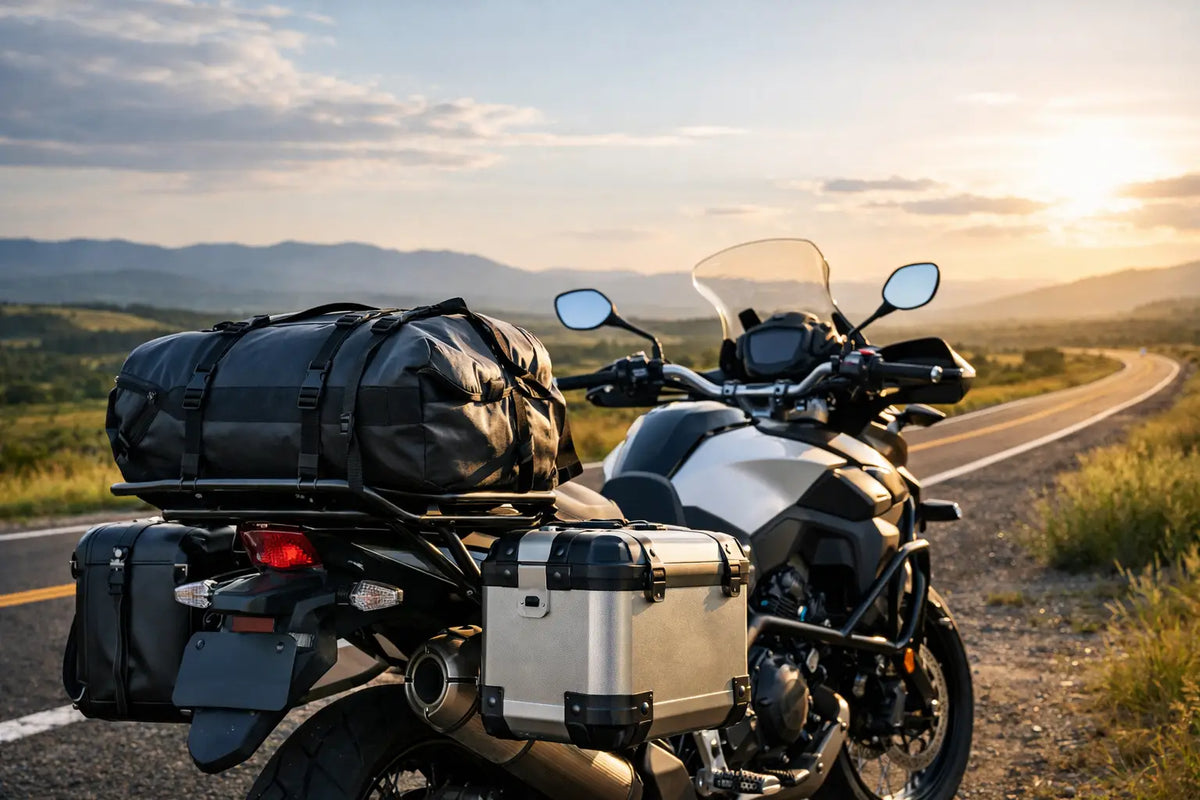
A duffel bag bungeed to a rear fender may get you through one ride. Hit a pothole, add rain, or run highway speed for a few hours, and that quick fix starts looking like what it is: a gamble. The best motorcycle luggage racks give your gear a solid foundation, whether you are hauling a tool roll to work, packing for a rally, or loading up for a cross-country run.
A good rack is not just a chunk of steel bolted behind the seat. It has to fit your bike, carry a realistic load, clear your passenger setup, and work with the bag you actually plan to use. Get those details right and your cargo stays planted while the bike keeps its clean, hard-edged look.
What Makes the Best Motorcycle Luggage Racks Worth Buying?
The right luggage rack earns its place every time you throw a bag over the back and head out. Its job is simple: create a stable, secure mounting surface without turning your motorcycle into an overloaded wagon.
Start with fitment. Motorcycle racks are rarely universal in the true sense. A rack designed around a Harley-Davidson touring frame will not necessarily mount correctly on a Softail, Indian Chief, Honda Rebel, or metric cruiser. Even within one model family, differences in year, fender width, detachable hardware, passenger seats, and sissy bars can change what fits. Always match the rack to your exact year, make, and model before you worry about finish or price.
Material matters next. Powder-coated steel racks are a strong choice for riders who favor a tough blacked-out look and want a rack built to handle regular use. Chrome-plated steel brings classic cruiser style and can hold up well when maintained, but road salt and neglected moisture can eventually take their toll. Aluminum is lighter and resists corrosion, making it popular on adventure and sport-touring machines, though its appearance may not suit every stripped-down cruiser build.
Then there is load capacity. Do not treat a rack's stated weight rating as a challenge. That number reflects ideal mounting conditions, not a license to stack a heavy hard case, camping gear, and a loaded cooler behind the rear axle. Weight carried high and far back can affect steering response, suspension performance, braking distance, and stability in crosswinds. Pack dense items low whenever possible, and keep the rack for lighter, bulkier cargo.
Choose a Rack Style That Matches Your Ride
There is no single best rack for every rider. A solo cruiser with a low-profile seat has different needs than a full dresser built for weeklong highway miles.
Solo luggage racks
Solo racks mount behind a single rider seat and usually follow the contour of the rear fender. They are a clean solution for a small tail bag, rolled jacket, compact duffel, or tool kit. Riders who prefer a lean bobber, chopper, or stripped cruiser profile often choose this style because it adds utility without burying the bike under hardware.
The trade-off is capacity. A solo rack is not the place for oversized luggage or heavy hard cases. It works best when you pack light and use quality straps with enough adjustment range to cinch cargo down tight.
Sissy bar luggage racks
A sissy bar rack sits behind the passenger backrest and gives you more room for a larger bag, bedroll, or backpack. This setup is a favorite for cruiser riders because it supports cargo while the sissy bar keeps the load from shifting toward the rider. With a tall enough backrest, it can also serve as a natural anchor point for tie-down straps.
This is one of the most versatile options for weekend rides and rally runs. It does add visual bulk, especially on a minimalist build, but the extra packing space is hard to argue with when the road calls for layers, rain gear, and more than one change of clothes.
Detachable racks
Detachable luggage racks give you the best of both worlds: cargo support when you need it and a cleaner rear end when you do not. These racks use a bike-specific docking system, allowing the rack or rack-and-backrest assembly to come off without a full wrench session.
They cost more than basic fixed racks, and the docking hardware needs to be properly installed and inspected. For riders who switch between solo day rides and two-up touring, however, the convenience pays off fast.
Tour pack and trunk mounting racks
Touring riders may need a rack designed to work with a top case, trunk, or tour pack. These are built for structured luggage systems rather than a soft bag tied to a platform. The benefit is weather protection, lockable storage, and organized packing. The downside is added weight and a more permanent touring look.
If you ride a bagger, Gold Wing, large adventure bike, or full-dress touring machine, this category makes sense. Just confirm the rack, trunk, mounting plate, and bike-specific bracket are engineered to work together. Mixing random parts is how loose mounts and cracked hardware show up halfway through a trip.
Fitment Details That Can Save You a Headache
Before buying, look past the product photos. A rack can look dead right on a similar bike and still interfere with your setup. Check whether it fits with your stock seat, an aftermarket seat, saddlebags, turn signal relocation kit, or passenger backrest. If you run a custom fender or chopped rear end, standard fitment claims may not apply at all.
Pay attention to mounting points. The strongest racks use existing factory locations or purpose-built docking hardware. Avoid relying on thin fender metal alone for a serious load unless the rack design specifically reinforces that area. Hardware should be corrosion-resistant, correctly sized, and tightened to the manufacturer's torque specifications.
Clearance matters too. A loaded bag should not rub the rear tire, block tail lights, cover license plates, interfere with turn signals, or contact hot exhaust. Compress the rear suspension by hand or have someone sit on the bike while you inspect the gap. What clears in the garage can make contact when the suspension hits a bump at speed.
How to Secure Luggage Without Losing It
A premium rack is only half the system. Weak straps and lazy packing can still send your gear sliding, bouncing, or disappearing down the highway.
Use purpose-built cam buckle straps, quality tie-down straps, or luggage straps with secure metal hardware. Bungee cords are fine as secondary tension helpers, but they are not the main line of defense for a loaded bag. They stretch, hooks can slip, and a snapped cord can cause damage fast.
Run straps through the bag's designed anchor loops whenever possible. Pull the load forward against a sissy bar or secure backrest rather than leaving it free to move. After tightening, grab the bag and try to shift it in every direction. If it moves more than slightly, it is not ready.
Keep loose strap ends away from the rear wheel, belt or chain, brake components, and exhaust. Roll and secure the excess instead of letting it flap in the wind. Stop after the first 10 to 15 minutes of riding and recheck everything. Straps settle, bags compress, and what felt tight in the driveway may need another pull.
Match Your Rack to Your Riding Style
For daily commuting, a compact solo rack and weather-resistant tail bag can handle lunch, gloves, a rain shell, and a small lock without changing the bike's character. For weekend trips, a sissy bar rack paired with a larger luggage bag gives you more room while keeping packing simple.
For two-up riding, detachable hardware is often the smart move. You can keep the passenger backrest in place, add cargo support when needed, and remove the setup when you want a cleaner look. Long-distance touring riders should prioritize load rating, locking storage compatibility, and a setup that keeps weight centered instead of stacked behind the axle.
Style still counts. A black powder-coated rack fits naturally with murdered-out cruisers, skull-heavy gear, and a hard street build. Chrome belongs on plenty of classic American V-twins and retro customs. The key is choosing a rack that looks like it belongs on the motorcycle, not like an afterthought hanging off the fender.
A Better Rack Setup Starts With Honest Packing
The best motorcycle luggage rack is the one that fits your exact machine and carries your real-world load without drama. Do not buy the biggest rack just because it is available, and do not overload a small rack because it looked tough in the listing. At American Legend Rider, the right move is always gear that is built for your ride, your miles, and the way you pack.
Measure your bike, check the fitment twice, use dependable straps, and take a hard look at what you truly need to carry. When the load is secure, you can quit worrying about your gear and focus on the next stretch of open road.


No comments yet. Be the first rider to weigh in.