
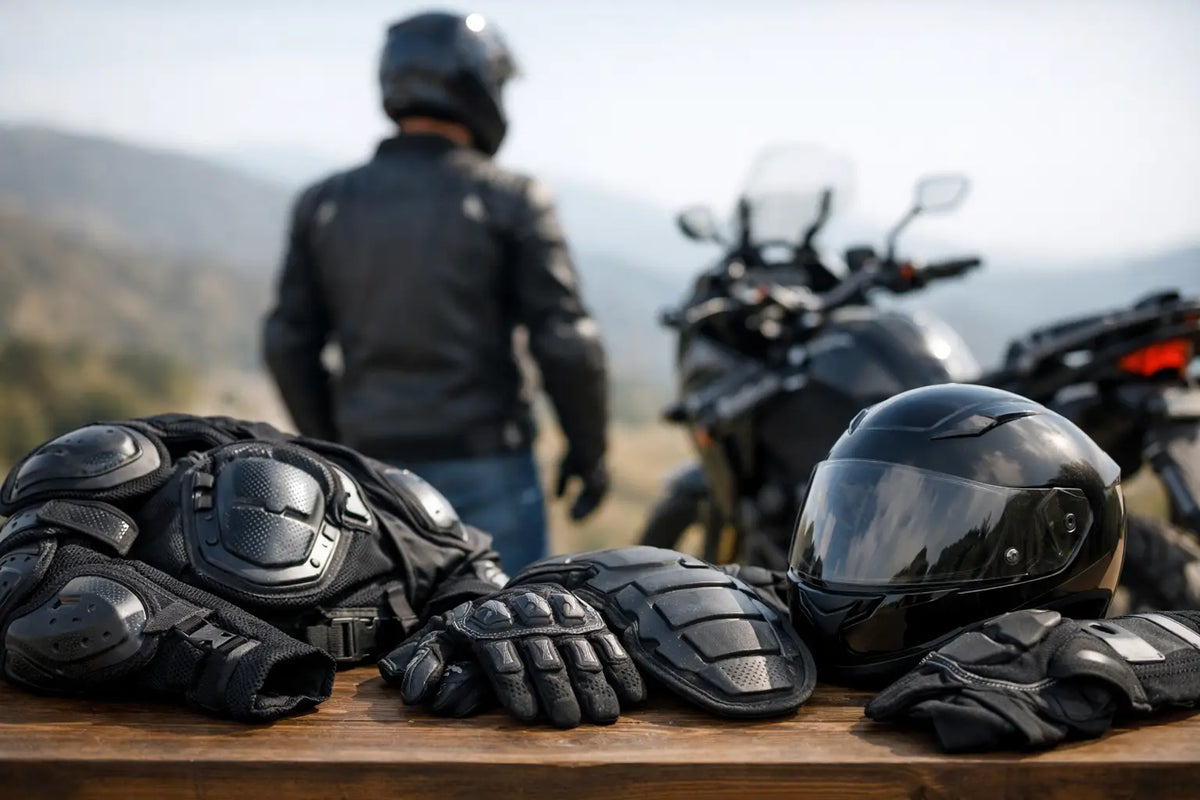
The wrong armor feels fine in the garage and terrible at 60 mph. It shifts, pinches, overheats, or leaves key impact zones exposed when you actually need it. That is why a solid motorcycle armor buying guide matters - not for showroom talk, but for choosing protection that works on real roads, in real weather, and with the way you actually ride.
If you ride a cruiser across state lines, commute through traffic, or hit weekend backroads, armor is not just a bonus feature tucked inside a jacket. It is the part that stands between your joints and the pavement. Good gear should feel road-ready, not like an afterthought.
Motorcycle armor buying guide: start with impact zones
Most riders shop armor backward. They look at style first, then price, then maybe protection. The smarter move is to start with impact zones. The core areas are shoulders, elbows, knees, hips, and back. Chest protection matters too, especially for aggressive riding, higher speeds, or riders who want fuller upper-body coverage.
For most street riders, shoulder and elbow armor are non-negotiable in a jacket. Knee armor is just as important in riding pants or reinforced jeans. Back protectors are where a lot of riders cut corners, usually because some jackets include only a thin foam pad. That foam may help the garment keep its shape, but it is not the same thing as real impact armor.
If your current jacket says it is "armor ready," read that as unfinished until you verify what is actually inside. A lot of gear looks tough and still needs an armor upgrade.
Understand CE ratings before you buy
The best motorcycle armor buying guide should make this part simple. If armor is CE-rated, it has been tested to a recognized impact standard. For most riders, the key distinction is Level 1 versus Level 2.
Level 1 armor passes a lower transmitted-force threshold. It is often lighter, slimmer, and easier to wear in hot weather or tighter-fitting gear. Level 2 armor reduces more impact force and usually gives you better protection, but it can be thicker, stiffer, or heavier depending on the material and design.
That does not mean Level 2 is automatically the right call in every case. If bulky armor makes you leave the gear at home, that is a bad trade. The better choice is the armor you will actually wear every ride. For city cruising and casual use, quality Level 1 can make sense. For higher-speed riding, longer highway days, or riders who want stronger impact management, Level 2 is usually worth the extra bulk.
Back protectors deserve extra attention. A CE-rated back protector is a major step up from a basic back pad. If your jacket only includes foam, replacing it should be high on your list.
Fit matters more than riders think
Armor only works well when it stays over the body part it is supposed to protect. That sounds obvious, but poor fit is one of the biggest weak spots in motorcycle gear.
If elbow armor rotates off your joint when you reach for the bars, it is not doing its job. If shoulder armor hangs too low, coverage drops where you need it most. If knee armor sits perfectly while standing but slides halfway down your shin on the bike, your pants are not cut right for your riding position.
This is where jacket and pant design matter as much as the armor itself. Cruiser riders often sit differently than sport riders, and gear cut for one position may not protect correctly in another. Look for adjustable armor pockets when possible. They give you more room to fine-tune placement, especially if you are between sizes.
Snug is good. Restrictive is not. You should be able to move, turn your head, reach the controls, and ride for hours without fighting your gear.
Material changes the feel on the road
Armor materials have improved a lot. Older hard-shell or basic foam setups can still offer protection, but many modern inserts are softer and more flexible until impact. That is a big reason newer armor feels less clunky than riders expect.
Soft viscoelastic armor is popular because it bends with your body and stays more comfortable during longer rides. Hard-shell designs can add abrasion resistance and structure, and some riders still prefer that more aggressive feel, especially in off-road or mixed-use setups.
Ventilation matters too. Some armor pieces are heavily perforated or designed with airflow channels. If you ride in southern heat, that can be the difference between wearing full gear and peeling layers off at a stoplight. Hotter gear often gets left behind. Better airflow keeps your protection in play.
There is always a trade-off. Softer armor usually wins on comfort and flexibility. Bulkier armor may feel more substantial and can inspire confidence, but only if it fits your body and riding style.
Match your armor to how you ride
Not every rider needs the same setup. A daily commuter filtering through traffic has different needs than a weekend rider putting down long highway miles, and both are different from somebody chasing curves every Sunday.
Cruiser and touring riders usually benefit from low-profile armor that stays comfortable for long stretches in the saddle. If you ride all day, pressure points become a real problem. Slim, well-vented armor in the shoulders, elbows, back, hips, and knees is usually the sweet spot.
Commuters need versatility. You may be riding in heat one month and cold rain the next. Modular gear with removable liners and dependable armor pockets makes more sense than a one-season setup. Easy on, easy off, and easy to live with matters when you ride often.
More aggressive riders should lean harder into upgraded back protection and, in many cases, chest protection too. Higher speed changes the equation. When impact risk goes up, better coverage starts making more sense than minimal bulk.
Don’t ignore the jacket and pants carrying the armor
Great armor inside a weak garment is still a compromised setup. The shell holding the armor needs to keep it in place during a slide and through movement on the bike. That means the jacket or pants should fit correctly, use durable materials, and have secure pockets or compartments for the armor.
Stretch panels can improve movement, but too much looseness can let armor drift. Cheap liners and sloppy pocket placement can do the same thing. If the pocket is oversized and the insert rattles around, the protection is only halfway there.
This is where price can be tricky. The cheapest gear may claim armor coverage, but if the garment fit is poor and the included inserts are generic, you may end up paying twice - once for the piece, then again for upgrades. Sometimes a mid-range option with better construction is the better value.
Upgrade paths are worth knowing
A lot of riders do not buy their final armor setup in one shot. They build it over time. That is normal, and honestly, it is smart if you focus on the biggest gains first.
Start by checking what your jacket and pants already include. If they have certified shoulder, elbow, and knee armor but only a foam back insert, upgrade the back first. After that, look at hips, then consider whether chest protection fits your riding needs.
If your current gear is comfortable and built well, upgrading the armor can be a better move than replacing the whole garment. On the other hand, if the fit is off and the armor never stays where it should, you are better off starting fresh.
Red flags that should slow you down
If product details do not clearly explain the armor type or rating, that is a red flag. If the gear says "protective padding" but never mentions certification, be careful. Marketing language can sound tough without saying much.
You should also be cautious with armor that feels too small for the coverage area, gear that bunches badly in a riding position, or jackets and pants that look armored but include only minimal inserts in the key zones. Tough styling is not the same as tested protection.
And if a piece feels so uncomfortable that you know you will stop wearing it after two rides, keep looking. The best armor is the armor that shows up every time the kickstand goes up.
What to buy first if you are building a kit
If you are putting together your first real setup, start with a jacket and pants that include certified shoulder, elbow, and knee armor, then add a true back protector. From there, hip armor is a strong next move, especially for street riders. Chest protection depends more on your speed, posture, and how much coverage you want.
Shop with a hard eye. Look for CE details, armor placement, adjustability, airflow, and how the gear fits in a riding position, not just standing in front of a mirror. At American Legend Rider, that means choosing road-tested protection that matches your bike, your style, and your budget - not buying the loudest product pitch on the page.
The right armor should feel like part of the ride, not a punishment for doing things right. Buy for the miles you actually ride, not the fantasy version of yourself, and your gear will serve you better every time you roll out.

No comments yet. Be the first rider to weigh in.