
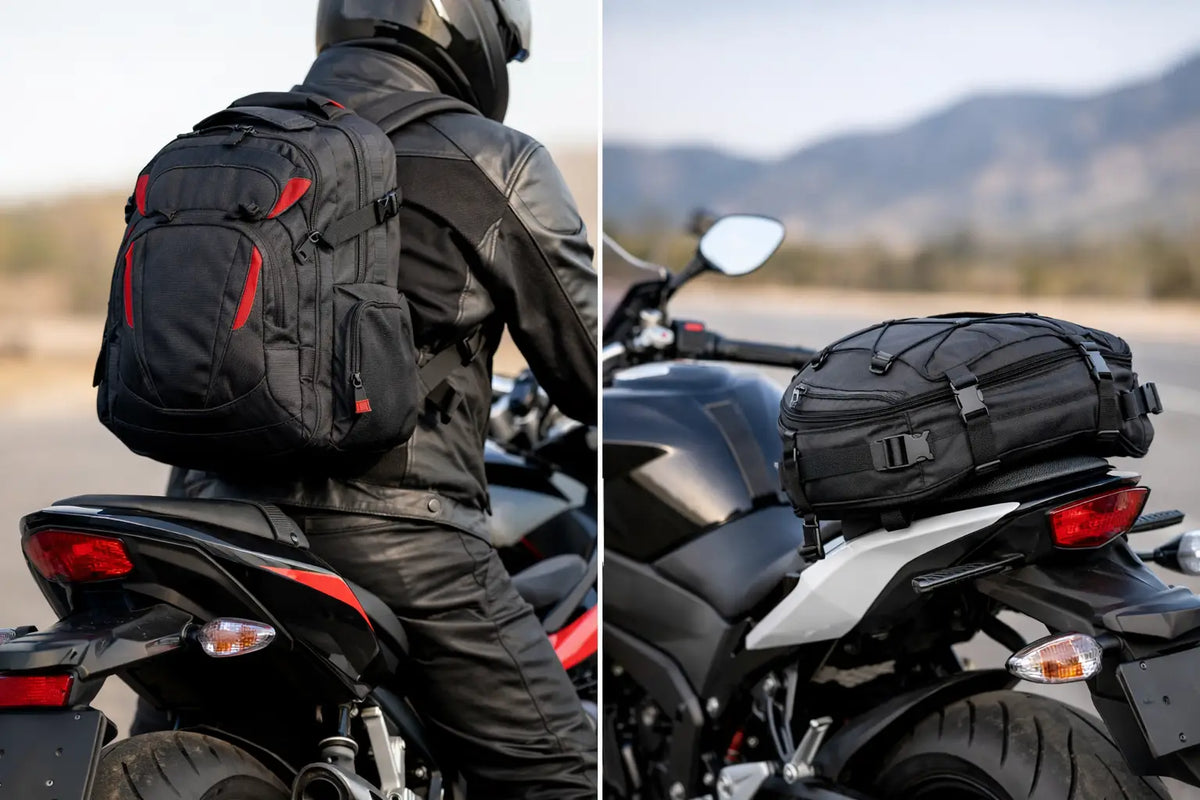
Throw a laptop, a hoodie, and a set of gloves on your back for a 40-minute ride, and you’ll feel the difference before the first gas stop. That’s why the motorcycle backpack vs tail bag question matters more than most riders think. Both carry your gear. Only one may fit the way you ride, the kind of bike you own, and how much hassle you’re willing to deal with every time you saddle up.
Motorcycle backpack vs tail bag: what really changes on the road
This choice is not just about storage. It changes comfort, weight distribution, access, weather protection, and even how hard you work at the end of a long day. A backpack keeps your stuff with you when you leave the bike. A tail bag keeps the load off your shoulders and out of your way while riding.
That sounds simple, but real-world use gets more specific fast. A rider doing daily city miles on a naked bike has different needs than someone logging weekend highway runs on a cruiser. A backpack can feel practical and cheap until it starts catching wind or wearing on your back. A tail bag can feel like the obvious upgrade until you realize you need to unstrap it every time you park in a sketchy lot.
The right answer depends on what you carry, how far you ride, and how often you get on and off the bike.
When a motorcycle backpack makes more sense
A motorcycle backpack wins when portability matters as much as riding comfort. If you commute to work, carry a laptop, need to bring your gear inside, or walk around after you park, a backpack is hard to beat. You throw it on, ride out, and take everything with you in one move.
For urban riders, that convenience is a big deal. There’s no mounting system to fuss with, no straps to tighten, and no worrying whether the bag is still sitting on the bike when you come back out. If your motorcycle is also your everyday transportation, a backpack fits the rhythm better than bike-mounted storage in a lot of cases.
It also works well if you switch between bikes. Riders with more than one machine, or those who borrow, rent, or rotate rides, don’t need to outfit every bike with its own luggage setup. One good backpack follows you anywhere.
But there’s a catch, and it’s not a small one. Backpacks get old on longer rides. Even a good one adds pressure to your shoulders and upper back. The heavier the load, the more that pressure builds. Add summer heat, stop-and-go traffic, and wind resistance, and what felt fine at mile 10 can feel miserable by mile 60.
Backpacks can also shift around if they’re not fitted right. That movement is annoying at best and distracting at worst. On sportier bikes with a more aggressive riding position, the issue gets worse. A loaded pack can bunch at the shoulders, push into your back, and fight your helmet when you tuck forward.
Best use cases for a backpack
A backpack usually makes the most sense for short to medium commutes, college runs, office carry, and riders who need to bring valuables with them every time they dismount. It also fits light packers who carry personal items rather than bulkier gear.
If your ride ends with stairs, sidewalks, or a long walk through a parking garage, a backpack stays practical long after the engine shuts off.
When a tail bag is the smarter move
A tail bag earns its keep once comfort on the bike becomes the priority. Instead of hanging the load on your body, it puts the weight on the motorcycle where it belongs. That alone can make a huge difference on longer rides.
If you’ve ever finished a ride with stiff shoulders from carrying tools, water, extra layers, or your lunch, a tail bag solves that problem fast. It keeps your body freer, reduces fatigue, and usually improves airflow around your back. On hot-weather rides, that matters.
Tail bags also tend to carry oddly shaped gear better than backpacks. Extra gloves, a tire repair kit, rain gear, a small camera, or a rolled-up layer often fit more naturally in a tail-mounted bag than in a pack built around office-style carry. Many riders also like how a tail bag keeps the cockpit and tank area cleaner, especially if they don’t want a tank bag in front of them.
The trade-off is convenience once you stop. A tail bag is not always grab-and-go. Some detach quickly, but others require undoing straps or dealing with mounting loops. That’s fine on a weekend ride or a road trip. It gets old if you’re parking five times a day and hauling your gear inside every time.
There’s also the question of bike compatibility. Some bikes have a clean, easy rear seat or rack setup that welcomes a tail bag. Others have awkward passenger seats, fenders, or styling that make fitment less ideal. A cruiser rider may love the look and practicality. A rider on a smaller bike with limited rear space may find the options tighter.
Best use cases for a tail bag
A tail bag shines for weekend rides, day trips, touring, and any ride where you’re carrying more than pocket stuff but less than full luggage. It’s also a strong choice for riders who hate anything on their back and want better comfort without jumping straight to saddlebags or hard cases.
Comfort is where most riders make the call
If this were a straight fight based on comfort alone, the tail bag would win for most riders. Weight on the bike beats weight on your body. That’s true on cruisers, touring bikes, standards, and a lot of dual-purpose setups too.
A backpack only stays comfortable when the load is light, the fit is good, and the ride is not too long. Once any of those conditions changes, comfort drops fast. A heavy backpack can also change how relaxed you feel in turns and at stops because your body is always managing extra weight.
That said, some riders don’t mind a backpack at all, especially for short rides. If you carry just a few essentials and use a riding-specific pack with chest and waist support, the comfort gap narrows. But it rarely disappears completely.
Storage, access, and weather protection
Storage is not just about liters. It’s about how usable the space feels when you’re actually riding and stopping.
Backpacks are better for organized daily carry. They often include sleeves, smaller compartments, and layouts built for electronics, keys, wallets, and paperwork. If your load looks more like a workday than a road trip, a backpack usually feels cleaner and easier to manage.
Tail bags tend to be better for riding gear and bulk. They often offer wider openings and more flexible shapes for stuffing in layers, tools, and ride-specific extras. If you stop to peel off a thermal liner or stash wet gloves, the tail bag often handles that mess better.
Weather protection depends on the bag, not just the category. Some backpacks are highly water-resistant, but many are only decent in light rain. Tail bags built for motorcycle use often do a better job with road spray and weather exposure, especially if they include rain covers or welded construction. Still, you need to check the build, because not every bag sold to riders is ready for a real downpour.
Security and everyday hassle
This is where the motorcycle backpack vs tail bag debate gets personal. A backpack is more secure because it goes with you. That’s a major advantage in cities, public parking, and anywhere you don’t trust people around your bike.
A tail bag can be secure while riding, but not always secure when parked. Even if it straps down well, it still lives outside your control once you walk away. If you leave tools, tech, or anything worth stealing in it, you’re taking a chance unless you remove it.
On the other hand, everyday hassle can tilt the other way. If you hate sweating under a backpack or arriving with shoulder strain, the tail bag makes riding easier. If you hate dealing with straps and removal every time you park, the backpack wins the daily-use battle.
Which riders should choose what
If you commute, carry valuables, switch bikes often, and spend as much time off the bike as on it, go with a backpack. It fits daily life better, especially for work, school, and quick errands.
If you ride longer distances, carry heavier gear, or want better comfort in the saddle, choose a tail bag. It’s a cleaner setup for the road and usually the better move once your rides get longer or your load gets bulkier.
If you’re stuck between the two, think less about max storage and more about friction. Which option makes your usual ride easier, not just possible? That’s the real test. At American Legend Rider, the best gear is the gear that matches your miles, your machine, and your style without slowing you down.
Pick the bag that lets you ride harder, stop easier, and carry what matters without thinking about it every ten miles.

No comments yet. Be the first rider to weigh in.