
A stolen bike can disappear in under a minute if it is parked with weak security. That is why the motorcycle lock vs chain debate matters more than most riders think. The right setup is not about looking tough in the parking lot - it is about making your motorcycle harder, slower, and louder to steal.
A lot of riders want one clean answer, but this is one of those calls that depends on how you ride, where you park, and how much weight you are willing to carry. A lock can be fast and compact. A chain can be brutally effective. The best choice comes down to the threat level you deal with every day.
Motorcycle lock vs chain: the real difference
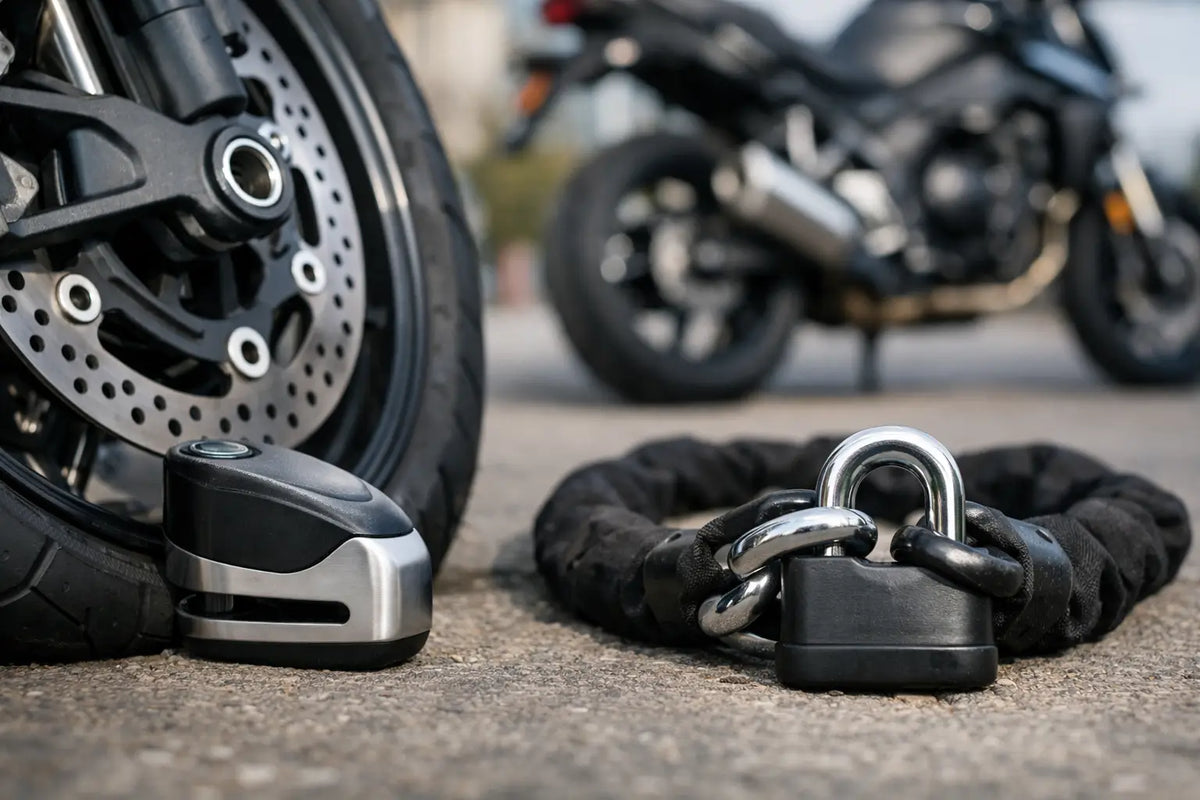
When riders say motorcycle lock, they usually mean a disc lock, grip lock, or U-lock. These are standalone devices that immobilize part of the bike or block wheel movement. A chain is different. It is built to wrap through the frame or wheel and secure the bike to something solid like a ground anchor, post, or heavy rack.
That difference matters. Most locks are designed to stop a ride-off theft. Chains are better at stopping a lift-and-load theft, where thieves pick up the bike and throw it into a van or truck. If your bike is light enough for two people to move, a basic disc lock alone may not be enough.
This is where some riders get burned. They buy the smallest lock they can fit under the seat, then assume the bike is secure anywhere. That works better for quick stops in visible areas than it does for overnight parking in a city or apartment lot.
Where a lock makes more sense
A lock is usually the easier daily carry. Disc locks are compact, fast to install, and good for riders who want security without hauling around a heavy chain. If you commute, run errands, or make frequent stops, that convenience matters.
A disc lock also creates a clear visual warning. A thief looking for an easy target may skip a bike that will not roll freely. Some models add an alarm, which raises the pressure fast if someone touches the bike or tries to move it. Noise is not perfect security, but it can kill a theft attempt when time is tight.
The trade-off is obvious. A disc lock does not anchor the motorcycle to anything. If thieves can lift the bike, the lock goes with it. On heavier cruisers and touring bikes, that is harder. On lighter bikes, it is a real weakness.
U-locks sit somewhere in the middle. They are stronger than many cheap disc locks and can sometimes secure part of the wheel to a fixed object. But fit can be tricky depending on wheel design, brake components, and available anchor points.
If your routine is short stops, daylight parking, and lower-risk areas, a quality lock can be the smart move. It is fast, practical, and far better than leaving the bike naked.
Where a chain pulls ahead
A good motorcycle security chain is heavier, slower to use, and harder to ignore. It also gives you something a basic lock cannot - the ability to secure the bike to the world around it.
That is the biggest advantage. If the bike is chained through the frame to a fixed object, thieves cannot simply roll it away or carry it off without serious tools, noise, and time. That changes the whole theft equation.
For overnight parking, apartment complexes, city streets, and public lots with repeat exposure, chains usually win on pure security. They are especially valuable if your motorcycle stays outside for long stretches. In those situations, convenience matters less than resistance.
The problem is weight. A serious chain is not subtle. Cheap chains are often all bark and no bite, but real security chains are heavy because they need hardened steel and thick links. That is not always something riders want to carry on the bike all day.
There is also the question of what you are locking to. A chain is only as strong as the object it is wrapped around. A hardened chain around a weak fence is not real protection. Neither is a chain looped only through a wheel that can be removed.
Security strength is not just lock vs chain
A lot of riders compare the category and miss the quality gap inside each one. A premium disc lock can outperform a bargain chain. A hardened chain with a weak padlock can fail the whole setup. What matters is the full system.
Material quality, shackle or link thickness, anti-cut design, anti-pick features, lock cylinder protection, and weather resistance all count. So does fit. If a chain has too much slack, thieves may gain leverage. If a lock is awkward on your brake disc, you may stop using it altogether.
The hard truth is simple. Cheap security gear often buys peace of mind, not real protection. If the price looks suspiciously low, there is usually a reason.
Motorcycle lock vs chain for different riders
A weekend cruiser rider who parks near the diner, the rally, or the local shop has different needs than a city commuter. If your bike stays close, parked in visible spots, and comes home to a garage, a strong disc lock or compact U-lock may cover the job without turning every ride into a loading exercise.
If you live in an apartment, park outside overnight, or leave the bike in public every day, a chain starts making a lot more sense. That is even more true if you ride a bike thieves target often, or one with high parts value.
Adventure and touring riders also sit in a different lane. They may stop in unfamiliar places, sleep at motels, and leave the bike loaded with gear. For that crowd, layered security has real value. A chain for overnight stops and a lock for quick breaks is often the more practical answer.
Custom bike owners should think the same way. If your machine turns heads, it also draws attention from the wrong crowd. A visible, heavy-duty setup makes your bike look expensive to steal - and that is exactly the point.
The smartest answer is often both
If you want the strongest real-world setup, it is usually not motorcycle lock vs chain. It is motorcycle lock and chain.
That combo attacks theft from two angles. A disc lock prevents easy rolling. A chain anchors the bike to something solid. Add an alarmed lock and you force thieves to deal with noise, delay, and physical resistance all at once.
Layered security works because most thieves want speed. They are looking for easy opportunities, not a wrestling match with hardened steel in a well-lit area. Every extra step you force on them increases the chance they move on.
This does not mean you need to go overboard for every gas station stop. It means matching the setup to the parking situation. Use the lighter option when risk is low. Bring out the full setup when the bike will be exposed longer.
What to look for before you buy
Skip flashy marketing and focus on the basics that matter on the street. Look for hardened steel, weather-resistant construction, a lock mechanism that does not feel flimsy, and enough size to fit your bike and parking routine. If you choose a chain, make sure it is long enough to reach a real anchor point without leaving excessive slack.
If you choose a disc lock, think about daily use. Can you install it quickly without a fight? Is it visible enough that you will remember it is on the bike? Many riders use reminder cables for a reason. Forgetting a disc lock and trying to ride off is a fast way to have a bad day.
Also think about storage. A heavy chain needs a plan. Some riders carry it in a tail bag or saddlebag. Others leave one chain at home and another at work. That setup can make a heavier security option much more realistic.
For riders shopping practical gear with biker attitude, stores like American Legend Rider make sense because security gear belongs in the same lane as the rest of your road-ready setup - useful, durable, and built for real use.
The bottom line on lock or chain
If you want convenience, lighter carry, and fast protection for short stops, a quality motorcycle lock earns its place. If you want stronger theft resistance, especially for overnight or high-risk parking, a chain is usually the harder hitter. If your bike is valuable, exposed, or parked outside often, combining both is the move.
The best anti-theft gear is the one you will actually use every single time. Buy for your real parking life, not your ideal one, and your bike stands a better chance of being right where you left it.

No comments yet. Be the first rider to weigh in.