
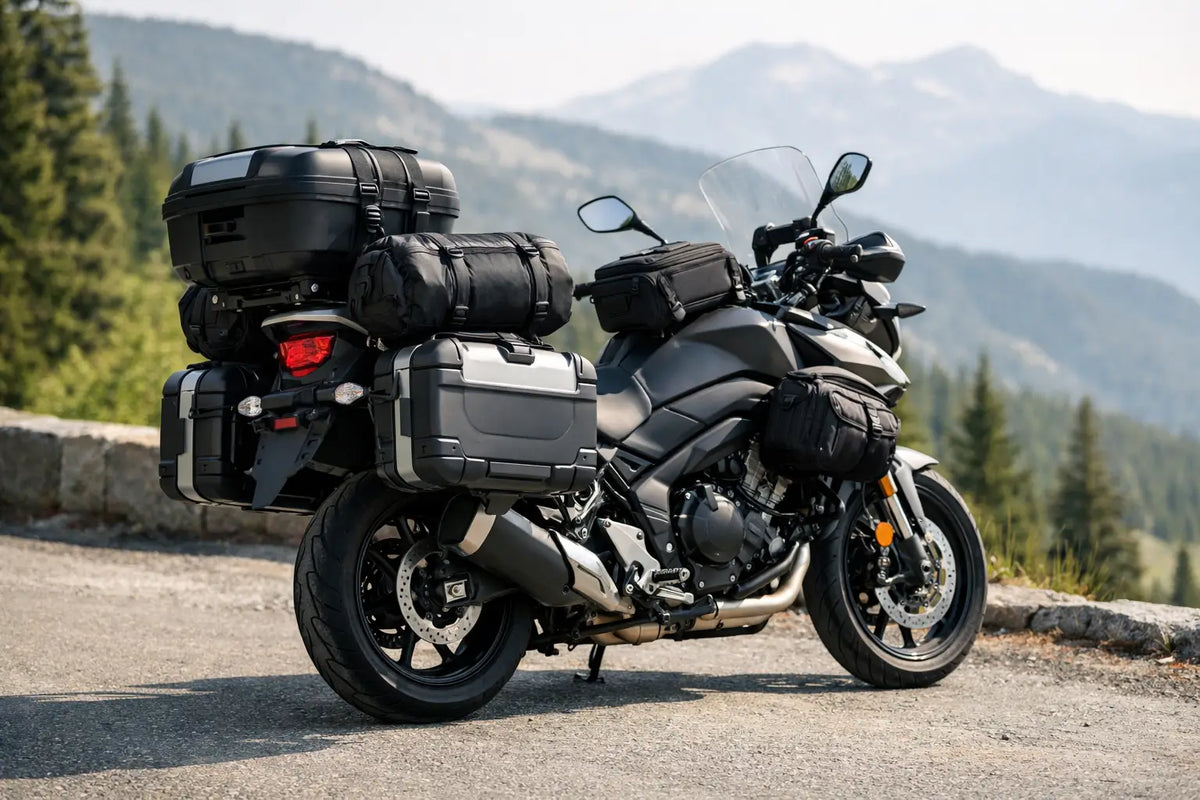
Packing goes bad fast on a motorcycle. Too much weight in the wrong place, a loose dry bag, or gear you need buried under clothes - that is how a good ride turns into a headache. If you are looking for a motorcycle luggage setup example that makes sense on real roads, the goal is simple: keep the bike stable, keep your essentials easy to reach, and carry only what earns its spot.
Most riders do not need a giant touring rig to pack smart. They need a setup that fits their bike, their trip, and their riding style. A cruiser headed to a weekend rally needs a different loadout than a commuter doing daily miles or a rider knocking out a three-day highway run. The right setup is not about stuffing every bag you own. It is about balance, access, weather protection, and not fighting your own gear at every stop.
A motorcycle luggage setup example for a weekend ride
Here is a practical motorcycle luggage setup example for a rider on a cruiser or standard bike doing a two- to three-day trip. The bike runs a pair of saddlebags, a medium tail bag, and a small tank bag or handlebar bag. That combination gives you enough room for clothes, tools, weather gear, and daily essentials without making the bike feel overloaded.
In the saddlebags, put your heavier items low and split them evenly side to side. One side can carry tools, tire repair, extra gloves, and a compact rain layer. The other can handle clothing, toiletries, and backup base layers. If one bag ends up much heavier, the bike will feel off, especially at low speed, in parking lots, and during slow turns.
The tail bag is where bulkier but lighter gear belongs. Think hoodie, packed T-shirts, rolled jeans, and maybe your overnight items. This bag should stay tight to the rear seat or luggage rack, not stacked sky-high like a tower ready to sway in crosswinds. A lower profile almost always rides better.
The tank bag or handlebar bag is for quick-access gear. Phone charger, wallet, sunglasses, registration, a face covering, small snacks, and a pocket-size first-aid kit all make sense here. This is the stuff you do not want to unpack a saddlebag to reach at a gas stop.
That basic layout works because it follows common-sense weight management. Heavy and dense items go low. Light and bulky items go higher or farther back. Frequently used items stay within reach. That sounds simple, but it is where most bad packing decisions start and end.
Why this motorcycle luggage setup example rides better
A loaded bike changes fast when the weight sits too far behind the rear axle. The front end can feel light, the steering can get vague, and sudden lane changes feel sloppier than usual. Riders often blame the bag, but it is usually the placement.
Saddlebags are the backbone of a stable setup because they keep weight lower and closer to the bike's center. Tail bags are useful, but they should support the setup, not carry the whole trip. If your rear bag is your biggest bag and your saddlebags are barely used, you are probably asking the bike to handle weight in the worst possible place.
There is also the issue of width versus height. A bike can usually tolerate some extra width from saddlebags better than a top-heavy load stacked high on the passenger seat. The trade-off is clearance. You need to watch exhaust routing, rear shocks, passenger peg mounts, and how close a soft bag sits to moving parts or hot metal. A bag that looks fine in the driveway can melt, rub through, or sag once the miles start.
Hard bags or soft bags - it depends on your bike and trip
Hard luggage has obvious strengths. It is more secure, holds shape better, and usually makes packing easier. It also tends to cost more, weigh more, and lock you into a more fixed look and fitment. If you ride a bagger, dresser, or a bike already built around hard storage, that may be the strongest option.
Soft luggage gives you flexibility. It is often lighter, easier to move between bikes, and better for riders who want utility without committing to permanent cases. For a lot of cruisers, standards, and stripped-down V-twins, soft saddlebags and a tail bag hit the sweet spot. You get carrying capacity without turning your bike into something it is not.
The downside is that soft luggage demands more discipline. You need solid mounting, heat protection where needed, and straps that stay put. Cheap hardware and lazy mounting jobs do not survive real miles. If your setup shifts every time you hit a bump, it is not road-ready.
What to pack where
Good packing starts by separating gear into three groups: ride-critical, day-use, and destination-only. Ride-critical gear includes rain gear, tools, tire repair, and anything tied to safety or breakdowns. Day-use gear covers your wallet, phone, charger, sunglasses, and maybe a lighter layer. Destination-only gear is the stuff you need once you stop - clean clothes, toiletries, and casual wear.
Ride-critical gear should never be buried under your overnight clothes. If the weather turns ugly on the highway, you want your rain layer in seconds, not after unpacking half the bike on the shoulder. Tools and repair gear should stay in the same place every trip so you are not guessing when you need them.
Clothing packs better when rolled tight and broken into smaller packing cubes or stuff sacks. That is not about being fancy. It keeps gear from exploding across the bike when you open one bag at a motel or campground. It also makes it easier to shift one soft bundle from one bag to another if you need to rebalance the load.
If you carry electronics, keep them padded and dry. A hard case helps, but even in soft luggage, a decent internal dry pouch does the job. Weather resistance on a bag is good. True waterproof protection is better. There is a difference, and riders usually learn it in the rain.
Fit matters more than total storage
A giant bag setup on the wrong bike looks bad and rides worse. A smaller cruiser, bobber, or standard bike needs luggage sized to its frame and intended use. More capacity is not always better if it encourages overpacking or interferes with passenger space, foot access, or rear visibility.
The best setup is the one that stays tight, clears the exhaust, and does not force weird compromises every time you swing a leg over. Some riders love throw-over saddlebags because they are simple and affordable. Others want bike-specific mounts for a cleaner fit and less movement. Neither choice is wrong. It comes down to how often you ride loaded and how much hassle you are willing to tolerate.
If you ride two-up, your luggage options shrink fast. A passenger takes away prime tail-bag real estate, which means your saddlebags need to do more work. In that case, compact and well-shaped side storage matters even more than a big rear bag.
Common mistakes that ruin a luggage setup
The first mistake is packing for fantasy instead of the actual trip. If you are leaving Friday and back Sunday, you probably do not need five shirts, three pairs of boots, and every tool in the garage. Extra gear adds weight, slows packing, and makes finding what you need harder.
The second mistake is trusting weak straps. Bungee cords have their place, but a serious luggage setup needs secure straps, solid mounting points, and a test ride before the real trip. If a bag can shift by hand, it can shift on the road.
The third mistake is ignoring access. Riders often pack everything tightly, then realize their rain gear, registration, and charger are trapped under half the load. Fast access matters. Gas stops, weather changes, and roadside delays are part of the game.
The fourth mistake is forgetting the bike itself. Check your owner guidelines for load limits, and pay attention to rear suspension, tire pressure, and belt or chain clearance. A loaded bike is not just your normal bike with bags attached. It needs a little setup, a quick inspection, and some respect.
Build a setup you will actually use
The best luggage setup is not the biggest or the most expensive. It is the one you can pack in ten minutes, strap down without a fight, and trust at 75 mph with bad weather rolling in. For most riders, that means a balanced pair of saddlebags, a compact rear bag, and one small quick-access bag up front.
That kind of setup works for weekend runs, rally travel, and plenty of everyday miles. It gives you enough storage for the real world without turning your bike into a cargo problem. If you are shopping your next bag setup, keep it tight, keep it balanced, and buy for the way you actually ride - not the way a catalog tells you to ride.
American Legend Rider makes that easier when you want gear that looks right, holds up, and is built for riders who expect more than generic luggage. Pack smart, ride harder, and leave room for the miles ahead.

No comments yet. Be the first rider to weigh in.