
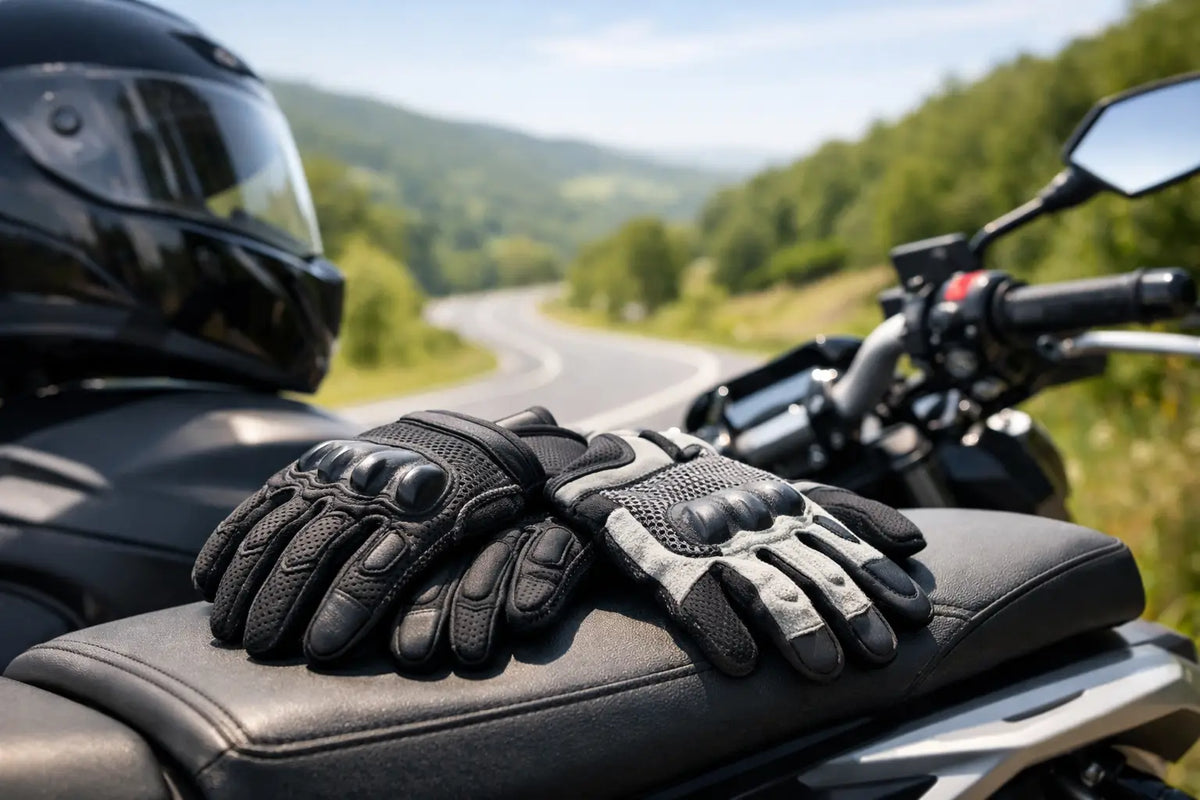
Hot pavement, stop-and-go traffic, and sweat building up inside your palms can ruin a ride fast. If you're asking what gloves are best for summer riding, the short answer is simple: lightweight, armored gloves with real airflow, solid palm protection, and a secure fit that does not turn sloppy once the heat kicks in.
A lot of riders make the same mistake in summer. They either wear thick three-season gloves and cook their hands, or they go too light and give up the protection that matters when things go sideways. The best summer riding gloves sit in the middle. They keep air moving, keep your grip steady, and still give you protection where it counts.
What gloves are best for summer riding and why?
The best summer gloves are usually short-cuff or mid-cuff designs built with a mix of mesh, perforated leather, textile, and hard or soft knuckle armor. They should feel light without feeling flimsy. If a glove breathes well but folds up like a cheap T-shirt, it is not road gear. If it protects well but turns your hands into a sweat box, it is the wrong tool for July and August.
For most street riders, a summer glove needs to do four jobs at once. It has to move air, manage sweat, protect your palms and knuckles, and keep a confident hold on the bars. Miss one of those and the glove starts working against you.
That is why there is no single perfect glove for every rider. A cruiser rider putting in easy highway miles in dry heat may want soft leather with perforation and simple armor. A sport rider hitting aggressive back roads may need more structure, finger sliders, and a tighter race-inspired fit. A commuter dealing with city traffic and red lights may care most about airflow, touchscreen use, and easy on-off convenience.
The features that actually matter in hot weather
Airflow is the first thing everybody notices, but it should not be the only thing you shop for. Open mesh across the back of the hand helps a lot, especially at speed, but airflow alone is not protection. Look for gloves that pair vented areas with a reinforced palm, knuckle coverage, and durable stitching. That is where the real value is.
Palm material matters more than many riders think. In a slide, the palm takes abuse fast. Leather or reinforced synthetic suede in the palm is a better bet than thin stretch fabric. If the glove has extra layers or sliders at the base of the palm, even better. That part of your hand is often the first to hit.
Knuckle protection is another big one. Hard knuckle armor gives strong impact coverage, while softer armor can feel more comfortable for all-day wear. Neither is automatically better. Hard armor usually wins for aggressive riding and higher-speed confidence. Soft armor often feels less bulky for casual riders and shorter trips.
Closure matters too. In summer, sweat changes fit. Gloves that felt fine in the garage can shift around once your hands get damp. A solid wrist closure helps the glove stay planted and keeps it from pulling off too easily in a crash. Hook-and-loop closures are common for a reason. They work.
Touchscreen fingertips are nice, but they should be a bonus, not the selling point. If a glove works with your phone but has weak seams and no palm reinforcement, that is fashion pretending to be riding gear.
Leather, mesh, or textile?
This is where trade-offs show up.
Leather summer gloves can be excellent because they offer strong abrasion resistance, a broken-in feel, and a classic look that fits cruiser and V-twin riders perfectly. If they are perforated in the right places, they can flow enough air for most warm-weather riding. The downside is that heavy leather can still run hot in brutal traffic or high humidity.
Mesh gloves usually win on airflow. If you ride in high heat, they can make a huge difference, especially at lower speeds where every bit of ventilation helps. The catch is that not all mesh gloves are built the same. Cheap mesh can wear out fast, and some ultra-light models give up too much protection to feel cool on the shelf.
Textile gloves sit in the middle. They can combine airflow, stretch, armor, and comfort pretty well. For commuting and mixed riding, they are often the practical choice. Still, construction quality matters. A well-built textile glove can outperform a bad leather glove every day of the week.
For many riders, the sweet spot is a hybrid glove - mesh or textile on the upper, leather or reinforced material in the palm, and solid armor over the knuckles.
Short cuff or gauntlet for summer?
Most riders looking for what gloves are best for summer riding end up in short-cuff gloves, and that makes sense. They are lighter, easier to pull on, and usually flow more air around the wrist. For daily street riding, cruising, and weekend runs, short cuffs are hard to beat.
Gauntlet gloves still have a place in summer, especially for riders who want extra wrist coverage or put in long highway days. Some warm-weather gauntlets are surprisingly breathable if they use perforated leather and vent panels. But in general, they are going to feel warmer and bulkier than a short cuff.
If your riding is mostly local, casual, or urban, short cuff is usually the smarter call. If you ride fast, ride far, or just want more coverage, a summer gauntlet may be worth the extra heat.
Fit makes or breaks a summer glove
A bad fit gets worse in hot weather. Gloves that are too tight will feel even tighter once your hands swell in the heat. Gloves that are too loose will twist, bunch, and kill bar feel.
You want a snug fit with no pressure points. Your fingertips should reach close to the end without being jammed. The palm should sit flat without extra material folding up when you grip the throttle. Armor should line up with your knuckles, not float above them or sit off to the side.
Break-in is normal, especially with leather, but do not buy a glove that already feels wrong and hope the road fixes it. It won't. A proper summer glove should feel controlled right away and more comfortable after a few rides, not the other way around.
Matching the glove to your riding style
Cruiser and touring riders usually do best with perforated leather or leather-textile hybrids that balance protection and all-day comfort. You want enough airflow to stay comfortable at fuel stops and traffic lights, but enough structure to handle long miles.
Sport and naked bike riders often prefer gloves with more aggressive pre-curve, stronger knuckle armor, and added palm or finger protection. These gloves may run warmer, but they give better control and more confidence when the pace picks up.
Commuters usually need practical features first. Easy entry, dependable grip in sweat, decent airflow, and enough protection for daily use matter more than race styling. If you ride every day, convenience starts to matter almost as much as armor.
If you ride in dry Southwest heat, maximum ventilation may be your top priority. If you ride in the Southeast, where humidity hits hard, sweat management and lining comfort become just as important as airflow. Heat is not one-size-fits-all, and your glove should match your climate.
What to avoid
The biggest trap is buying gloves that look cool but skip the basics. Thin fashion gloves, work gloves, and cruiser-style gloves with no real armor might feel good for ten minutes, but they are not built for asphalt.
Be careful with ultra-cheap gloves that advertise breathability but do not show reinforced palms, strong closures, or impact coverage. Summer gear should be lighter, not weaker. There is a difference.
Also watch out for bulky internal seams and rough liners. In hot weather, those little comfort issues get amplified fast. A glove that rubs when your hand is dry can become miserable once sweat shows up.
So what gloves are best for summer riding?
For most riders, the best choice is a lightweight armored glove with a breathable upper, reinforced palm, knuckle protection, and a secure wrist closure. That could mean perforated leather, mesh-textile hybrid, or a mixed-material street glove depending on your bike, your climate, and how hard you ride.
If your priority is maximum airflow, go with a quality mesh or textile-leather hybrid. If your priority is better abrasion resistance and classic biker style, go with perforated leather. If you want one glove that handles commuting, weekend rides, and hot-weather miles without fuss, look for a short-cuff hybrid with real protection and a clean, locked-in fit.
The right summer glove should disappear once the ride starts. No hot spots, no slippery palms, no fighting the controls, and no feeling like you traded safety for comfort. Get that balance right, and the miles feel better from the first green light to the last stretch home. Shop like a rider, not a spectator, and your hands will thank you every time the temperature climbs.



No comments yet. Be the first rider to weigh in.