
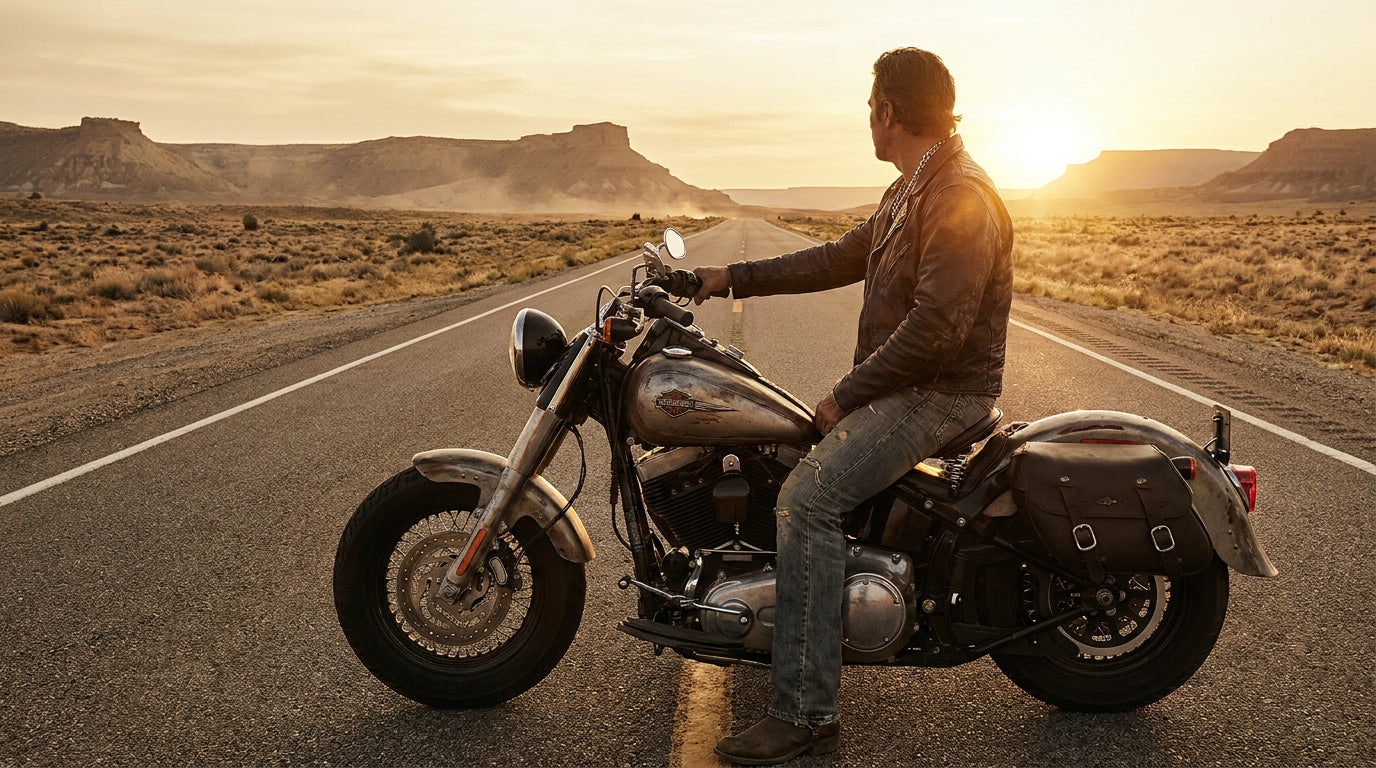
A rider without a chain is like a Harley without pipes. Something's missing. Whether you throw on a heavy Cuban link before a rally or wear a skull pendant on every ride, your biker necklace says more about you than your cut ever will. The problem? Half the chains sold online are thin, plated garbage that turns green after two rain rides.
This guide covers the real chain styles, the materials that survive road life, how to size one properly, and the mistakes that waste your money. By the end, you'll know exactly what to look for and what to skip.
What Makes a Chain a "Biker Chain"?
Not every men's necklace qualifies. A biker chain has three things going for it: weight, width, and material that can take a beating. Most start at 6mm wide and 60 grams or heavier. Anything thinner belongs on a dress shirt, not a leather vest.
The standard material is 316L stainless steel. It resists corrosion, holds up against sweat and rain, and costs a fraction of sterling silver. A solid 316L Cuban link in 10mm width runs about $25 to $70 depending on length. Sterling silver versions of the same chain start around $150 and climb fast.
Weight matters because it keeps the chain from bouncing around at speed. A 24-inch Cuban link in 10mm stainless steel weighs roughly 120 to 160 grams. You feel it sitting on your chest. That's the point. Lightweight chains flip around, catch on zippers, and feel like nothing's there.
The clasp is part of the equation too. Lobster clasps in stainless steel handle the weight of heavy chains without bending open. Spring rings are too small for anything serious. If the chain weighs over 100 grams, a lobster clasp is the only safe choice.

5 Biker Chain Styles Every Rider Should Know
Not all chains look the same, and each style sends a different signal. Here are the five you'll see at every bike night and swap meet across the country.
1. Cuban Link
The classic. Interlocking oval links that sit flat against the chest. The Miami Cuban is the most popular variation, with links pressed and cut so they lock together without gaps. Widths from 8mm to 14mm are the sweet spot for riders. Ice Cube made the Cuban link a cultural icon in the 1990s, and it never left biker culture. At 12mm width, a 22-inch Cuban link makes a statement without being over the top.
2. Figaro
A pattern of three short links followed by one longer link. It's lighter than a Cuban and works well with pendants because the long link gives them room to hang straight. A 22-inch Figaro in 7mm stainless steel typically weighs around 65 grams. Italian jewelers originated this style, and it remains one of the most recognizable chain patterns in the world.

3. Byzantine
Thick, intricate, and unmistakable. Byzantine chains use a weave pattern that dates back to the Eastern Roman Empire. They look complex but are surprisingly durable because each link supports the next. A 24-inch Byzantine in 8mm width weighs about 90 to 110 grams and catches light from every angle. This is the chain that gets the most questions from other riders at rallies.
4. Snake
Smooth, round, and flexible. Snake chains get their name from the way they move, fluid and almost liquid-looking. They work best as pendant chains because the flat surface lets a skull or cross pendant hang perfectly straight. The downside: snake chains kink if you bend them too sharply, and kinks are permanent. Keep them stored flat or hanging, never balled up in a pocket.

5. Rope
Twisted links that create a spiral texture. Rope chains are strong for their size and catch light well. A 5mm rope chain in stainless steel can handle a heavy pendant without stretching. Gold-tone rope chains are popular with riders who want flash without the gold price tag. At 6mm and above, rope chains hold their own as standalone pieces without any pendant.
Materials That Actually Survive Road Life
Material choice determines whether your biker necklace lasts five years or five weeks. Here's what you're working with.
| Material | Durability | Tarnish Resistance | Typical Price (24" Cuban) | Best For |
|---|---|---|---|---|
| 316L Stainless Steel | Excellent | High | $25 - $70 | Daily riding, rain, sweat |
| Titanium | Excellent | Very High | $50 - $120 | Lightweight comfort, allergies |
| Sterling Silver (.925) | Good | Moderate (patinas) | $150 - $400+ | Show pieces, special occasions |
| Gold-Plated Steel | Good base | Plating wears off | $30 - $80 | Flash on a budget (replate yearly) |
| Zinc Alloy / "Fashion" | Poor | None | $5 - $15 | Avoid for riding |
The bottom line: 316L stainless steel is the workhorse. It handles exhaust heat, summer sweat, and surprise rainstorms without turning color. Titanium is lighter and even more resistant but costs more and is harder to find in heavy biker styles. Sterling silver develops a patina that some riders love (and others polish off weekly), but it requires maintenance.
Zinc alloy and mystery-metal "fashion jewelry" from random marketplace sellers will corrode, irritate your skin, and break at the clasp within months. The price tag looks tempting at $8, but you'll replace it three times before a $40 stainless steel chain even shows wear.
If you're putting together a full set of biker chain bracelets, matching the material across your necklace and bracelet keeps the look consistent and avoids galvanic corrosion between different metals.

Pendant Styles Riders Actually Wear
A chain without a pendant works fine on its own. But if you want a centerpiece, these are the five designs that have stayed in biker culture for decades and show no signs of leaving.
Skull pendants remain the most popular by a wide margin. A solid stainless steel skull pendant weighing 30 to 50 grams pairs well with a Cuban or rope chain in 8mm or thicker. The skull has been a biker symbol since World War II, when fighter pilots and motorcycle dispatch riders adopted it as a good-luck charm.
Cross pendants are the second most common, ranging from simple Latin crosses to ornate Celtic designs with knotwork. A well-made cross pendant in surgical steel runs $15 to $35 and lasts for years. Eagle pendants represent freedom and the open road, and tend to run larger, often 2 to 3 inches tall. They need a sturdy chain, at least 8mm, to hang right.
Wolf pendants gained traction after the Sons of Anarchy series put MC culture back in the mainstream spotlight, and they've stuck around long after the show ended. Bullet and wrench pendants lean more mechanical, popular with riders who wrench on their own bikes and want their jewelry to reflect that.
Sizing rule: your pendant should weigh less than half the chain's total weight. A 150-gram Cuban link can handle a 60-gram skull pendant without drooping or pulling. Overload a lighter chain and the clasp becomes the failure point.
If you're into the skull aesthetic beyond necklaces, biker rings in the same stainless steel finish complete the set without clashing.

How to Pick the Right Chain Length and Thickness
Getting the wrong length is the most common buyer mistake with biker necklaces. A chain that sits too high looks like a choker. Too long and it disappears under your shirt or gets caught in your jacket zipper. Here's the breakdown.
| Chain Length | Where It Sits | Best Worn With |
|---|---|---|
| 18 inches | Base of the neck | T-shirts, open collar. Tight fit. Works best on slimmer necks. |
| 20 inches | Collarbone | Most popular length. Works with everything from tees to vests. |
| 22 inches | Just below collarbone | Pendants. Sits visible over a tee without riding too low. |
| 24 inches | Mid-chest | Heavy chains, layering, leather vests. The rally standard. |
| 28-30 inches | Lower chest / sternum | Statement chains worn outside jackets. Visible at a distance. |
For thickness, 8mm to 12mm is the range most riders land in. Below 6mm feels flimsy on anyone with broad shoulders. Above 14mm gets uncomfortable on longer rides because the weight concentrates on the back of your neck. A 10mm width at 22 to 24 inches is the most versatile setup for everyday wear on and off the bike.
Here's a quick way to measure: wrap a flexible tape measure around your neck where you want the chain to sit. If you don't have a tape measure, use a piece of string, then measure the string against a ruler. Add 2 to 4 inches to your neck measurement, and that's your target chain length.

How to Layer Biker Chains Without Looking Like a Costume
Layering two or three chains is popular, but there's a right way and a wrong way. The wrong way is three chains of the same length tangled into a knot. The right way uses different lengths so each chain sits at its own level.
A solid layering setup: one 18-inch chain tight at the base of the neck (a thinner rope or figaro works here), one 22-inch Cuban link with a pendant, and one 26-inch chain hanging below both. Keep the widths varied too. If your main chain is 10mm, use a 5mm or 6mm for the shorter and longer pieces. Three chains at 10mm each looks bulky and tangled.
Material matching still applies. Three stainless steel chains in silver tone look intentional. Mixing gold, silver, and copper across layers looks like you raided a clearance bin. Pick one metal tone and stick with it across all three layers.

5 Common Mistakes When Buying Biker Chain Jewelry
These come up constantly in forums and product reviews. Avoid them and you'll save money and frustration.
1. Buying plated chains expecting them to last. Gold or silver plating over base metal looks good for about 60 days of regular wear. Then the plating chips at the clasp, around the links, and anywhere friction occurs. If you want gold tone, buy gold-plated stainless steel, not plated zinc. The steel base will outlast the plating, and replating costs less than replacing the whole chain.
2. Ignoring the clasp type. Lobster clasps are the strongest for heavy chains. Toggle clasps look cool but can pop open during a ride if the chain bounces. Spring ring clasps are too small and weak for anything over 80 grams. Always check the clasp before you check the chain itself.
3. Ordering without measuring. A 20-inch chain on a guy with a 17-inch neck sits differently than on someone with a 15-inch neck. Two inches of difference changes whether the chain sits at your collarbone or your chest. Measure first, order second.
4. Buying from no-name marketplace sellers. The listing says "stainless steel" but the chain arrives weighing half what it should because it's hollow or made from pot metal. Genuine 316L stainless steel has real weight to it. If a 24-inch 10mm Cuban link weighs under 80 grams, it's not solid. Check reviews for weight complaints before ordering.
5. Wearing mismatched metals. A silver chain with a gold bracelet and a copper ring looks scattered, not styled. Pick one metal tone and build your set around it. Stainless steel plays well with silver-tone rings and bracelets. If you're mixing, keep it intentional, like a deliberate two-tone pairing rather than random pieces thrown together.
Your Chain, Your Call
A good biker chain is one of those pieces you put on and forget about until someone asks where you got it. Pick the right material, get the length dialed in, match it to how you actually ride, and stop overthinking it. The best chain is the one you wear every day without worrying about it.
If you're building out your chain jewelry setup, the biker chain bracelet collection is where most riders start to round out the look. Same 316L steel, same weight, same attitude.


No comments yet. Be the first rider to weigh in.