
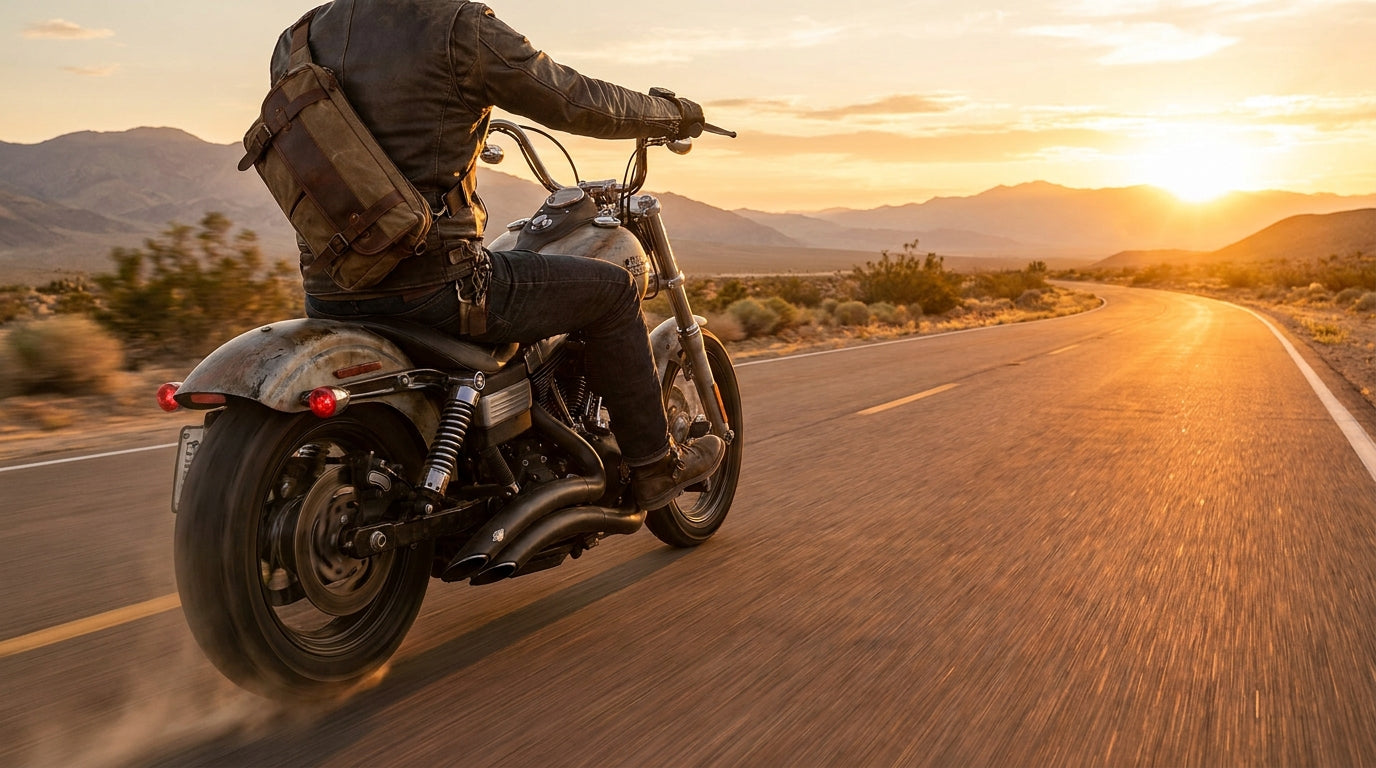
You pull into a gas station after 90 miles, swing off the bike, and realize your wallet is buried inside a locked saddlebag under a bungee cord. Two minutes of fumbling later, you swear you will find a better carry system. A motorcycle chest bag solves this exact problem in about three seconds. One hand, one zip, done.
This guide covers the best motorcycle chest bags for riders, what separates a good one from a cheap one, and which style fits your type of riding. Everything here is based on real product specs and rider feedback. By the end you will know what to spend on, what to skip, and how a chest bag stacks up against leg bags and tank bags.
Why Riders Are Switching to Motorcycle Chest Bags
The main draw is access speed. A chest bag puts your phone, wallet, keys, and toll money right in front of you. No reaching behind your back. No pulling over to dig through a saddlebag. You can grab your phone at a red light without even taking your gloves off if the bag has a clear-window pocket.
Weight distribution is the other big factor. A loaded backpack pulls on your shoulders and gets uncomfortable after about 60 miles. A tank bag shifts weight forward and can block your view of the gauges. A chest bag sits flat against your torso and moves with your body. The average chest rig weighs under 0.5 lbs empty and holds 2 to 4 liters of gear. That is enough for a phone, wallet, sunglasses, a multitool, and maybe a small water bottle.
The motorcycle chest bag trend started picking up around 2019 in urban riding circles and spread to touring and commuter riders within a couple of years. Brands like Kriega proved the concept with their Sling WP, a 3-liter waterproof bag that retails for around $65 and stays locked in place at triple-digit speeds. Once riders tried the format, most never went back to stuffing their jacket pockets.

What to Look for in a Motorcycle Chest Bag
Not every chest bag survives real riding. Here is what separates a motorcycle-grade bag from a fashion sling you would grab at a mall.
Strap system. A single diagonal strap is fine for walking around town. For riding at highway speed, you want either a Y-strap rig or a main strap with a secondary stabilizer clip that locks across your back. Without that second anchor point, the bag slides to your armpit or swings behind you the first time you hit 50 mph. This is the single biggest failure point in cheap chest bags.
Material and build. 600-denier nylon or Cordura is the standard for motorcycle bags. Leather works well for cruiser riders but adds weight. Thin polyester rips easily and soaks through in rain. Check the stitching at the strap junctions. Reinforced bar-tacking at stress points is the difference between a bag that lasts three years and one that fails in three months.
Water resistance. Sealed zippers or a roll-top closure keeps rain out. A bag rated IPX4 or higher handles real downpours. Anything marketed as just "water resistant" without a rating typically gives you about 10 to 15 minutes in steady rain before your phone screen starts fogging up from moisture.
Size. Stick to 2 to 4 liters. Bigger than that and the bag catches wind like a sail, blocks your mirrors, or bounces around. The sweet spot is a bag roughly the size of a paperback book when packed.
Closure type. Magnetic snaps are fast but can pop open at speed, especially on bumpy roads. YKK zippers are the industry standard and rarely jam. Buckle closures are the most secure option for highway riding but slower to open one-handed.

Best Motorcycle Chest Bag Styles for Different Riders
Tactical Nylon Chest Rigs
These borrow from the military and outdoor world. MOLLE webbing on the front panel lets you clip on extra pouches, a flashlight, or a radio. Most include a clear phone pocket so you can check GPS without opening anything. A solid nylon chest rig runs $25 to $45 and weighs around 6 oz empty.
The Condor Recon chest rig is a popular choice among adventure riders for its adjustable dual-strap system and 4 built-in magazine-style pouches that double as phone and tool holders. The drawback with tactical-style bags is the look. They pair well with riding jackets and casual gear but stand out if you use the bag off the bike at restaurants or stores. For riders who care more about function than fashion, they are hard to beat at this price point.

Leather Chest Bags for Cruiser Riders
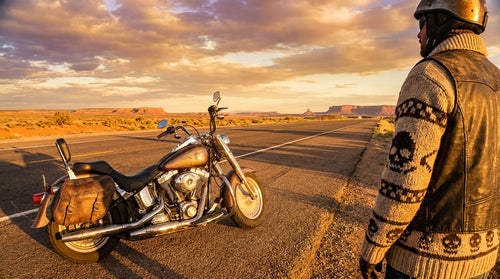
If you ride a Harley-Davidson Softail or an Indian Chief, a nylon tactical rig does not match the vibe. A leather chest bag keeps the classic biker look while giving you the same quick access. Quality matters more here than in any other category. Full-grain or top-grain leather breaks in over time and develops a patina that matches your jacket and boots. Bonded leather, which is just glued scraps pressed together, cracks and peels within a few months of sun exposure.
A genuine leather motorcycle chest bag starts around $40 to $60 for a basic design. Look for antique brass or matte black hardware, reinforced stitching, and a lining that will not scratch your phone screen. Some leather bags include a snap-open belt loop on the back so you can convert them from a chest rig to a belt pouch at your destination. That kind of versatility is worth paying a little extra for.

Waterproof Chest Bags for Touring and Commuting
Long-distance riders deal with weather that changes three times in a single ride. A welded-seam chest bag with an aqua-guard zipper or roll-top closure keeps everything dry without needing a separate rain cover.
Kriega's Sling WP sets the benchmark at $65 with fully waterproof construction, a 3-liter capacity, and reflective panels for night visibility. For budget-friendly options, look for bags with a minimum IPX4 rating and taped seams. Reflective strips or hi-vis panels are a genuine safety bonus if you commute at dawn or dusk.
A bag that keeps your phone, wallet, and house keys dry through a 2-hour rainstorm is worth more than a $200 jacket pocket that does the same job but takes 10 minutes to access. When you are comparing waterproof chest bags for motorcycle riding, check whether the waterproofing is built into the fabric (welded seams) or added as a coating (DWR spray). Coatings wear off after 20 to 30 washes or a season of UV exposure. Welded seams last the life of the bag.

How to Wear a Motorcycle Chest Bag Properly
Placement makes or breaks the experience. Position the bag on your upper chest, centered or slightly off to one side. Too low and it presses into your stomach during hard braking. Too high and it sits under your chin and blocks your view of the road.
Tighten the straps until the bag sits snug but does not restrict your breathing or arm movement. You should be able to do full lock-to-lock handlebar turns without the bag shifting. Once you hit the highway, check that it stays flat against your body and does not flap in the wind.
One detail most riders overlook: route the main strap under your jacket, not over it. This prevents the strap from catching wind and vibrating against your neck at speed. It also stops the bag from swinging when you lean into turns. If your jacket has a collar or high neck, run the strap under it for the most secure fit.
For riders who wear a chest bag with body armor or a back protector, test the fit before heading out. Some armor panels sit in the same zone as the bag, and the two can stack uncomfortably. Moving the bag 2 inches to the side usually fixes the overlap without changing your access angle.
Motorcycle Chest Bag vs Leg Bag vs Tank Bag
Each bag type has a job it does best. Here is how they compare side by side.
| Feature | Chest Bag | Leg Bag | Tank Bag |
|---|---|---|---|
| Access speed | Fastest (front of body) | Fast (thigh level) | Medium (lean forward) |
| Capacity | 2 to 4 liters | 1 to 3 liters | 5 to 20 liters |
| Wind drag | Low | Moderate | High on sport bikes |
| Long-ride comfort | Good | Can restrict leg movement | Good |
| Best for | Phone, wallet, keys | Phone, wallet, small tools | Maps, snacks, camera |
| Price range | $20 to $70 | $25 to $60 | $40 to $150 |
A chest bag wins for quick-access essentials. A motorcycle leg bag gives you similar access but can feel heavy on your thigh after a few hours of continuous riding. A motorcycle tank bag holds far more gear but requires leaning forward and unzipping to reach anything.
Some riders use both a chest bag and a leg bag on longer rides. That combo covers phone and wallet (chest) plus tools and sunglasses (leg) without needing a full backpack. For day trips under 200 miles, a chest bag alone handles everything most riders carry.
5 Mistakes Riders Make Choosing a Motorcycle Chest Bag
1. Buying too big. A 6-liter chest bag catches wind at highway speed and bounces around when you lean into corners. Stick to 2 to 4 liters. If you need more capacity, add a tank bag instead of upsizing your chest rig.
2. Skipping the stabilizer strap. That $12 single-strap sling bag from a marketplace seller will spin to your back the moment you hit 50 mph. Any bag marketed for motorcycle use should have a secondary chest clip, a back stabilizer, or a full dual-strap setup.
3. Ignoring zipper quality. Cheap zippers corrode after a few rain rides and jam when you need them most. YKK zippers are the industry standard and cost the manufacturer roughly $0.30 more per unit. That tiny cost difference adds years of reliable use.
4. Wearing it too low. The bag should sit on your upper chest, not your stomach. A low-mounted bag interferes with your riding position, blocks airflow to your core, and can shift forward under hard braking.
5. Choosing fashion over function. A $15 faux-leather chest bag from a fast-fashion brand will not survive one rainy commute. The strap stitching fails, the material peels, and the zipper corrodes within weeks. Spending $30 to $50 on a bag built for the road saves you from replacing it every few months. American Legend Rider's riding bags are built with genuine leather and tested hardware, exactly the kind of quality that holds up season after season.
If you are shopping for a riding bag that actually holds up on the road, the motorcycle bags collection at American Legend Rider has leg bags, sling bags, and chest-ready options built for real riders. Genuine leather, solid hardware, and free shipping on every order.

No comments yet. Be the first rider to weigh in.