
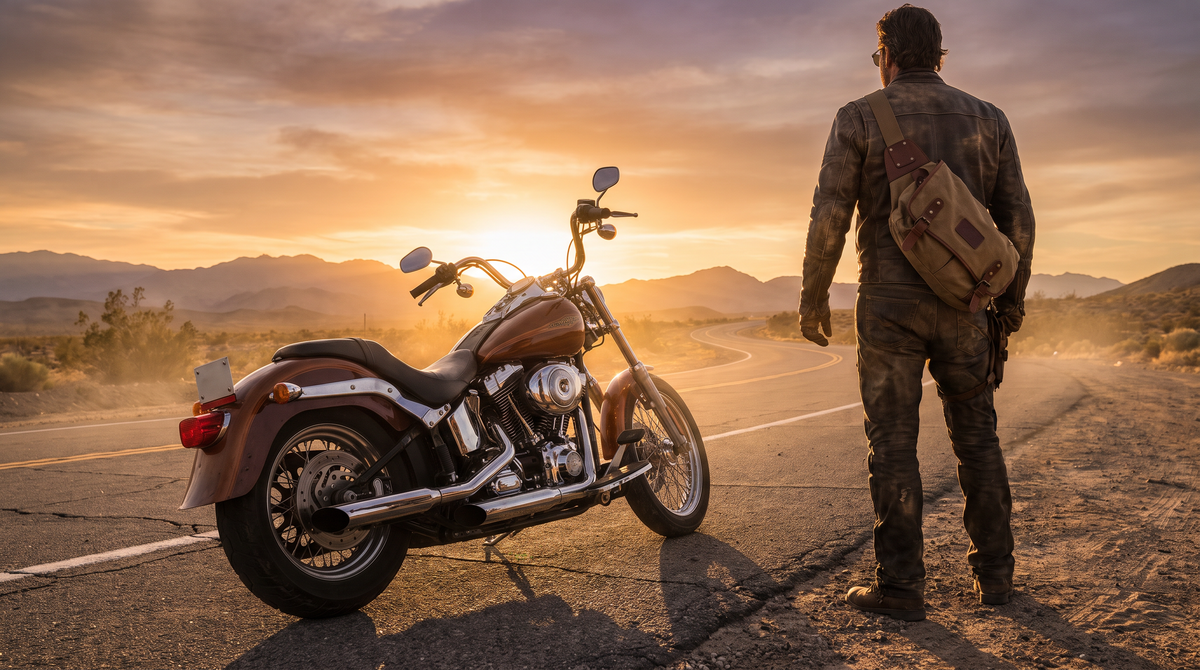
You pull into a gas station, swing off the bike, and realize your phone, wallet, and sunglasses are scattered across three jacket pockets and a tank bag you forgot to zip. A good motorcycle sling bag fixes that problem in one move. It sits tight across your chest or back, stays locked down at highway speed, and gives you one spot for everything you actually need on the road.
This guide breaks down what separates a real riding sling bag from a fashion accessory that flaps around at 50 MPH. You will walk away knowing the right size, the right material, and the right features for your riding style, plus five specific bags that actually deliver.
What Makes a Motorcycle Sling Bag Different from a Regular One
Regular sling bags are built for walking around a city. Motorcycle sling bags are built for 70 MPH wind, rain, and vibration. The differences are structural, and they matter the second you hit the highway.
First, the strap system. A riding sling bag uses a wide, padded strap with an adjustable sternum clip or secondary buckle. That second anchor point keeps the bag from sliding around your torso when you lean into a curve. Without it, the bag migrates to your armpit within 10 minutes of riding. Most quality sling bags for riders use straps that are 2 inches wide or more, compared to the 1-inch straps on standard city bags.
Second, water resistance. Most quality motorcycle sling bags use 600D to 1680D nylon or PU-coated polyester with sealed zippers. A good benchmark: the bag should survive a 30-minute ride in steady rain without soaking your phone. Some come with a separate waterproof cover for heavier storms. The denier number tells you fabric toughness. Cordura 1000D is the industry benchmark for motorcycle gear. Anything below 400D will scuff through on rough leather within a season.
Third, low-profile fit. A backpack catches wind like a sail. A properly sized sling bag, typically 8 to 12 liters, tucks close to your body and creates almost no drag. At 65 MPH, a bag that sticks out even 3 inches from your body generates roughly 2 to 4 pounds of sideways wind load. That sounds small, but over 200 miles it pulls your shoulder out of alignment and creates fatigue.
Best Motorcycle Sling Bag for Everyday Riding
For most riders, the sweet spot is a waterproof crossbody chest bag in the 8 to 10 liter range. It holds a phone, a slim wallet, keys, sunglasses, and maybe a rain layer or a small water bottle. Anything larger starts catching wind and pulling on your shoulder.
The Sling Bag for Men Waterproof Crossbody Chest Bag is built exactly for this use case. At $54.97, it uses water-resistant material with a clean crossbody design that sits flat against the chest. The main compartment fits a phone up to 6.7 inches, and the secondary pocket keeps smaller items from rattling around. The strap adjusts wide enough to fit over a leather jacket, which is a detail a lot of fashion sling bags miss completely. It is the kind of bag you throw on for a day ride or a commute and forget it is there.

Best Motorcycle Sling Backpack for Longer Rides
If you need more room, say for a camera, a tablet, tools, or extra layers, step up to a sling backpack in the 12 to 15 liter range. These shift the weight slightly higher on your back, which keeps the center of gravity closer to your shoulders rather than pulling sideways on your hip.
The Motorcycle Sling Bag for Men Waterproof Crossbody Backpack at $69.95 is the larger option in the lineup. It is waterproof, has an organizer pocket layout with separate compartments for electronics and tools, and runs a wider strap that distributes weight better over long distances. If you are doing a full-day ride with stops, this is the one to grab. The knapsack-style design also works off the bike, so you do not look out of place walking into a restaurant or a store.
One practical note: even with the larger size, keep total loaded weight under 6 lbs for rides over 2 hours. A heavier bag creates a pulling force on your shoulder socket that compounds with road vibration. If you need to carry more than that, a tank bag or tail bag is the better tool for the job.

Motorcycle Sling Bag for Men: Sizing and Fit Guide
Fit matters more than features when it comes to a motorcycle sling bag for men. A bag that is too loose bounces. A bag that is too tight restricts shoulder movement and makes head checks harder. Here is how to dial it in correctly.
- Strap length: Adjust so the bag sits at your lower ribs (chest carry) or between your shoulder blades (back carry). Most adjustable straps run 28 to 52 inches, which covers chest sizes from 34 to 48 inches.
- Bag width: Should not extend past your shoulder line. Anything wider than 7 inches across the face catches crosswind and increases drag.
- Weight when loaded: Keep it under 5 lbs total for chest carry, under 6 lbs for back carry. Exceed those numbers and your shoulder takes the hit after about 45 minutes.
- Strap width: 2 inches minimum. Anything narrower digs into the trapezius muscle under load and over a jacket.
One detail riders miss: try the bag over your riding jacket, not a t-shirt. A leather jacket adds 1 to 2 inches to your chest circumference. If the strap barely fits over a t-shirt, it will not work over gear. Also test the strap adjustment while wearing gloves. If you cannot tighten or loosen it with gloved hands, it is useless on the road.
Sling Bag vs. Leg Bag vs. Tank Bag: Which One Works Best
Every rider carries gear differently. Here is an honest comparison of the three most popular on-bike bag styles so you can pick the right one for how you actually ride.
| Feature | Sling Bag | Leg Bag | Tank Bag |
|---|---|---|---|
| Capacity | 8 to 15 liters | 1 to 3 liters | 5 to 30 liters |
| Access while riding | Quick (swing to front) | Instant (thigh-mounted) | Moderate (lean forward) |
| Wind drag at speed | Low | None | Moderate to high |
| Works off the bike | Yes, looks normal | Stands out | Awkward to carry |
| Stays with you when parked | Yes | Yes | Must remove or risk theft |
| Best for | Day rides, commuting | Phone, wallet, keys only | Touring, long trips |
| Typical price range | $30 to $80 | $25 to $60 | $50 to $200+ |
For riders who want phone-and-wallet access without removing the bag, a leg bag wins on convenience. For everything else, a sling bag gives you the most flexibility between riding and walking around. Tank bags work best for touring where volume matters more than quick access. Many riders end up owning both a sling bag for daily riding and a tank bag for longer trips.

5 Features That Separate Good Sling Bags from Bad Ones
Not every feature matters equally. These five separate a bag that lasts multiple seasons from one that falls apart or annoys you within weeks.
1. Water-Resistant Zippers
Standard zippers let water in through the teeth. YKK water-resistant zippers or rubberized zipper flaps are worth paying for. One unexpected 20-minute downpour will prove this point when your phone screen is fogging up inside a cheap bag.
2. Reflective Strips or Panels
A bag on your chest or back is prime real estate for visibility. Even a 2-inch reflective strip on the strap adds meaningful visibility at night. The NHTSA reports that 33% of fatal motorcycle crashes happen between 6 PM and midnight, exactly when a reflective detail on your bag catches headlights.
3. Anti-Theft Pocket
A zippered pocket on the body-facing side of the bag keeps your phone and cash secure at crowded gas stations and rally stops. It is pressed against your back, so no one can access it without you knowing. Simple feature, but it matters anywhere you park in a crowd.
4. Padded Strap with Breathable Mesh
Neoprene or EVA foam padding with mesh backing prevents the strap from digging into your shoulder and trapping sweat. This is the difference between a 20-minute ride and a 4-hour ride feeling comfortable. In summer riding at 90+ degrees, a non-breathable strap creates a sweat stripe down your chest that takes hours to dry.
5. Quick-Release Buckle
A magnetic or side-release buckle lets you take the bag off in one motion with gloved hands. Helpful at gas stations, rest stops, or if you need to remove it fast in an emergency. Avoid bags that use only a slider adjustment with no buckle. Those require two hands and fine motor control you do not have in gloves.

Common Mistakes Riders Make with Sling Bags
These show up over and over in riding forums and gear reviews. Avoid them.
Overloading the bag
A 10-liter sling bag packed to 15 liters of gear changes your center of gravity. It pulls your shoulder down on one side, which affects steering input over time. At highway speed, even a half-pound shift to one side creates a constant correction your arms have to fight. Pack only what you need for that specific ride.
Wearing it too low
If the bag hangs at your hip, it swings outward in every turn. The bottom edge of the bag should sit no lower than your belly button. Any lower and centrifugal force in turns works against you, pulling the bag away from your body at exactly the wrong moment.
Skipping the stabilizer strap
If your bag has a secondary chest or waist strap, use it. Riders who skip it report the bag shifting to one side within the first 20 miles. That shift becomes a distraction, and distractions at speed are dangerous.
Buying fashion-first, function-second
A bag that looks great in a mirror but uses uncoated canvas and standard zippers will soak through in 10 minutes of rain. Always check the denier rating and water resistance specs before the color options. A 200D polyester bag from a fashion brand will not survive one season of real riding.
Ignoring the return policy
Fit is personal. A bag that works perfectly for a 5-foot-8 rider might sit wrong on someone 6-foot-3. Buy from a seller with a real return policy so you can test it on an actual ride, not just in a parking lot.

How to Wear a Motorcycle Sling Bag the Right Way
This sounds basic, but most riders get it wrong the first time. Here is the correct setup, step by step.
- Put your jacket on first. Always fit the bag over your outer layer. Putting it under a jacket restricts access and bunches the jacket fabric.
- Sling the strap over your left shoulder if you are right-handed (bag sits on right hip or chest). Reverse if left-handed. This keeps your dominant hand free to grip the throttle naturally without the strap interfering.
- Pull the bag to your chest or center back. Do not let it sit on your side. Center it so the weight distributes evenly.
- Cinch the strap until the bag does not move when you twist your torso left and right. You should be able to do a full head check without the bag shifting.
- Buckle the stabilizer if there is one. Test by leaning forward into a riding position. The bag should not slide toward your neck.
One more tip: do a parking lot test before hitting the highway. Ride a few slow figure-eights and make two or three hard stops. If the bag shifts at 15 MPH, it will be worse at 65.
If you are shopping for a riding sling bag that is built for actual riding, not just style, the motorcycle bags collection is where to start. Every bag there is tested for wind, water, and on-bike fit.


No comments yet. Be the first rider to weigh in.