You are doing 65 on a two-lane highway and a hornet bounces off your chin. Or a cloud of dust hits you broadside at a desert intersection. Or the temperature drops 20 degrees after sundown and your face goes numb by the next gas stop. A skull face mask fixes all three problems, and it does it with more attitude than a plain black neck gaiter ever could.
This guide breaks down every type of skull face mask riders actually use on the road: full-coverage balaclavas, lightweight motley tubes, and classic cotton bandanas. You will see the real materials, the fit differences, and which style works best for your kind of riding. No guesswork, just what works at highway speed.
Why Riders Choose Skull Face Masks Over Plain Ones
A face mask is a face mask, right? Not quite. Skull-print masks outsell plain black models by a wide margin in the biker gear market, and the reason is simpler than you might think: visibility and identity. A rider in all-black gear blends into the road. A skull face mask makes you instantly recognizable in a group ride, easier to spot in a mirror, and harder to forget at a rally.
But the practical side matters more. A good riding mask with a skull print blocks wind, road debris, UV rays, and cold air. The printed design sits on top of the same technical fabrics (polyester microfiber, neoprene, moisture-wicking cotton blends) that plain performance masks use. The skull pattern does not compromise breathability or stretch. It just looks better doing the job.
One thing to watch: cheap no-name masks from random online sellers often use low-grade ink that fades after two or three washes. The skull design peels, cracks, or turns into a gray blur. Quality masks use sublimation printing, where the ink bonds into the fibers instead of sitting on the surface. That is the difference between a mask that looks sharp after 50 rides and one that looks washed out after 5. If you have ridden with a faded mask stuffed in a pocket for months, you already know the difference.
The 3 Main Types of Skull Face Masks
Not all skull face masks work the same way. The three main styles each cover different amounts of your face, fit differently under a helmet, and suit different riding conditions. Here is how they break down.
Full-Coverage Balaclavas
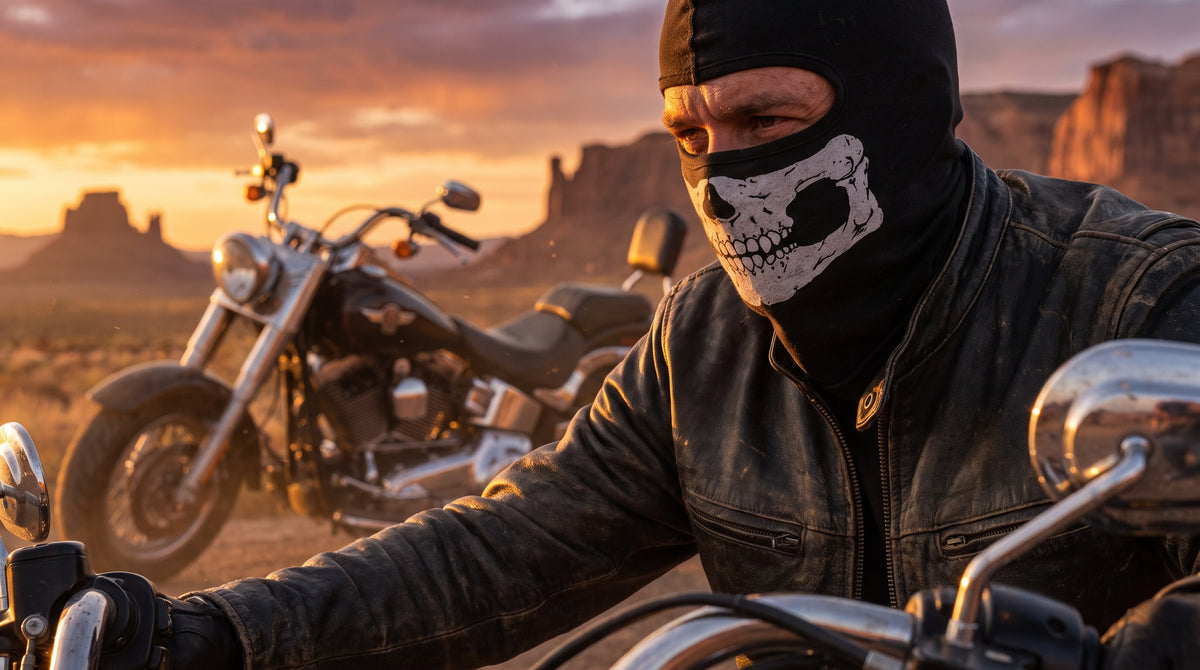
A skull balaclava covers your entire head, from the top of your skull down past your neck. Most leave an opening just for your eyes (some have a wider mouth opening too). This is the warmest option and the best choice for cold-weather riding. A polyester balaclava weighs around 2-3 ounces and fits flat under a full-face or half-shell helmet without bunching.
The skull print on a balaclava typically wraps from jawline to forehead, creating a full skeletal face effect. It is the most dramatic look and the most protective option. Wind cannot sneak in around the edges because there are no edges. The fabric covers everything.

Motley Tubes and Neck Gaiters
A motley tube is a seamless polyester tube (roughly 10 inches wide and 18 inches long) that you pull over your head and position where you need it. Wear it as a face mask, pull it down as a neck gaiter, stretch it up as a headband, or fold it into a bandana. The 4-way stretch means one size fits most riders, and the seamless construction means no stitching digs into your skin under a helmet strap.
For warm-weather riding, a motley tube is the go-to. The single layer of microfiber polyester breathes better than a two-layer balaclava, dries in minutes if you sweat through it, and packs down to the size of a fist in your saddlebag. The skull print runs the full length of the tube.

Skull Bandanas and Head Wraps
The classic biker bandana has not gone anywhere. A cotton skull bandana ties behind your head and covers your nose and mouth. It is the lightest option (under 2 ounces for a standard 21x21 inch square), the easiest to put on one-handed at a stoplight, and the most breathable in hot weather. Cotton absorbs sweat instead of wicking it, so it keeps your face cooler through evaporation on a 95-degree ride.
The trade-off: bandanas shift more than tubes or balaclavas, and they do not cover your neck or ears. For pure summer riding and short runs around town, a skull bandana is hard to beat. For highway miles, you might want something that stays put without retying.

Materials Comparison: What Holds Up at 70 MPH
The fabric matters as much as the fit. Here is a side-by-side of the four most common skull face mask materials and how they perform in real riding conditions.
| Material | Breathability | Warmth | Dry Time | Best For |
|---|---|---|---|---|
| Polyester Microfiber | High | Low-Medium | 10-15 min | Summer rides, all-around use |
| Neoprene (2mm) | Low | High | 1-2 hours | Cold weather, wind blocking |
| Cotton Blend | High | Low | 30-60 min | Hot weather, short rides |
| Fleece-Lined Poly | Medium | High | 45-60 min | Fall/winter touring |
Polyester microfiber is the best all-around choice for most riders. It handles heat, wicks sweat, dries fast, and holds sublimation-printed skull designs without fading. Neoprene is the cold-weather specialist but traps moisture and can feel clammy if the temperature rises mid-ride. Cotton breathes well and feels comfortable, but it stays wet longer and the prints do not last as many wash cycles.
How to Wear a Skull Face Mask Under a Helmet
The number-one complaint about face masks and helmets is bunching. The mask rides up, folds over itself, or creates a pressure point under the cheek pads. Here is how to avoid that with each type.
Balaclava under a full-face helmet: Pull the balaclava on first, smooth it flat against your face, then slide the helmet on from front to back (not straight down). Tuck the neck portion inside your jacket collar. A thin polyester balaclava (under 3 oz) fits better than a thick fleece one under tight-fitting helmets like the Shoei RF-1400.
Motley tube under a half-shell: Position the tube so the skull design sits centered on your face with the top edge just below your eye line. The tube stays in place by tension alone, so it works best with half-shell and 3/4 helmets that do not press on the fabric. Under a full-face helmet, fold the top edge down once so it clears the chin bar.
Bandana under any helmet: Tie it behind your head first, then put the helmet on. The knot should sit below the helmet's rear edge so it does not create a lump. If it shifts during riding, switch to a tube style for longer trips.
Skull Balaclava vs. Skull Motley Tube: Which One Do You Need?
This is the question most riders land on. Both cover your face, both fit under a helmet, and both come in skull prints. The difference comes down to coverage and season.
Pick a skull balaclava if you ride in temperatures below 50°F regularly, if you want full head-and-neck coverage in one piece, or if you ride with a half-shell helmet and want ear protection. The balaclava eliminates the gap between your helmet and jacket collar where cold air sneaks in at speed.
Pick a skull motley tube if you ride mostly in warm or mild weather, if you want one mask you can wear five different ways, or if you want the lightest option that packs small. The tube is more versatile but less warm. Many riders carry both and swap based on the forecast.
A practical setup: keep one skull balaclava and one skull motley tube in your saddlebag or tail bag. Grab whichever one matches the ride.
5 Skull Face Mask Mistakes That Cost Riders Comfort
Riders make the same handful of errors when buying and wearing skull face masks. Avoid these and your mask will last longer and feel better on every ride.
1. Buying based on the print alone. The skull design catches your eye, but the material determines whether you enjoy wearing it. A cheap polyester mask from an unknown brand might have a great-looking skull and terrible fabric that pills, stretches out, and loses its print after a few washes. Check the material weight (150-200 GSM polyester is the sweet spot for motorcycle use) before you look at the pattern.
2. Wearing a thick mask in summer. A neoprene skull mask in 90-degree heat is miserable. Your face overheats, your visor fogs, and you end up pulling the mask down after ten minutes. Match the material weight to the season. Thin microfiber or cotton for summer. Neoprene or fleece-lined for winter. Period.
3. Ignoring the helmet fit. That skull balaclava might fit great on its own but add 2-3mm of thickness inside your helmet. If your helmet already fits snug, try the mask on with the helmet before you commit to wearing it on a long ride. A too-tight fit creates headaches (literally) after an hour.
4. Machine-drying printed masks. High heat in the dryer breaks down sublimation prints faster than anything else. Hang-dry your skull-print gear and the design will stay sharp three times longer. This applies to all printed performance fabrics, not just masks.
5. Settling for marketplace knockoffs. Random sellers on big marketplaces list skull masks for $3-5 with stolen product photos. The masks that show up are thinner than advertised, the print is off-center, and the elastic gives out in weeks. Spending $15-25 on a mask from a brand that actually stocks and ships biker gear gets you a product that holds up for seasons, not days. That is not upselling. That is the reality of printed textile pricing.
What to Look for When You Buy
A quick checklist before you add a skull face mask to your cart:
- Sublimation printing (ink bonded into the fiber, not screen-printed on top)
- 4-way stretch fabric so it fits flat under a helmet without bunching
- Reinforced stitching at the seams (or seamless construction for tubes)
- UPF 30+ rating if you ride in direct sun regularly
- Machine-washable with hang-dry instructions for the print
One more thing: size matters more than most riders expect. A mask that fits a 22-inch head measurement feels completely different from one sized for a 24-inch head. Most motley tubes and balaclavas are sold as "one size fits most," and that works because 4-way stretch polyester accommodates a wide range. But neoprene has less give. If you have a larger head, check whether the brand offers an XL option before ordering a neoprene skull mask.
If you are looking for skull-design masks built for riding, the skull mask collection at American Legend Rider has balaclavas, motley tubes, and bandanas that check every box above. All designs use sublimation printing on motorcycle-grade fabrics, and every item ships from a real warehouse with actual inventory, not a dropship mystery package from overseas.
For the rest of your riding setup, pair your mask with a matching skull helmet or a set of riding goggles for full face protection that looks cohesive on and off the bike.
No comments yet. Be the first rider to weigh in.