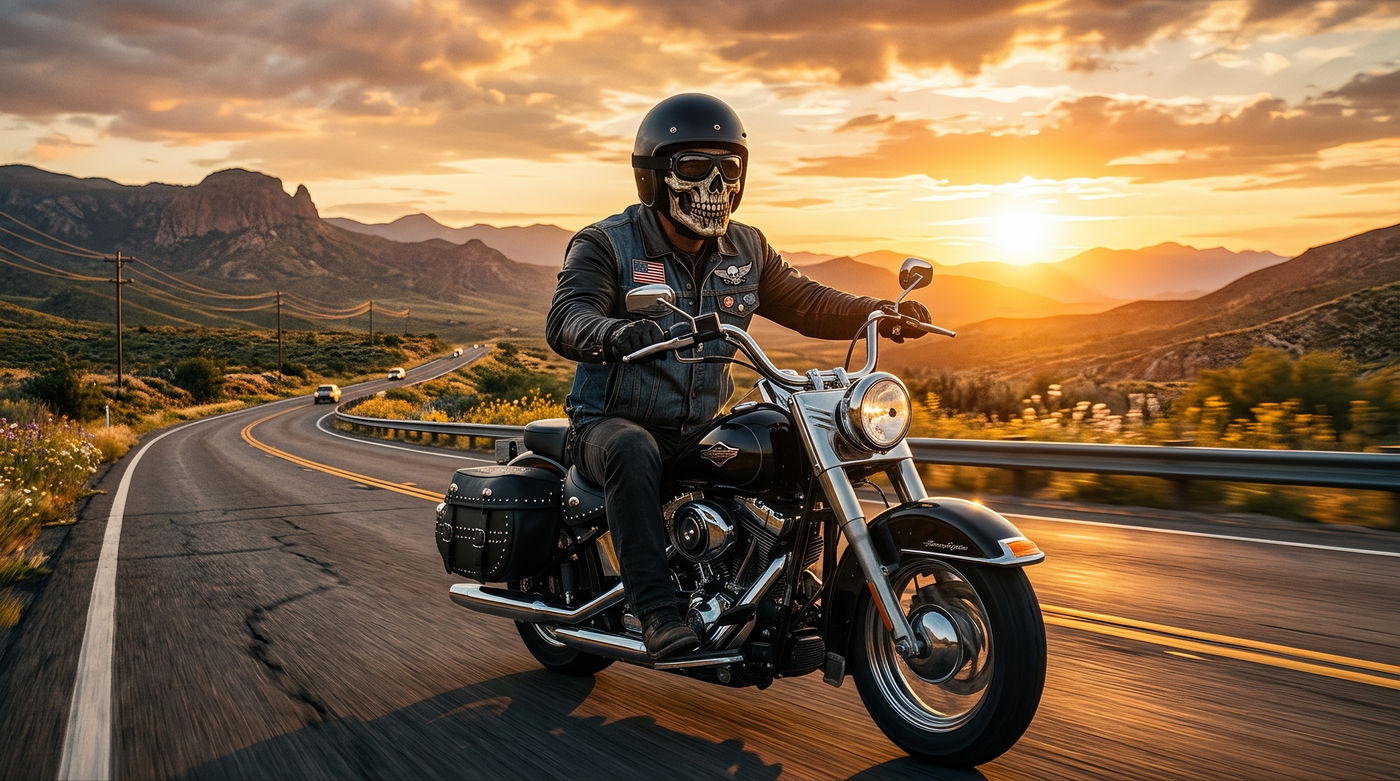
Most riders grab a skull face mask because it looks good. That's a fine reason. But the gap between a mask that stays put at 70 mph and one that slides up past your nose before the second stoplight comes down to material, cut, and stitching. Pick wrong and you'll spend more time adjusting than riding. The cheapest option usually means the worst fit, and a mask you keep pulling up is a mask you'll stop wearing after one ride.
Below you'll find every type of skull face mask for motorcycle riders, from full balaclavas to neoprene half-masks and polyester neck tubes. You'll learn which materials survive highway speeds, which designs fit under a helmet without bunching, and where cheap skull masks fall apart after a few washes. Whether you ride a cruiser, sport bike, or touring rig, there's a skull mask here that fits your setup and your climate.
Why Riders Choose a Skull Face Mask
Style matters, but a skull face mask does real work on the road. At 60 mph, wind chill drops the effective temperature by roughly 15 to 20 degrees Fahrenheit depending on humidity. That's the difference between a comfortable cruise and a jaw that goes numb after 20 minutes. A face mask blocks that windburn, along with road debris, bugs, and the grit that kicks up behind trucks on the interstate.
Sun protection is the other big factor. Standard polyester fabric blocks about 85% of UV rays, and thicker neoprene blocks even more. Riders covering long distances in direct sun, especially across the Southwest, stack real UV damage on the nose and cheeks over a full riding season. A mask fixes that problem without needing to reapply sunscreen every two hours while wearing gloves.
Bug strikes are a smaller issue at city speeds but a genuine annoyance on the highway. A June ride through the Midwest at dusk means hundreds of insects per mile. A mask keeps them off your lips and out of your mouth, which sounds obvious until you've ridden without one through a cloud of gnats at 65 mph.
Then there's the identity factor. A biker skull face mask signals a particular attitude. It's not aggressive. It's the rider equivalent of wearing your team's jersey. You see another rider at a gas station rocking a matching skull balaclava, and there's an instant nod. That's community, and it's part of why skull designs outsell every other face mask pattern in the motorcycle market.

Types of Skull Face Masks for Motorcycles
Not every skull face mask works for every ride. The style you need depends on weather, helmet type, and how long you're in the saddle. Here are the main categories and when each one makes sense.
Full Balaclava
A skull face mask balaclava covers your entire head, neck, and face with a single opening for your eyes. Made from stretchy polyester or spandex blends, most weigh under 3 oz and fit comfortably under a full-face or half-shell helmet. The Skull Balaclava Full Face Mask from ALR uses a single-piece tube-cut polyester design that eliminates pressure points under a helmet strap. No seam runs across the forehead or cheeks, so there's nothing to dig in during a long ride.
Full balaclavas are the top choice for cold-weather rides and long highway stretches where wind chill is a real factor. They also keep your helmet liner cleaner because sweat and skin oil hit the balaclava instead of the pads. Riders who do 200+ mile days often keep two in rotation so one can air out while the other is in use.
Neoprene Half Mask
A neoprene skull face mask covers your nose, mouth, and chin but leaves the top of your head open. Neoprene runs 2 to 3mm thick, blocks wind almost completely, and retains warmth in temperatures down to about 35 degrees Fahrenheit. The trade-off: it doesn't breathe well above 70 degrees. That trapped heat gets old fast in summer traffic.
Half masks with Velcro closures fit under any helmet type and come off fast at stops. Most neoprene models also feature a filter pocket or perforated breathing holes near the mouth. If yours doesn't have those holes, you can punch two small ones with a leather punch without compromising the structure. Just keep them under a dime in diameter.
Polyester Neck Tube (Motley Tube)
Thin, stretchy tubes you pull up over your nose or wear around your neck. The USA Flag Skull Motley Tube runs about $17.95 and works as a neck gaiter, face cover, or headband depending on how you fold it. Polyester tubes breathe better than neoprene and dry fast when you sweat through them. They weigh almost nothing, pack flat in a jacket pocket, and work as a backup even when you're riding with a primary mask.

Bandana Style
The classic triangle bandana tied behind the head. Less coverage than a tube or balaclava, but easy to pull down at a stoplight. Works best under a half helmet for short rides in mild weather. A standard cotton bandana only blocks about 40% of wind compared to neoprene's 95%, so it's more about style than protection at highway speed. Still, for a 20-minute ride to a bike night or a rally parking lot cruise, a bandana with a skull print does the job.
Skull Face Mask Material Comparison
Material is the single biggest factor in whether your mask works or fails on the road. Here's how the main options stack up for motorcycle use.
| Material | Wind Block | Breathability | Best Temp Range | Durability | Price Range |
|---|---|---|---|---|---|
| Neoprene (2-3mm) | 95%+ | Low | 30-55°F | High, 2-3 seasons | $15-30 |
| Polyester/Spandex | 60-70% | High | 45-85°F | Medium, 1-2 seasons | $10-25 |
| Cotton | 40-50% | Medium | 55-80°F | Low, absorbs sweat | $5-15 |
| Fleece-Lined | 90%+ | Very Low | 20-45°F | High | $20-40 |
For most riders, a polyester skull face mask handles three seasons well. Add a neoprene half mask for winter rides, and you're covered year-round without buying five different masks. The two-mask setup runs about $35 to $50 total and lasts most riders two full seasons before the elastic starts to give.
How to Fit a Skull Face Mask Under Your Helmet
The most common complaint about motorcycle skull face masks is bunching under the helmet. The wrong fit creates hot spots on the forehead or cheeks that turn a great ride into a headache. Here's how to get it right.
With a full-face helmet, a thin polyester balaclava works best. Anything thicker than 1mm adds noticeable pressure on the cheek pads. Pull the balaclava on first, position the eye opening, then lower the helmet straight down. Don't try to adjust the mask after the helmet is on. If you need to reposition, take the helmet off, fix the mask, and start over. Forcing it creates wrinkles that only get worse at speed.
With a half-shell or 3/4 helmet, you have more options. Neoprene half masks, tubes, and bandanas all work because there's no chin bar creating a tight seal. The Velcro closure on most neoprene models lets you adjust tension without removing the helmet. Pair it with one of the skull helmets in the ALR collection for a matched look that works together instead of fighting each other.
For riders wearing glasses or goggles, a skeleton skull face mask with a nose bridge cutout makes a real difference. Standard masks push warm breath straight up into your lenses, fogging them within minutes. Models with a shaped nose piece or exhaust vents direct breath downward and out the sides. Some riders also swear by anti-fog sprays, but a properly vented mask solves the root problem without adding another product to the routine.
Best Skull Face Masks by Riding Condition
Highway Cruising (60+ mph)
You need a mask that won't flap or ride up at sustained speed. A full skull face mask balaclava or a neoprene half mask with an ear-to-ear Velcro strap holds best. Look for flatlock seams instead of overlocked ones. Flatlock seams sit flush against skin and don't create pressure lines under a helmet strap. On a 4-hour highway stretch, that seam difference is the difference between comfort and a red line across your forehead.
City Riding and Stop-and-Go
You'll be pulling your mask down at every red light if you can't breathe through it in slow traffic. A polyester tube is the move here. Pull it up when rolling, tuck it down around your neck when stopped. Quick transitions without removing your riding gloves. In city heat, a moisture-wicking tube with UPF protection does double duty as sun shield and face cover.
Cold Weather (Below 45°F)
Layer a fleece-lined balaclava under a full-face helmet. Some riders double up with a neoprene half mask over a thin balaclava for rides below freezing, but this only works if your helmet has the room. A Shoei RF-1400, for example, has tighter cheek pads than most modular helmets, so doubling up may not fit without swapping to thinner pads. If you ride through winter regularly, consider a helmet with removable cheek pads one size thinner to accommodate the extra layer.
Hot Weather (Above 80°F)
Skip neoprene entirely in the heat. A moisture-wicking polyester tube keeps sun off your face without trapping warmth. Look for UPF 30+ rated fabric if you're riding in direct sun for hours. A quick trick: wet the mask before you head out and evaporative cooling keeps things comfortable for about 20 to 30 minutes before it dries. Carry a small spray bottle on long summer rides to re-wet it at gas stops.
5 Common Mistakes When Buying a Skull Face Mask
1. Choosing style over fit. A mask with the best skull graphic means nothing if it slides down at speed. Always check whether the mask has an adjustable closure, either Velcro, drawstring, or elastic band, rather than a one-size tube that relies purely on stretch. Adjustable closures let you dial in the tension for your face shape instead of hoping the stretch is enough.
2. Ignoring material for your climate. Buying a 3mm neoprene mask for summer riding in Texas is a recipe for overheating. Match the material thickness to your typical riding temperatures using the table above. If you ride year-round, budget for two masks in different materials rather than trying to find one that does everything.
3. Forgetting helmet compatibility. That thick padded balaclava might feel great on its own but adds 5mm of bulk inside a snug helmet. Test the mask with your helmet before a long ride. If the cheek pads feel noticeably tighter, size up the helmet or switch to a thinner mask. Never ride with a helmet that's squeezing your jaw because of an extra layer underneath.
4. Buying no-name marketplace masks with no returns. A $4 skull face mask for men from a random seller often uses single-layer fabric that pills after three washes and loses its print. The elastic gives out fast, and the dye can run when it gets wet from sweat or rain. Spending $15 to $25 on a quality motorcycle skull face mask from a brand that actually stands behind its gear saves money over a full riding season. You buy once, ride all year.
5. Washing with fabric softener. Fabric softener coats polyester and neoprene fibers, reducing moisture-wicking ability and stretch recovery. It also breaks down the UV-blocking treatment on UPF-rated masks. Cold wash, air dry. That's the whole routine. Skip the dryer too, because high heat warps neoprene permanently.
How to Care for Your Skull Face Mask
A well-maintained mask lasts two to three times longer than one you toss in with the regular laundry. Here's the quick version for each material type.
Polyester and spandex masks: Hand wash in cold water with a mild detergent, or machine wash on a delicate cycle inside a mesh laundry bag. Air dry flat. Don't wring them out by twisting, which stretches the fabric permanently. Most polyester skull masks can handle a wash after every 3 to 4 rides without losing shape.
Neoprene masks: Wipe down with a damp cloth after each ride to remove sweat and salt. For a deeper clean, soak in cold water with a teaspoon of mild soap for 15 minutes, then rinse and hang dry. Never machine dry neoprene. The heat causes it to crack and lose its flexibility. A well-cared-for neoprene mask lasts 3 seasons or roughly 15,000 miles of riding.
Cotton bandanas: Machine wash cold, air dry. Cotton is the least fussy material but also degrades the fastest. Expect to replace a cotton skull bandana every season if you ride regularly.
Where to Start Shopping
If you're looking for a solid skull face mask for motorcycle use that's built for actual riding, the skull face mask collection at American Legend Rider has options tested by riders, not resold from generic wholesalers. Every mask ships from the US with a real return policy, which matters when fit is everything.
For riders who want the full setup, matching a black skull face mask with a skull helmet from the skull helmet lineup makes for a look that turns heads at every rally and bike night. Start with the mask, see how it rides, and build from there.
No comments yet. Be the first rider to weigh in.