
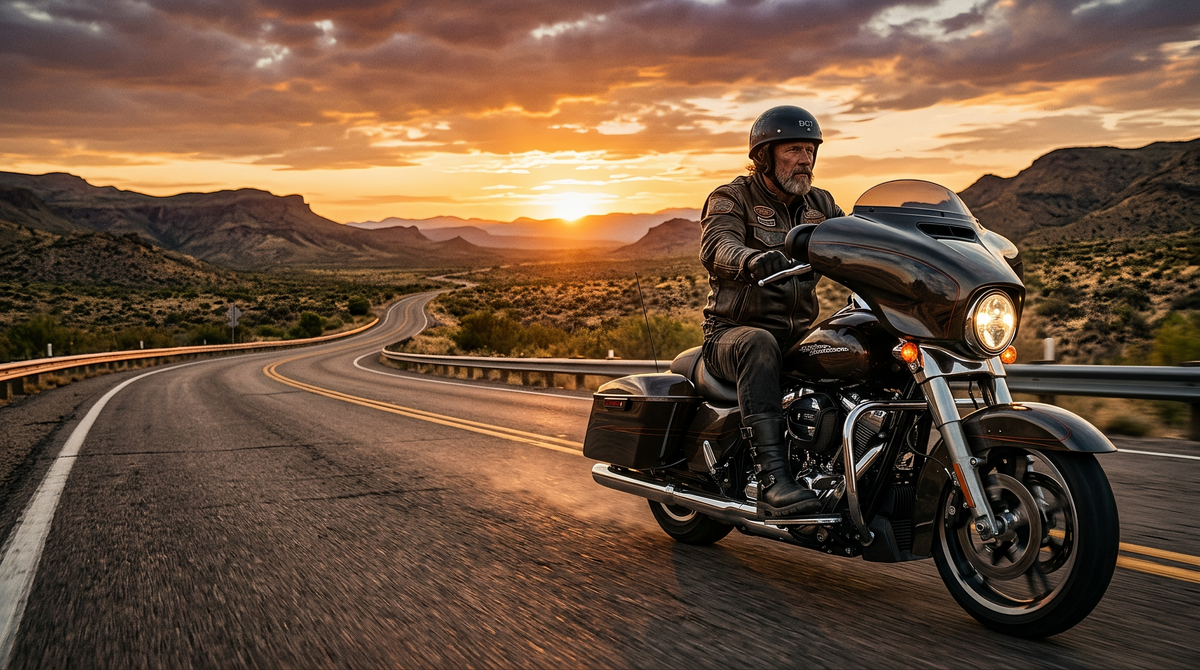
A 5-foot-7 rider throws on a pair of Harley engineer boots and suddenly stands just under 5-foot-10. So how much height do motorcycle boots add? The short answer is 1 to 3 inches, depending on three things: heel height, sole thickness, and whether the boot uses a hidden insole. Most riders never think about it until they flat-foot a heavy cruiser at a stoplight and realize an extra inch matters more than they expected.
This guide breaks it down by style, from slim riding sneakers to stacked engineer boots. You will see real measurements, a comparison table, and tips on picking the right pair for your build.
How Much Height Do Motorcycle Boots Add by Style
Not every motorcycle boot adds the same amount. A low-profile riding shoe sits close to the ground, while a classic engineer boot with a stacked leather heel can put you 2.5 inches taller. Here is the general range by boot type.
| Boot Style | Typical Height Added | Heel Type | Best For |
|---|---|---|---|
| Riding sneaker / short boot | 0.75 to 1.25 in | Flat rubber | Sport riders, commuters |
| Cruiser / touring boot | 1.0 to 1.5 in | Low block heel | Long-distance, Harleys |
| Harness boot | 1.5 to 2.0 in | Stacked leather | Classic biker look |
| Engineer boot | 1.75 to 2.5 in | Stacked or Cuban | Cruisers, choppers |
| Height-increasing boot | 2.5 to 3.5 in | Hidden insole + heel | Riders wanting max lift |
The numbers above come from measuring heel-to-ground with the boot on versus barefoot. A Chippewa 17-inch engineer boot, for example, adds about 2.25 inches. A typical leather motorcycle boot with a 1.5-inch heel and a 0.5-inch sole lands you around 1.75 inches taller.
What Actually Creates the Height in a Motorcycle Boot
Three layers stack up to give you lift.
Heel Height
The heel is the biggest contributor. Most cruiser-style boots use a block heel between 1 and 1.75 inches. Engineer and harness boots go higher, often 1.5 to 2 inches. A Cuban heel (angled and tapered) can reach 2 inches while still looking proportional on a size-11 boot.
Sole Thickness
The outsole adds another 0.25 to 0.75 inches depending on the material. A Vibram rubber sole on a touring boot runs about 0.5 inches thick. A Goodyear-welted leather sole on a traditional engineer boot can be 0.4 inches at the ball and thicker at the heel.
Insole and Midsole
Factory insoles typically add 0.2 to 0.4 inches. Height-increasing boots hide an extra wedge insole inside, adding 0.75 to 1.5 inches on top of the standard construction. That is how some motorcycle boots reach the 3-inch mark without looking obviously built up.

Engineer Boots: The Tallest Standard Motorcycle Boot
If you want maximum height without a hidden insole, the engineer boot is the answer. A Red Wing 2990 engineer adds 2.1 inches. The Carolina CA1904 sits at about 2.25 inches. These boots use a stacked leather heel that ranges from 1.75 to 2 inches, plus a leather-and-rubber outsole adding another 0.4 inches.
Engineer boots also have a wide shaft that fits comfortably over jeans. The trade-off is weight. Most pairs weigh 3.5 to 4.5 lbs per boot, which you will feel on long walks off the bike. On the bike itself, that weight is irrelevant, and the thick sole gives solid contact with the highway peg.

Harness and Cruiser Boots: The Middle Ground
Harness boots like the classic Chippewa 27899 add around 1.75 inches. The strap-and-ring hardware on a harness boot is decorative, but the heel is functional: a 1.5-inch stacked block that grips the footpeg without slipping. Cruiser boots with a low block heel sit in the 1.0 to 1.5-inch range, making them the most common choice for everyday riding.
For riders who spend equal time on and off the bike, a cruiser boot with a 1.25-inch heel is a solid compromise. You get enough lift to flat-foot most mid-weight bikes without feeling off-balance when you walk into a diner.

Height-Increasing Motorcycle Boots: How They Work
Height-increasing boots use a hidden elevator insole inside the shaft. From the outside, they look like a standard 1.5-inch-heel boot. Inside, a wedge-shaped insole adds another inch or more. The result is 2.5 to 3.5 inches of total lift.
The key difference from aftermarket insoles you buy separately is the boot itself is engineered for the extra height. The footbed is deeper, the shaft is taller to accommodate the insole, and the arch support is adjusted. Dropping a $12 gel insole into a regular boot works in a pinch, but it changes the heel angle and can cause hot spots on long rides.
A purpose-built height-increasing motorcycle boot keeps the weight balanced over the ball of the foot, which matters when you are shifting gears for 200 miles straight.
How to Measure the Exact Height a Boot Adds
Retailers list "heel height" but that number only tells part of the story. To get the real height increase, do this:
- Stand barefoot on a hard floor and mark your height on a wall with a pencil.
- Put the boots on, stand in the same spot, and mark again.
- Measure the gap. That is your actual height gain.
This method accounts for heel height, sole thickness, and insole lift together. A boot listed as having a "1.5-inch heel" might give you 1.9 inches of total lift once you factor in the sole. The Delta HF 7-inch side-zip, for example, lists a 1.4-inch heel but measures 1.85 inches of real height gain because of its thick rubber outsole.
Does Boot Height Affect Riding?
Yes, but not always in the way you expect. A taller heel changes two things on the bike.
Flat-Footing
Extra height helps shorter riders flat-foot heavier bikes. A 2-inch heel gain on a rider with a 30-inch inseam turns a tippy stop on a Harley Street Glide (seat height 26.1 inches) into a confident two-foot plant. That margin can prevent a slow-speed drop that costs $800 in crash bar and mirror repairs.
Shift and Brake Feel
A thicker sole reduces the tactile feedback from the shift lever and brake pedal. Most riders adapt in under 30 minutes. If the sole is over 0.75 inches thick, you may need to adjust the shift lever height by one spline (about 15 minutes with a socket wrench). Boots with an oil-resistant Vibram sole give better grip on wet pegs than smooth leather soles.
Common Mistakes When Choosing Boots for Height
- Buying based on heel spec alone. A 2-inch heel does not mean 2 inches of height. The insole compresses, and your foot sinks into the footbed. Always measure total gain with the boot on.
- Using aftermarket insoles in boots not built for them. Adding a tall insole raises your heel inside the boot, which pushes your ankle against the collar. This creates friction blisters on rides over 50 miles. Use boots designed for the extra insole or buy a purpose-built height-increasing pair.
- Ignoring break-in on stacked heels. Stacked leather heels compress about 0.1 to 0.2 inches after 40 to 60 hours of wear. Your 2.25-inch engineer boot might settle to 2.1 inches after a month. This is normal and does not affect riding.
- Choosing platform soles for maximum height. Platform motorcycle boots exist, but a sole over 1 inch thick kills your feel for the rear brake. For riding, keep the sole under 0.75 inches and let the heel do the lifting.
Which Boot Style Should You Pick?
Match the boot to how you ride.
- Commuter or sport rider (0.75 to 1.25 in): A low-profile riding boot or motorcycle sneaker. Light, flexible, easy to walk in. Height gain is minimal but so is bulk.
- Cruiser or tourer (1.25 to 1.75 in): A standard leather cruiser boot with a block heel. Enough lift to flat-foot most mid-weight bikes. The workhorse choice for 90% of riders.
- Style-first rider (1.75 to 2.5 in): An engineer or harness boot. The classic biker look with meaningful height. Heavier, but it looks right on a chopper or a Softail.
- Maximum height needed (2.5 to 3.5 in): A height-increasing motorcycle boot with a hidden insole. If flat-footing a tall bike is a safety concern, this solves it without anyone noticing.
If you are shopping for a pair, the leather motorcycle boots collection is where to start. Every pair is real leather with a genuine stacked or molded heel, not the glued-on plastic heels you get from no-name marketplace sellers that crack after two seasons.
No comments yet. Be the first rider to weigh in.