
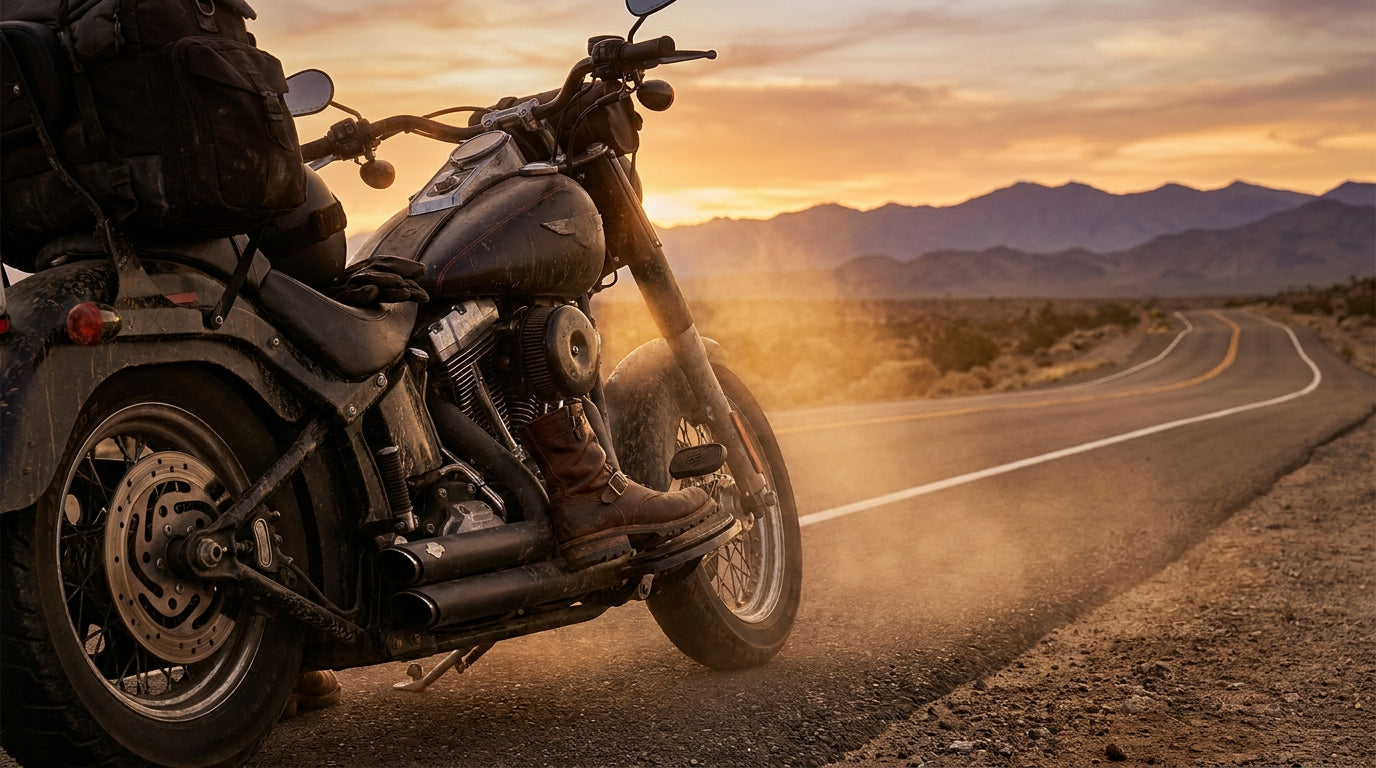
A Harley-Davidson Fat Boy weighs 699 pounds wet. At a red light on a hill, the rider needs both feet flat on the ground to hold that weight steady. For riders under 5'8", most stock cruiser seats sit too high for a confident stop. The fix is not always a lowered seat or a suspension swap. Sometimes the simplest upgrade starts at the feet, and height increasing motorcycle boots are the most practical way to close the gap between your inseam and the pavement.
This guide covers height increasing motorcycle boots from factory-heeled engineer styles to aftermarket insole upgrades. You will learn exactly how much height each type adds, which construction details hold up to real riding, and how to pick the right pair without giving up ankle protection or shift-lever feel.
Why Flat-Footing Your Bike Matters More Than Comfort
Dropping a motorcycle at a stop is one of the most common incidents riders deal with, and it rarely happens at speed. The Motorcycle Safety Foundation notes that low-speed tip-overs make up a large share of damage claims, and most happen because the rider could not plant both feet before the bike leaned past the balance point. On a 700-pound touring rig, tipping past about 15 degrees of lean at a standstill is the point of no return for most riders.
The physics are straightforward. A rider with a 34-inch inseam can flat-foot a seat that sits 29 inches off the ground with room to spare. A rider with a 28-inch inseam on the same bike is balancing on toe tips. That 1.5-inch difference between a secure, planted stop and a slow-motion drop in a parking lot is exactly what height increasing motorcycle boots are designed to fix.
The alternative is modifying the bike: lowered suspension, a shaved seat, or both. A professional seat shave runs $150 to $300. Lowering links cost $50 to $100 in parts but change the bike's ground clearance and cornering geometry. A good pair of motorcycle boots that add height solves the reach problem for $100 to $200 without touching the machine at all.

How Height Increasing Motorcycle Boots Are Built
There are three ways a boot adds height. The most common is an internal heel lift, a wedge of dense foam or rubber built between the insole and the outsole. From the outside, the boot looks like a standard riding boot. The lift sits inside the heel cup where the rider's foot naturally rests, invisible once the boot is on.
The second method is a raised heel block. Traditional engineer boots and harness boots use this approach. The Chippewa 27899, a classic American-made engineer boot, carries a stacked leather heel that measures 1.75 inches from the ground. That heel is structural. It adds real height while keeping the ball of the foot flat for clean gear shifts.
The third method is a thick platform sole. Boots with a Vibram 100 lug sole or a similar platform tread add 1.25 to 1.5 inches of height purely from sole thickness. When you combine a platform sole with a raised heel block, an engineer-style boot can push total lift past 2.5 inches.
Some manufacturers stack all three: an internal foam lift, a raised heel, and a thick outsole. These are sometimes listed as "elevator motorcycle boots" and can add 3 inches or more. The trade-off is weight. A boot with 3 inches of total lift typically weighs 3.5 to 4 pounds per boot, compared to about 2.5 pounds for a standard riding boot. For riders on a cruiser who wear boots all day, that extra pound adds up over an eight-hour ride.
How Much Height Do Motorcycle Boots Actually Add
The exact height gain depends on the boot style and its construction. Here is a realistic breakdown by common boot type, measured from the bottom of the sole to the top of the heel cup:
| Boot Type | Heel Height | Sole Thickness | Total Height Added |
|---|---|---|---|
| Standard riding boot | 0.75 in | 0.5 in | 1.0 to 1.25 in |
| Engineer boot (classic heel) | 1.5 to 1.75 in | 0.75 in | 1.75 to 2.25 in |
| Harness boot (angled heel) | 1.5 in | 0.5 in | 1.5 to 2.0 in |
| Platform sole boot | 0.75 in | 1.25 to 1.5 in | 1.75 to 2.25 in |
| Elevator boot (internal lift) | 1.5 in + 1 in lift | 0.75 in | 2.5 to 3.25 in |
| Boot + aftermarket insole | 0.75 in + 0.75 in insert | 0.5 in | 1.5 to 2.0 in |
A 5'6" rider on a bike with a 28-inch seat height typically needs about 1.5 inches of additional reach to go from toe-touching to flat-footing. An engineer boot covers that with room to spare. Riders on taller adventure bikes or touring models with 30-inch-plus seats may need the full 3-inch elevator boot setup to feel secure at stops.
A quick way to find your number: sit on your bike in your current shoes and have someone measure the distance between the ball of your foot and the ground when both feet are down. That gap tells you exactly how much boot height you need.
Best Types of Motorcycle Boots That Add Height
Engineer Boots: The Original Height Builder
The engineer boot has been adding height to riders since the 1930s. Originally built for railroad workers, the pull-on design with a stacked heel became standard riding gear for American motorcyclists by the 1950s. Brands like Chippewa, Wesco, and Frye still make engineer boots with 1.5 to 1.75-inch heels and Goodyear welt construction that can be resoled multiple times. The pull-on design with no laces means nothing catches on foot pegs or shift levers.
Harness Boots: Height with the Biker Look
Harness boots add a strap-and-ring detail across the ankle and carry a similar heel height to engineer boots. The Harley-Davidson Hustin harness boot sits on a 1.6-inch heel with an oil-resistant outsole. Harness boots fit the cruiser aesthetic naturally and provide 1.5 to 2 inches of total lift. The ring hardware adds roughly 2 ounces of weight but has zero effect on shifting or brake feel.
Touring Boots with Thick Soles
Touring boots from brands like Alpinestars and TCX prioritize ankle armor and waterproofing, but several models carry thicker soles that add meaningful height. The Alpinestars Belize Drystar uses a lugged sole that measures just over 1.3 inches at the thickest point. The look is more sport-touring than old-school biker, which works well with ADV bikes and modern nakeds. These typically add 1.25 to 1.5 inches total.

Platform-Sole Riding Boots
Platform soles use a continuous thick base, usually 1.25 to 1.5 inches of dense rubber, across the entire foot. Paired with a 1.5-inch heel, the total lift reaches 2.5 to 3 inches. The trade-off is stiffness. A thick platform dampens the feel of the rear brake pedal and shift lever. Some riders file or shave the sole slightly at the toe box for better shifter contact, which is a simple fix that takes ten minutes with coarse sandpaper.
Aftermarket Insoles and Lifts: The Budget Option
For riders who already own leather motorcycle boots they like, an aftermarket heel lift or insole is the simplest upgrade. A 0.75-inch EVA foam insole insert costs $12 to $20 and fits inside most pull-on riding boots without changing the look from the outside.
The key constraint is heel cup depth. Most motorcycle boots have 0.75 to 1 inch of space between the top of the insole and the collar of the boot. An insert thicker than that pushes the heel up and out, creating a loose fit and blister risk at highway speed. Layered insole kits, which let you stack 0.25-inch layers to your preferred height, offer more control than a single-piece lift. Brands like LiftKits and CALTO sell motorcycle-specific versions with a non-slip rubber base that stays put under engine vibration.
The max practical height from an insole alone is about 1 inch before the fit starts to suffer. But combine a 0.75-inch insole with a boot that already has a 1.5-inch heel, and the total lift reaches 2.25 inches. That is enough for most riders to go from toe-touching to flat-footing without any visible change to the boot and without the stiffness of a platform sole.

What to Check Before Buying Height Increasing Motorcycle Boots
Ankle Support. A taller heel raises the ankle's pivot point, which changes the load on your ankle ligaments during a hard stop or low-speed maneuver. The boot shaft should reach at least 8 inches above the sole. Buckle or lace closures that cinch at the ankle provide better lateral support than loose pull-on designs for boots with more than 2 inches of total lift.
Shifter Clearance. The toe box needs to stay thin enough to slide under the shift lever cleanly. Platform soles with thick rubber at the toe can make upshifts clumsy. Before committing to a pair, sit on the bike and run through all gears. If you cannot feel the lever click into gear, the sole is too thick at the toe. Most bikes have an adjustable shift lever that can drop one spline to compensate for thicker soles, a two-minute fix with a 10mm wrench.
Sole Stiffness. A flexible sole absorbs vibration better but gives less support on a footpeg during long highway stretches. For touring, a stiffer sole with a steel shank reduces foot fatigue over 200-plus-mile days. For city riding with frequent stops, a more flexible sole gives better ground feel when the foot is planted flat.
Weight. Each extra inch of height adds roughly 4 to 6 ounces per boot. That is barely noticeable on a two-hour ride but adds up during a full day in the saddle. Lightweight synthetic boots exist, but leather boots with Goodyear welt construction last five to ten times longer and can be resoled when the tread wears down.

5 Common Mistakes With Height Increasing Motorcycle Boots
- Buying too much lift at once. Going from a flat sneaker to a 3-inch elevator boot changes your center of gravity, knee angle on the pegs, and rear brake pedal reach all at the same time. Start with 1.5 to 2 inches and adjust upward from there once you have adapted to the new foot position.
- Ignoring break-in on thick soles. A new platform sole is rigid out of the box. It takes 200 to 300 miles before the rubber flexes enough for comfortable shifting. Wear the boots around the house and on short errands for a few days before your first long ride.
- Skipping the shift lever adjustment. Most motorcycles have an adjustable shift lever. If your new boot sole is 0.5 inches thicker than your previous pair, drop the shift lever one spline to match. It takes a 10mm wrench and two minutes in the driveway.
- Wearing boots with no ankle support past 2 inches of lift. A slip-on Chelsea boot with a 2.5-inch heel looks clean, but without shaft support, the ankle rolls inward on uneven surfaces like gravel parking lots. Stick with engineer, harness, or lace-up designs for anything above 2 inches of total height.
- Buying no-name elevator boots from marketplaces. Height increasing boots sold under unknown brands often use a dense foam heel that compresses within a few months. The boot starts at 3 inches and settles to 2 after regular wear. Boots with a stacked leather heel or a solid rubber platform maintain their height because those materials do not compress under body weight the way cheap foam does.
If you are shopping for motorcycle boots that add real height and hold up to actual road use, the leather motorcycle boots collection has engineer, harness, and platform styles built for riders. Every pair ships with free returns, so you can check the fit and peg feel at home before committing.


No comments yet. Be the first rider to weigh in.