
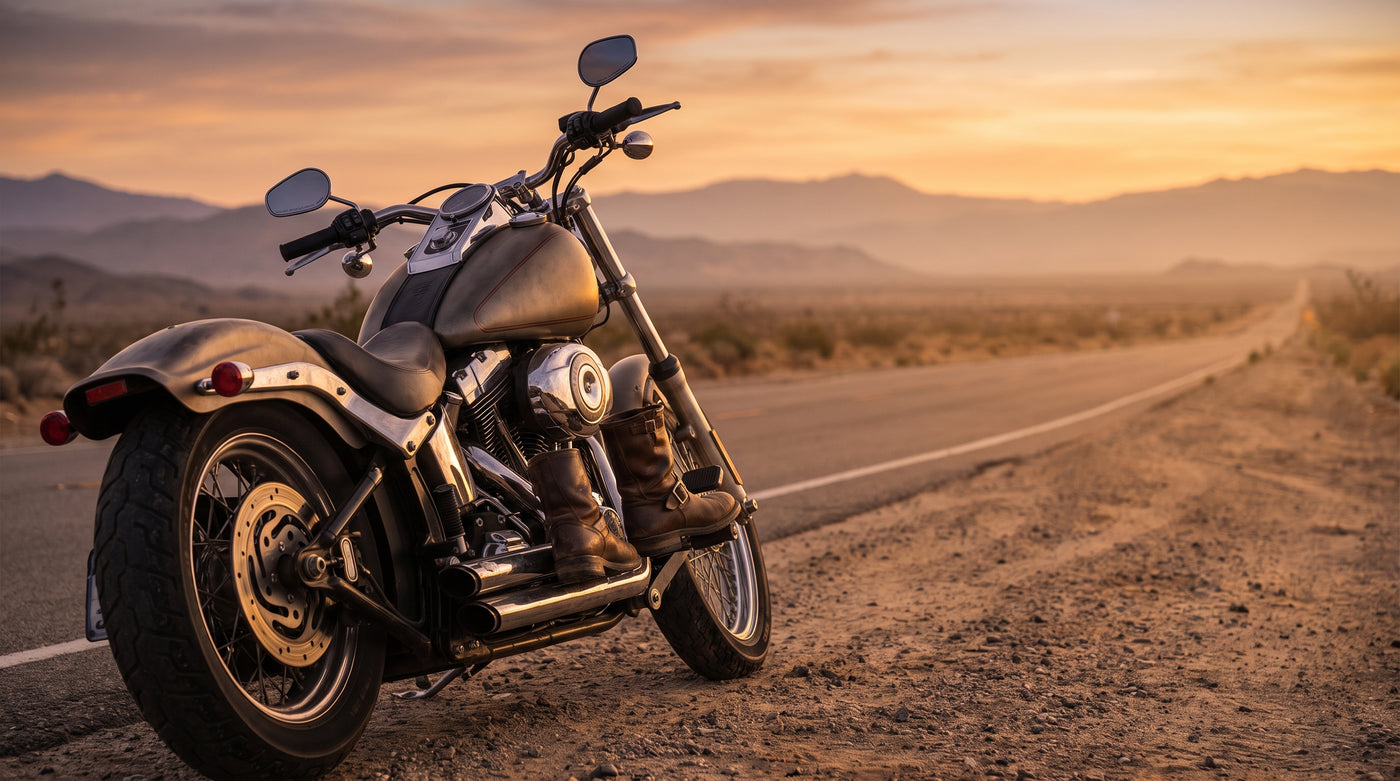
A pair of cheap boots from a random marketplace seller looks fine in the box. Three rides later, the sole peels, the zipper jams, and your feet are soaked through. Most "biker boots" sold online were never designed for riding. They are fashion pieces with motorcycle branding slapped on synthetic material and a glued-on sole.
This guide covers every type of mens biker boots worth considering, the materials that hold up on real rides, and the details that separate a boot built for the road from one built for a photo op. You will know the difference between an engineer boot and a harness boot, why sole construction matters more than aesthetics, and how to avoid the sizing mistakes that cost riders money.
What Makes a Real Pair of Mens Biker Boots
Real biker boots exist to protect your feet and ankles on a motorcycle. That means oil-resistant soles, ankle support that reaches above the ankle bone, and full grain leather thick enough to handle road contact without shredding. A practical benchmark: the Chippewa 27899 engineer boot weighs about 3.5 lbs per boot and uses a steel shank for arch support. That weight comes from real protection. If a "biker boot" feels as light as a sneaker, it is probably a fashion boot with no reinforcement inside.
The biggest tell is the sole. Riding boots use thick rubber or Vibram-style outsoles with a defined heel block. The heel catches the foot peg and stops your foot from sliding forward under braking. Fashion boots often have thin, flat soles that work on pavement but give zero grip on a peg in the rain.
Stitching matters too. Double or triple stitching along the welt and toe box keeps the boot together when it gets dragged across asphalt. Single-stitch boots from no-name sellers tend to split at the seams within the first season.
The Five Main Types of Biker Boots for Men
Not every boot fits every rider. The style you pick depends on your bike, your riding, and how much walking you do after you park. Here is how the five main types break down.
Engineer Boots
The original biker boot. Tall shaft (11 to 17 inches), no laces, steel toe optional. A strap and buckle at the ankle hold it in place. The Wesco Boss is a well-known example, built with full-grain horsehide and a triple-stitched toe. Engineer boots work best for cruiser and chopper riders who want maximum shin coverage and a clean silhouette.
Harness Boots
Similar to engineer boots but with a ring-and-strap detail at the ankle. The Frye Harness 12R brought this style into mainstream biker culture in the 1960s. Most harness boots sit 10 to 12 inches tall and pull on like engineers. Solid choice for the classic biker look without laces getting in the way.
Lace-Up Combat Style
Shorter at 6 to 8 inches, faster to put on, and easier to walk in once you park. Lace-ups let you adjust tension across the instep for a tighter fit. Popular with sport-touring and adventure riders who spend time off the bike walking around cities or campsites.
Shorty and Ankle Boots
The most casual option at 5 to 6 inches. These work for commuters who ride to work and do not want to change shoes at the office. Less ankle protection than tall boots, but still leagues ahead of sneakers. Look for a reinforced heel counter and oil-resistant sole before buying.
Western and Cowboy Hybrids
Pointed toe, angled heel, decorative stitching. A quality pair from a maker like Dan Post or Ariat uses a genuine leather sole with a rubber outsole overlay. The pointed toe can make shifting harder on some bikes, especially those with small shift levers, so try before you commit.
Black Biker Boots: Why They Dominate
Walk into any bike rally and count the boots. Nine out of ten will be black. There is a practical reason beyond tradition: black leather hides road grime, chain lube splatter, and scuff marks better than any other color. A pair of brown boots after 5,000 miles of riding shows every single mark. Black boots after the same mileage still look presentable with a quick wipe-down and a coat of polish.
Black leather biker boots also pair with everything in a rider's closet. Black jeans, blue denim, leather riding chaps, textile riding pants. You do not need to think about color matching. For anyone building a riding wardrobe from scratch, start with black boots and expand from there.
If you want a second pair, dark brown or distressed tan works as a casual off-bike boot that still handles weekend rides. Just know that lighter colors show wear faster and need conditioning more often to avoid looking beat up.
Full Grain Leather vs. Synthetic: The Material Breakdown
Full grain leather is the outer layer of the animal hide with the natural grain pattern intact. It is the strongest and most durable option for biker boots for men. A well-maintained pair of full grain leather boots lasts 8 to 12 years of regular riding. The leather molds to your foot shape over time, so the fit actually improves the longer you wear them.
Top grain leather is the next tier down. The surface gets sanded to remove imperfections, which weakens the fiber structure slightly. Still real leather, still functional, but it will not hold up as long under the same abuse.
Bonded leather and PU synthetic are the budget options. Bonded leather is leather scraps glued to a fabric backing. It cracks and peels within 1 to 2 years of regular use. PU synthetic can look convincing at first but does not breathe, which means sweat buildup, odor, and a shorter usable life. If you ride more than twice a month, real leather pays for itself over time.
Here is a quick test: look at the cut edge of the material. Full grain shows a consistent, fibrous cross-section all the way through. Bonded leather shows distinct layers. If a product listing does not specify "full grain" or show the grain pattern up close, assume synthetic. The same material principles apply to choosing between leather and textile jackets.
How to Get the Right Fit for Biker Boots
Sizing biker boots is different from sizing regular shoes. Most pull-on styles (engineer and harness boots) run true to Brannock device size but need attention on shaft width. If your calves measure over 16 inches in circumference, check the shaft measurement before ordering. A tight shaft creates painful pressure behind your knee after an hour in the saddle.
Width matters more than many riders expect. Standard D-width boots work for most feet, but riders with wide feet (EE or wider) should look for brands that offer dedicated wide sizes. Thorogood, Red Wing, and Carolina all make EE and EEE options. A narrow boot compresses the metatarsal area and kills circulation, leading to numb toes on long rides.
Break-in period for full grain leather runs 2 to 4 weeks of regular wear. Do not ride long distance in brand-new boots. Wear them around the house, to the store, and on short rides first. Speed up the process by applying a leather conditioner like Obenauf's Heavy Duty LP after the first three wears. It softens the leather without weakening the fiber.
One more thing: always try boots on with the socks you actually ride in. If you wear thick wool socks in cold weather, size up a half. Thin socks, go true to size. For more on getting motorcycle footwear right, see our full motorcycle boots buying guide.
Steel Toe vs. Soft Toe: Picking the Right Protection
Steel toe biker boots add about 3 to 4 oz per boot and protect against crushing impacts up to 2,500 lbs under the ASTM F2413 standard. If your boot ever gets pinned between a foot peg and the ground in a low-side slide, that steel cap earns its weight instantly.
The tradeoff: steel conducts temperature. In winter riding below 40 degrees F, your toes will feel the cold through the cap. Composite toe caps, made from Kevlar or carbon fiber, offer similar crush protection at roughly half the weight and do not conduct cold. Brands like Timberland PRO and Keen Utility use composite toes in their motorcycle-compatible boots.
Soft toe boots are lighter and more comfortable for all-day wear off the bike. If you mostly ride in warm weather and stick to highway cruising, soft toe is a reasonable call. For stop-and-go city riders where low-speed tip-overs are more likely, steel or composite toe is the safer bet.
Mens Biker Boot Types Compared
| Type | Height | Best For | Toe Options | Walk Comfort |
|---|---|---|---|---|
| Engineer | 11-17 in | Cruiser, chopper | Steel or soft | Moderate |
| Harness | 10-12 in | Cruiser, touring | Soft (some steel) | Moderate |
| Lace-Up Combat | 6-8 in | Sport-touring, ADV | Steel, composite, soft | High |
| Shorty/Ankle | 5-6 in | Commuting, casual | Soft | Highest |
| Western Hybrid | 10-14 in | Cruiser, style | Soft | Low-moderate |
Five Common Mistakes When Buying Mens Biker Boots
1. Buying by looks alone. A boot that looks great but has a cardboard insole and glued-on sole will fall apart in months. Always check sole construction and leather grade before anything else.
2. Ignoring heel height. The heel should sit between 1 and 1.5 inches for proper foot peg engagement. Flat-sole boots slide on pegs. Heels over 2 inches shift your riding posture and make walking awkward after you park.
3. Skipping the break-in period. New full grain leather boots are stiff by design. Riders who take brand-new boots on a 300-mile trip come back with blisters and blame the brand. The boots were not the problem. The missing break-in was.
4. Going too cheap on the sole. Cemented (glued) soles are fine for light use. Goodyear-welted or Blake-stitched soles can be resoled when they wear down, which doubles the usable life of the boot. Over five years, a $180 resoleable boot costs less per ride than a $60 glued boot you replace annually.
5. Not matching shaft height to your bike. Sportbike riders need shorter boots (under 8 inches) for ankle articulation during aggressive lean. Cruiser riders benefit from tall shafts (11 inches and up) for wind protection and debris coverage. Match the boot height to your riding position.
How to Pick the Right Pair
Start with what you ride. Cruiser or chopper riders get the most from engineer or harness boots in full grain leather. Sport-touring and adventure riders do better with lace-up combat styles that allow ankle movement and easy walking. Commuters should look at sturdy ankle boots that work both on the bike and at a desk.
Then check the material. Full grain leather is the standard for any boot you plan to ride in regularly. It protects, it breathes, and it lasts. Synthetic works for occasional riders on a tight budget, but set realistic expectations for its lifespan.
Finally, get the fit right. Measure your foot on a Brannock device, check your calf circumference for tall boots, and always try on with riding socks. A properly fitted boot makes every ride more comfortable and safer.
If you are shopping for a pair, our leather motorcycle boots collection is where to start. Every pair is built with genuine leather for riders who want gear that lasts, not gear that needs replacing next season.

No comments yet. Be the first rider to weigh in.