
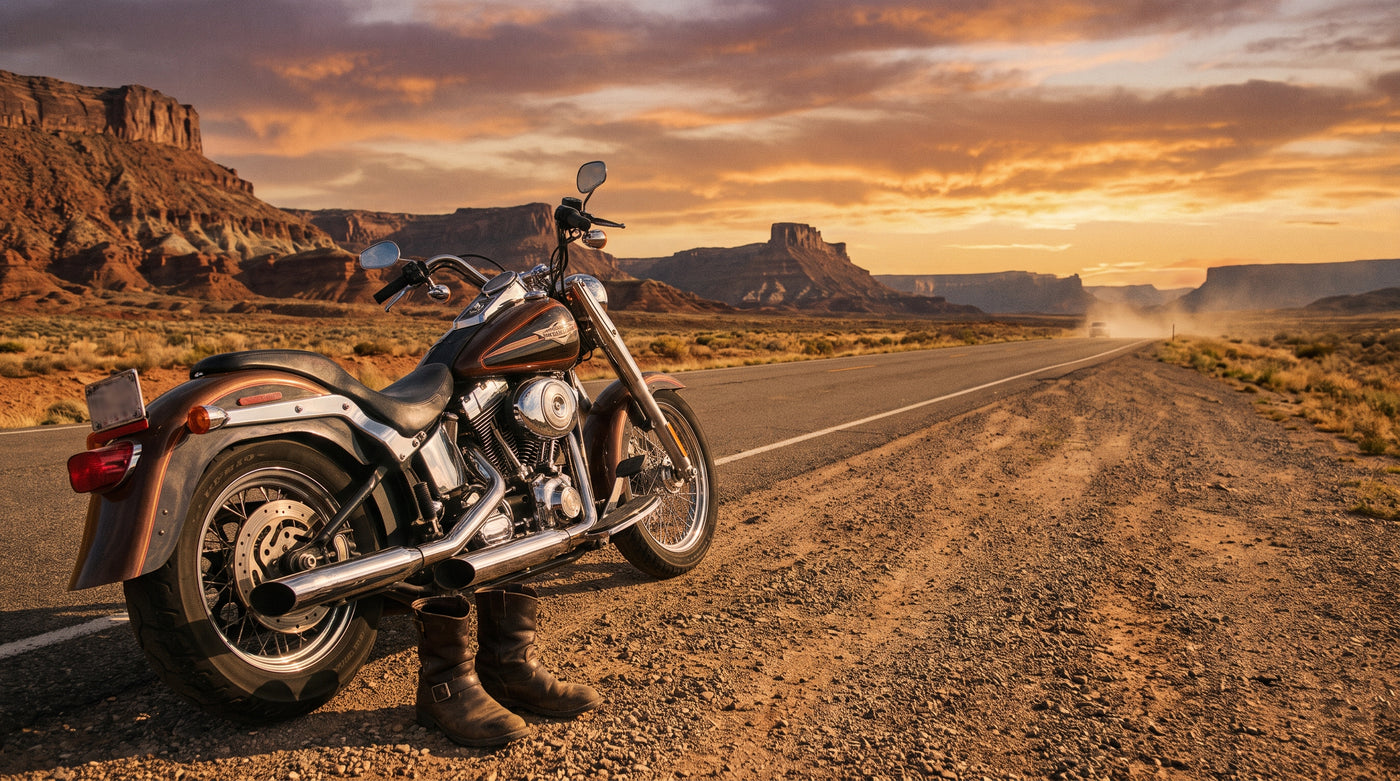
Picking the wrong motorcycle boots is one of the most common and painful mistakes a new rider can make. A pair that looks great on the shelf can leave you with blistered heels after 45 minutes on a Sportster, zero ankle protection in a low-speed drop, or numb toes from a toe box that is too narrow. The right pair does the opposite: it protects, grips, and actually gets better the more you wear it.
This guide breaks down every factor that matters when you choose motorcycle boots. Types, fit, protection, wide-foot options, height-boosting designs, and how to break them in without suffering through it. Every recommendation here is backed by real specs and rider feedback, not catalog fluff.
Types of Motorcycle Boots and When Each One Works
There are four main categories. Each one is built for a different kind of riding, and picking the wrong type is the fastest way to end up uncomfortable or underprotected.
Cruiser Boots
These sit at mid-calf height, usually 8 to 10 inches tall. They use full-grain leather, a flat or low-block heel for solid peg control, and a Goodyear welt or cemented sole. Most weigh 3 to 4 pounds per boot. If you ride a Harley Softail, Indian Chief, or any V-twin cruiser, this is the standard choice. The classic engineer boot falls here too, and it has been the go-to silhouette for bikers since the 1940s.
Touring Boots
Built for long days in the saddle. Look for waterproof membranes (Gore-Tex is the gold standard), oil-resistant soles, and reinforced ankle cups. The Alpinestars Andes V2 Drystar, for example, uses a dual-compound sole rated for 8-plus hours of riding comfort and keeps your feet dry in a downpour. Touring boots tend to weigh 2.5 to 3.5 lbs and prioritize all-day wearability over aggressive styling.
Sport and Racing Boots
These cover the shin, use hard plastic sliders on the outside, and include torsion-control plates that prevent your ankle from rolling in a slide. They are stiff and tall by design. Dainese's Torque 3 Out, priced around $400, is a benchmark in this class with a magnesium toe slider and dual-flex system. Unless you are doing track days or riding an aggressive sport bike, they are overkill for daily commuting.
Casual Riding Shoes
These look like sneakers or street shoes but hide ankle armor and shift pads inside. The TCX Street 3 WP weighs just 1.7 lbs and packs a D3O ankle protector you would never see from the outside. Good for short rides and errands around town. Not enough protection for sustained highway speeds above 60 mph.
What to Look for in Motorcycle Boots
Regardless of which type you choose, four things separate a good motorcycle boot from a fashion boot pretending to be one.
Ankle Protection
This is non-negotiable. Look for internal or external ankle cups made from thermoplastic or D3O. A boot that flexes freely at the ankle will not do much in a slide. CE Level 2 certification (EN 13634:2017) means the boot passed standardized impact, abrasion, and cut resistance tests. If a boot does not list a CE rating, it is probably a fashion piece.
Sole Grip
Oil-resistant rubber with a lug pattern gives you traction at gas stations and on wet pavement. Vibram soles are a reliable benchmark across the industry. Smooth leather soles look sharp but will slip on anything slick. This matters more than most riders realize, because a dropped bike at a gas pump is embarrassing and expensive.
Closure System
Laces are traditional but they can catch on pegs or chain guards. Side zippers are faster to get on and off. Buckle and ratchet systems (common on sport boots) give the most precise fit. BOA dial closures are showing up in more 2026 models and let you micro-adjust tightness with one hand.
Leather vs. Synthetic
Full-grain leather is heavier, more durable, and molds to your foot shape over time. A quality pair lasts 5 to 10 years with basic care. Synthetic boots are lighter and cheaper up front but wear out faster, typically 2 to 3 seasons of regular riding. For riders logging serious miles, real leather boots pay for themselves on a cost-per-year basis.
Best Motorcycle Boots for Wide Feet
Finding motorcycle boots for wide feet is one of the most-searched rider problems. Most manufacturers design around a D-width last (standard men's). If you need an E or EE width, your options shrink fast, and sizing up just gives you more length without the width where it counts.
Here is what actually works:
- Wide toe box models: Look for round-toe or engineer-style boots. Square-toe western riding boots also tend to run wider across the ball of the foot. The Harley-Davidson Darnel, for example, runs about a half-size wider than most competitors at the same price point.
- Brands that consistently run wide: Thorogood, Carolina, and Chippewa build on wider lasts as a rule. Multiple riders report that Thorogood's 1957 Series fits an EE foot comfortably without having to size up.
- Explicit wide sizing: Check for "W" or "EE" designations in the size chart. If a brand does not offer wide sizing at all, check their return policy before ordering.
- The leather advantage: Full-grain leather stretches and conforms to your foot shape over 2 to 3 weeks of wear. Synthetic materials barely stretch at all, so what you feel on day one is what you get.
If wide fit is a priority, look for boots built with genuine leather construction. The material gives where synthetics will not, and a boot that feels slightly snug across the ball on day one will mold to your foot by week three.
Height Increasing Motorcycle Boots: What Actually Works
A lot of riders search for elevator motorcycle boots or height-boosting designs. Shorter riders especially want extra inches to flat-foot at a stop light without tiptoeing on one side, which is a real safety concern on a 600-pound touring bike.
Standard motorcycle boots add about 1 to 1.5 inches of height from the heel and sole combined. Elevator-style riding boots use a concealed internal lift to add another 1 to 2 inches on top of that, giving you a total boost of 2 to 3 inches.
A few things worth knowing:
- Internal lifts vs. thick soles: Internal lifts are invisible from the outside and keep the sole profile normal for peg contact. Thick platform soles (common on some engineer boots) are visible and shift your foot position on the peg, which can affect shifting and braking feel.
- The trade-off: More height means a stiffer boot and a slightly different ankle angle. Most riders adjust within a week or two. If you go above 3 inches of total lift, expect some awkwardness on the pegs until you adapt.
- Budget fix: If you just need an extra half inch to flat-foot your bike, a gel insole insert can do the job without buying specialty boots. A Sof Sole insert at 3/4-inch thickness costs around $15 and fits inside most standard riding boots.
How to Break In Motorcycle Boots Without the Pain
New leather motorcycle boots are stiff. That is the point. The leather has not conformed to your foot yet, and once it does, the fit will be better than any synthetic boot can match. But you have to get through the break-in period without destroying your feet on a long ride.
Here is the proven process:
- Wear them at home first. Put them on for 20 to 30 minutes at a time while walking around the house. Do this for 5 to 7 days before your first long ride.
- Apply leather conditioner. Lexol, mink oil, or Bickmore Bick 4 all work well. Rub the conditioner into the stiffest areas, usually the heel counter and ankle, and let it absorb overnight.
- Use thick socks. Wool hiking socks add padding and gently stretch tight spots. Two pairs of thinner socks work too.
- Flex the ankle repeatedly. While sitting, bend your foot up and down to work the ankle joint. This is the area that takes the longest to soften up.
- Skip the heat shortcuts. Hair dryers, ovens, and hot water can dry out and crack leather permanently. Patience beats shortcuts every time.
Most full-grain leather boots break in fully within 2 to 4 weeks of regular wear. After that, they feel like they were made for your feet, because in a real sense, they were.
Motorcycle Boot Comparison: Types at a Glance
| Feature | Cruiser | Touring | Sport/Race | Casual |
|---|---|---|---|---|
| Height | Mid-calf (8-10") | Mid-calf to knee | Shin-high | Ankle |
| Weight per boot | 3-4 lbs | 2.5-3.5 lbs | 2-3 lbs | 1.5-2 lbs |
| Waterproof | Varies | Yes (Gore-Tex) | No | Some models |
| Ankle armor | Internal cups | Internal + external | Rigid plates | D3O or foam |
| Closure | Lace / zip | Zip + buckle | Buckle / ratchet | Lace / BOA |
| Best for | Cruiser / chopper | Long-distance | Track / sport | Commute / errands |
| Typical price | $120-$300 | $150-$400 | $200-$500 | $80-$200 |
5 Common Mistakes Riders Make Buying Motorcycle Boots
1. Buying for looks over protection. A boot that looks amazing but has no ankle reinforcement is a fashion boot, not a riding boot. Check for CE certification or at minimum internal ankle cups before you consider anything else. A low-speed tip-over at 5 mph can fracture an unprotected ankle.
2. Ignoring the sole compound. Flat, smooth soles are a liability on oil-slick gas station pavement. Press your thumb into the rubber. If it does not flex or show a visible lug pattern, keep looking. Oil-resistant rubber compounds are standard on purpose-built riding boots and rare on fashion ones.
3. Going too tight on sizing. Your feet swell on long rides, especially in summer heat. Size up a half size, or try boots on in the afternoon when your feet are naturally larger. A boot that feels perfect at mile zero becomes painful by mile 50.
4. Skipping the break-in entirely. Riding 200 miles in brand-new stiff leather boots is a recipe for blisters and regret. Break them in at home first. Five days of walking around the house beats one miserable day on the road.
5. Choosing cheap synthetic to save money. A $90 synthetic boot that wears out in one season costs more per year than a $200 leather boot that lasts five. Do the math on cost per year, not sticker price. Quality leather is an investment that pays back every time you pull them on.
Picking the Right Pair for Your Riding Style
The right motorcycle boots protect your feet, improve your bike control, and get more comfortable with every single ride. Whether you need wide-fit options, a height boost, or just a solid cruiser boot that will last for years, start with real leather and proper ankle protection. Those two things are non-negotiable.
If you are ready to shop, the ALR boot collection is where I would start. Everything there is real leather with the kind of construction that molds to your foot and lasts. Pair them with a quality leather riding jacket and you have the two most important pieces of riding gear locked down.

No comments yet. Be the first rider to weigh in.