
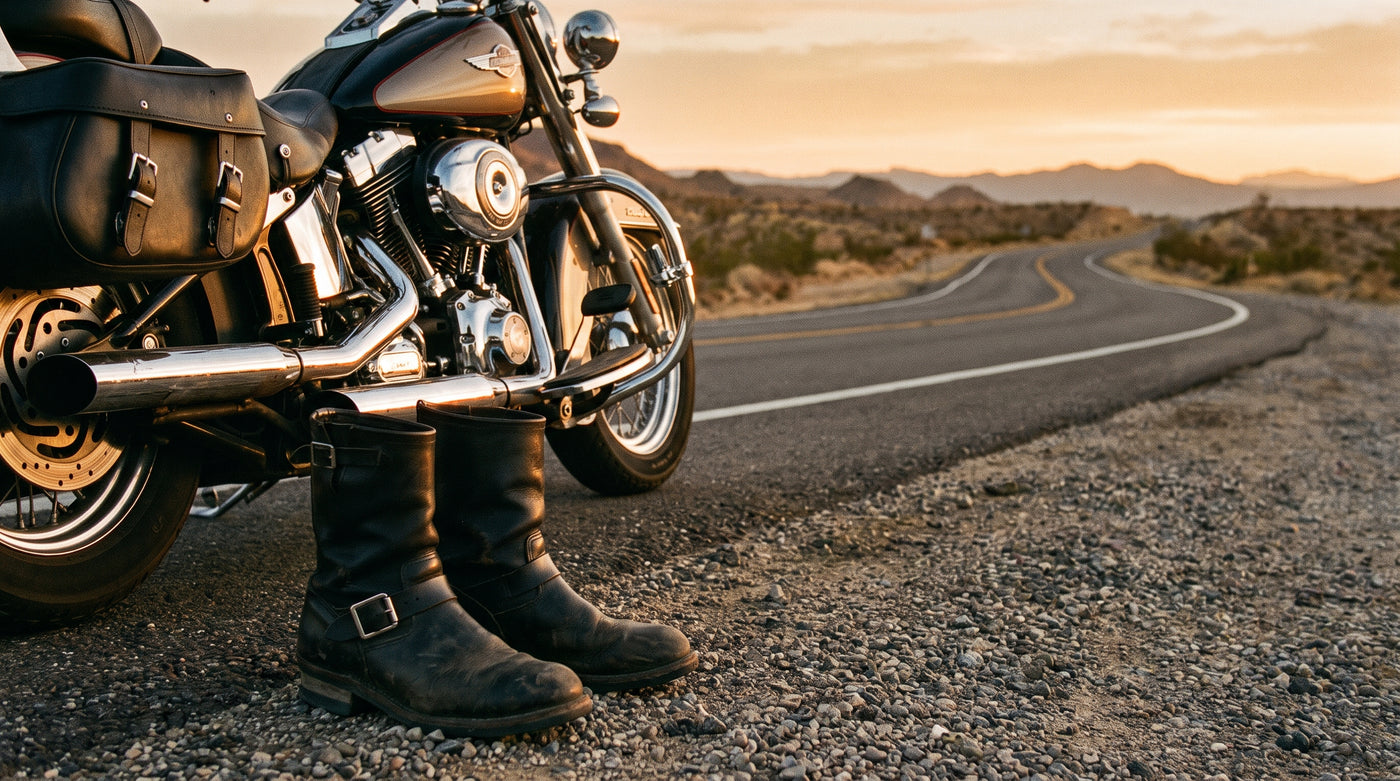
A pair of cheap boots splits at the seam 400 miles into a summer road trip. Your ankle is exposed, rain is coming, and the next town is 90 minutes away. That is not bad luck. That is what happens when you buy biker boots based on looks alone. The right pair protects your feet, lasts for years, and feels better with every ride. The wrong ones fall apart before your first oil change.
This guide covers everything you need to pick the right biker boots: the styles that matter, how leather stacks up against synthetic materials, what to look for in a sole, and the sizing mistakes that ruin an otherwise solid purchase. By the end, you will know exactly what separates a boot that lasts 10 years from one that barely survives a season.
What Makes a Good Pair of Biker Boots
Four things matter most: upper material, sole construction, ankle support, and closure system.
Upper material is the biggest factor. Full-grain cowhide at 1.2 mm or thicker resists abrasion and molds to your foot over time. Cheap corrected-grain leather or bonded leather looks fine in photos but cracks and peels within months. A genuine cowhide upper from a brand like Chippewa can take five or more years of regular riding before showing serious wear.
Sole construction separates riding boots from fashion boots. A Goodyear welt or cemented rubber outsole with oil resistance keeps your foot planted on wet pegs. The sole should be stiff enough to protect against heat from exhaust pipes but flexible enough at the ball of the foot for shifting gears.
Ankle support is non-negotiable for highway riding. A shaft height of at least 7 inches covers the ankle bone completely. Padded collars and reinforced heel cups prevent the kind of lateral roll that sends riders to the ER.
Closure matters more than most riders think. Pull-on boots (harness and engineer styles) are faster at gas stops but harder to get a tight fit. Lace-up and zip styles give you more control over snugness, especially if your calves run thick or thin.
Biker Boot Styles: Harness, Engineer, and Combat
Three styles dominate the riding world. Each has a different origin and a different strong suit.
Harness Boots
The classic Harley look. The metal ring and strap across the ankle started as functional hardware on cavalry boots. Today, they are the most popular biker boot style in the US. A standard Frye Harness 12R weighs about 2.4 lbs per boot and runs 12 inches tall. They pull on, which means no laces to snag on pegs.
Engineer Boots
Taller, heavier, and built for industrial work. They typically stand 11 to 17 inches high, with a wide toe box and a steel shank for arch support. Red Wing's 2268 Engineer is the benchmark at around $350, made in the USA with oil-tanned leather and a Vibram sole. These are overkill for a Sunday cruise, but they are built for riders who put on serious miles.
Combat Boots
Crossed over from military use, combat boots lace up, usually sit 8 to 10 inches tall, and offer the best ankle flexibility of the three. Brands like Danner and Belleville make versions with speed-lace hooks that save time. The trade-off: exposed laces can catch on foot pegs or shift levers if you do not tuck them in.
| Style | Height | Closure | Best For | Typical Weight |
|---|---|---|---|---|
| Harness | 11-13 in. | Pull-on | Cruiser riding, classic look | 2.2-2.6 lbs |
| Engineer | 11-17 in. | Pull-on + buckle | Long-distance touring | 2.8-3.4 lbs |
| Combat | 8-10 in. | Lace-up | Sport riding, urban commuting | 1.8-2.4 lbs |
Leather vs Synthetic: Why Material Decides Everything
Full-grain cowhide wins on durability, and it is not close. A leather boot that gets conditioned twice a year can last a decade of regular riding. The leather conforms to your foot shape after 30 to 50 hours of wear, creating a custom fit that no synthetic material can match.
Synthetic boots (usually polyurethane or textile blends) cost 40 to 60 percent less and weigh less out of the box. They skip the break-in period and dry faster after rain. But they do not mold to your foot, they trap more heat in summer, and most start delaminating after 12 to 18 months of real use.
There is a middle ground: boots with a leather upper and synthetic lining. The leather handles abrasion and weathering while the synthetic interior wicks sweat. Alpinestars and TCX use this approach in their touring lines, and it works well for riders who want leather toughness without the full weight.
One thing to watch: "genuine leather" on a label does not mean what you think. It is actually the lowest grade of real leather. Look for "full-grain" or "top-grain" on the product description. If a boot just says "leather" with no qualifier, it is probably bonded or corrected grain, and you should keep shopping.
How Biker Boots Should Fit
Motorcycle boots fit differently than work boots or sneakers. You want a snug heel with zero lift when you walk, a firm hold across the instep, and enough toe room to curl your toes slightly. Your big toe should sit about a half inch from the tip.
Most riders make the mistake of buying their street shoe size. Biker boots, especially pull-on styles, typically run a half size large because the shaft needs room to slide over your calf. Try them on with the socks you actually ride in. Thicker than dress socks, thinner than ski socks.
Break-in matters. Leather boots are stiff for the first 20 to 40 hours. Wear them around the house for a few evenings before a long ride. Some riders apply mink oil or Huberd's Shoe Grease to speed the process, which softens the leather without weakening it.
For riders with wide feet (EE width or wider), look for brands that offer wide sizing. Thorogood and Carolina both make EE and EEE options in their motorcycle-adjacent lines. A boot that is too narrow creates pressure points on the fifth metatarsal, and that turns into real pain after hour two on the highway. Check out ALR's leather motorcycle boots for options that come in standard and wide fits.
Black Biker Boots and the Classic Colorway Question
Black is the default for a reason. It hides road grime, matches every riding outfit, and does not show scuffs the way brown or tan leather does. Roughly 75% of biker boots sold in the US are black, according to major boot retailers.
Brown leather has gained ground in recent years, especially in the cafe racer and scrambler communities. A distressed brown engineer boot pairs well with raw denim and a vintage-style open-face helmet. The downside: brown shows every water stain and salt mark. You will need to condition and clean it more often.
For a first pair of biker boots, black full-grain leather is the safest bet and the easiest to live with long term. If you already own a solid black pair and want a second set for casual rides, that is when brown or tan starts to make sense.
5 Common Biker Boot Mistakes
- Buying based on brand hype alone. A $400 boot from a fashion label is not automatically better than a $180 boot from a work boot manufacturer. Check the construction method (Goodyear welt vs cemented), the leather grade, and the sole material before the logo.
- Skipping the break-in. Riding 300 miles in stiff new boots causes blisters and hot spots. Break them in at home first. Every experienced rider knows this. Every first-timer learns it the hard way.
- Ignoring sole grip. Smooth leather soles look great in photos. They are also dangerously slick on wet pavement, oily gas station floors, and chrome foot pegs. Always choose rubber outsoles with a tread pattern.
- Choosing style over shaft height. Low-cut ankle boots leave your lower leg exposed to exhaust burns, road debris, and impact in a slide. A minimum 7-inch shaft height gives you real protection where it counts.
- Not conditioning the leather. Leather dries out, cracks, and stiffens without regular care. Apply a conditioner like Bick 4 or Obenauf's every 2 to 3 months, more often if you ride in rain. This one habit can double the life of your boots.
Where to Start Shopping
If you want quality leather biker boots without guessing at materials or construction, the leather motorcycle boots collection at American Legend Rider is a solid starting point. Every pair is real leather, built for actual riding, and priced without the brand-name markup you see at dealerships.
Still building out your riding kit? The fingerless motorcycle gloves guide covers what to look for in warm-weather hand protection. And if you ride a cruiser, the Sons of Anarchy bike guide is worth a read for anyone who appreciates American iron.
No comments yet. Be the first rider to weigh in.