
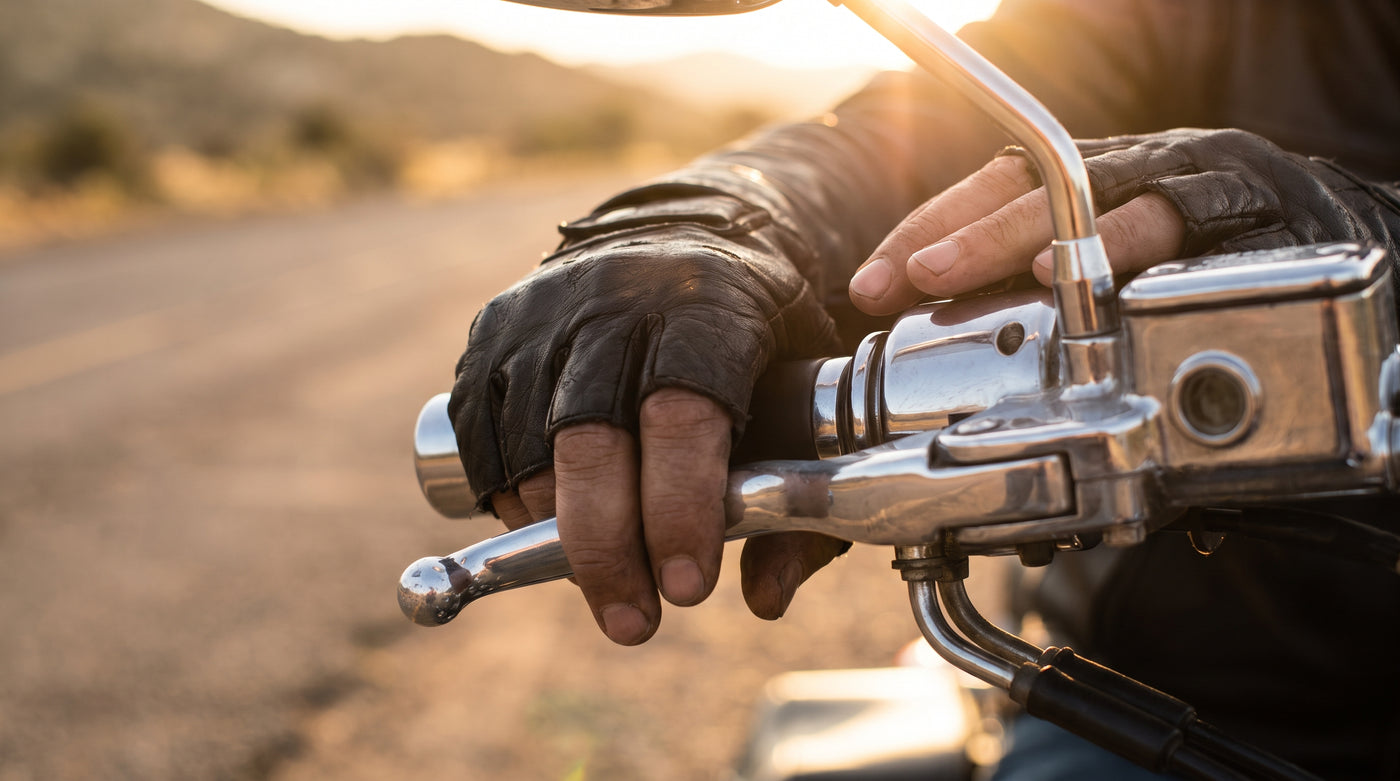
You pull into a gas stop, tug off your gloves, and your palms are raw from four hours of bar vibration while your fingertips are soaked with sweat. Full-finger gloves felt like too much for a July ride. Bare hands felt like a mistake. That gap is exactly where fingerless motorcycle gloves earn their keep, and the right pair changes how a long day in the saddle feels.
This guide breaks down the best fingerless motorcycle gloves for 2026: the leather that actually lasts, the protection features worth paying for, and the buying mistakes that leave riders with blistered palms or cold hands. By the end you will know which pair fits the way you ride.
What Makes a Good Fingerless Motorcycle Glove
A fingerless glove has one job the bare hand cannot do: protect your palm and the back of your hand while keeping your fingers free for throttle feel and phone taps. The best ones do four things well.
- Palm padding. A padded or gel palm cuts the buzz that travels up from the bars. On a V-twin idling around 800 rpm, that vibration adds up fast over a two-hour ride.
- Real leather across the back. Full-grain cowhide or goatskin resists abrasion if your hand meets pavement. Thin fashion leather tears on the first slide.
- A secure wrist closure. A hook-and-loop strap keeps the glove from shifting under load. A glove that slides is a glove that comes off when you need it most.
- Breathability. Perforated leather or a mesh back is the whole reason to go fingerless in summer heat.
Leather Types Compared
Most fingerless biker gloves use one of three leathers. Each rides differently.
| Leather | Feel | Durability | Best for |
|---|---|---|---|
| Cowhide | Stiff at first, breaks in tough | Highest abrasion resistance | Riders who want maximum protection |
| Goatskin | Supple, strong, natural oils | High, with better bar feel | All-round daily riding |
| Deerskin | Softest, stretches to fit | Good, less abrasion resistant | Comfort and hot-weather cruising |
If you ride a lot of highway miles, cowhide is the safe call. For a glove you forget you are wearing, goatskin hits the balance most riders want.
Fingerless vs Full-Finger: When Each Wins
Fingerless gloves are not a full-finger replacement. They are a tool for specific conditions.
Go fingerless when the temperature climbs past 85 degrees, on short around-town cruises, and any time you want direct throttle feel. Reach for full-finger gloves below 55 degrees, in the rain, and on long highway runs where a slide would take skin off your knuckles and fingertips. Plenty of riders keep both in the saddlebag and swap based on the day. For a deeper look at hot-weather options, see our guide to the best gloves for summer riding.
Protection Features That Actually Matter
Marketing photos love a studded knuckle. Here is what changes a real outcome.
- Knuckle coverage. A padded or hard-shell knuckle guard takes the first hit if your hand lands on asphalt.
- Padded palm. Beyond comfort, palm padding is your slide protection, since the palm is what hits first in a low-side.
- Reinforced stitching. Double stitching at the seams keeps the glove together under abrasion. Single-stitched fashion gloves split open.
- A real closure strap. Skip anything that just slips on. You want a wrist strap you can cinch down.
Quality full-grain leather gloves cost more than a costume pair, and the difference shows the one time you need them.
How to Get the Fit Right
Measure around your palm just below the knuckles and match it to the size chart. The glove should feel snug, not tight, with no bunched leather across the palm. Leather stretches about half a size as it breaks in, so a new cowhide pair that feels firm on day one usually settles within a week of riding. A loose glove twists on the bars and rubs blisters, which is the opposite of what you paid for.
Common Mistakes When Buying Fingerless Gloves
- Buying pure fashion gloves. Thin, unpadded leather looks the part and offers close to zero protection. Why it fails: it tears on first contact and does nothing for vibration.
- Sizing too loose. A roomy glove feels comfortable in the store. Why it fails: it bunches, blisters your palm, and dulls throttle control.
- Ignoring the closure. A slip-on glove is easy. Why it fails: it shifts under load and can pull off in a slide.
- Treating fingerless as all-season. One pair for the year sounds simple. Why it fails: your fingertips go numb below 55 degrees and soak through in rain.
- Skipping the palm padding. A flat leather palm is cheaper. Why it fails: long rides leave your hands buzzing and tired.
The Bottom Line
The best fingerless motorcycle gloves are full-grain cowhide or goatskin, with a padded palm, real knuckle coverage, and a wrist strap that cinches down. Match the pair to your weather and your miles, keep a full-finger backup for cold and rain, and skip anything that feels like a costume. Get those basics right and a good pair of fingerless biker gloves will outlast three cheap ones.



No comments yet. Be the first rider to weigh in.