
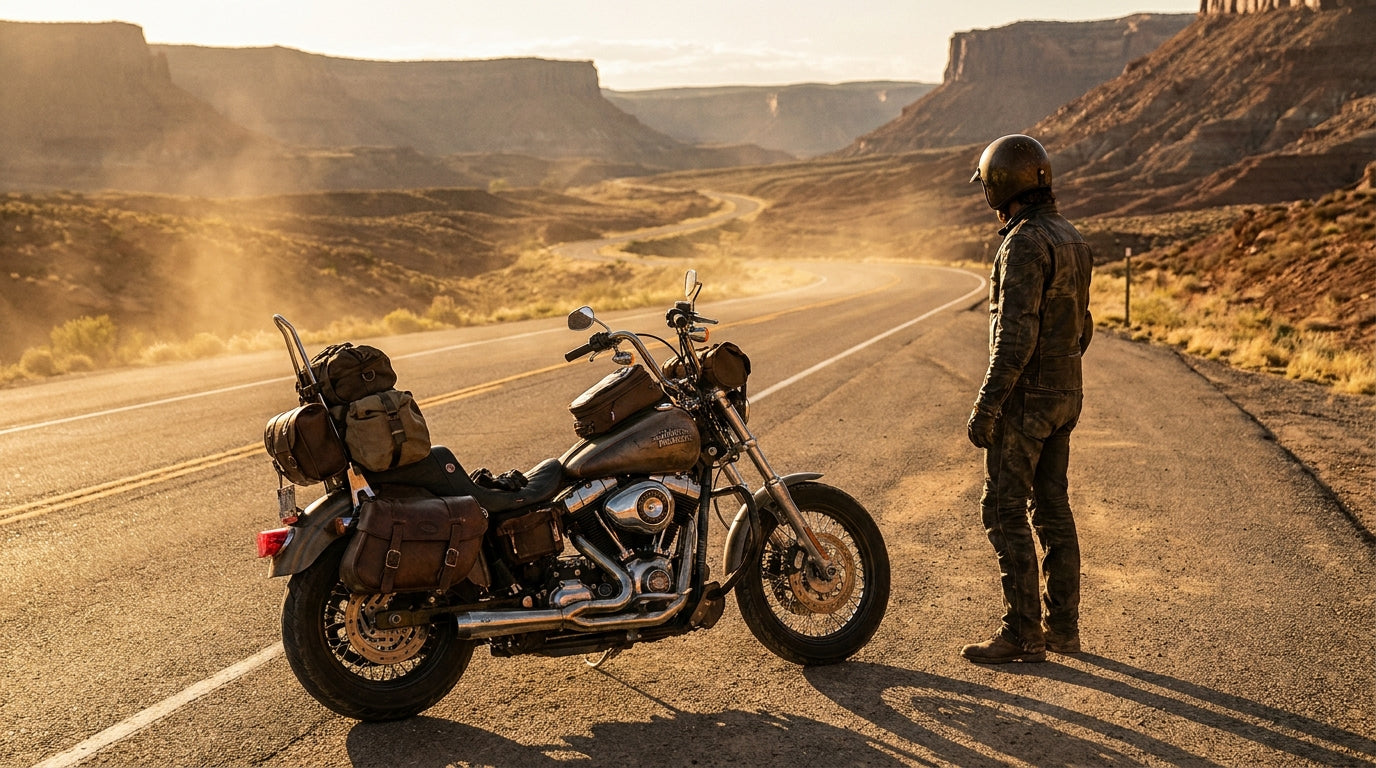
You are standing in a parking lot after a 200-mile ride, digging through your jacket pockets for your phone, a gas receipt, and the card you need for lunch. Everything is crammed together. Your keys scratch your screen. There is a better way to carry gear on a motorcycle, and it does not involve stuffing your jacket like a cargo vest.
This guide breaks down every style of biker bag that actually works on a motorcycle. By the end, you will know the difference between a drop leg bag and a crossbody sling, which material holds up in rain, and how to pick the right biker bag for your riding style. Whether you ride a Harley Softail or a Honda Rebel 500, the right bag changes how you ride.
Why Biker Bags Beat Pockets and Backpacks
A standard backpack shifts your center of gravity higher and traps heat against your back. On a 90-degree day, that means a soaked shirt by mile 30. Biker bags sit lower on your body, usually on your thigh, hip, or chest, keeping weight closer to the bike's center of mass.
The practical difference is real. A drop leg bag weighing 1.5 lbs sits on your thigh, below your jacket. It does not shift when you lean into a turn. A quality motorcycle bag also keeps your hands free at gas stops and rest areas. No swinging a backpack off your shoulders every time you need your wallet.
Biker bags for men and women come in six main styles. Each one solves a different problem. Here is how they compare.
Drop Leg Bags: The Most Popular Biker Bag Style
Drop leg bags strap around your waist and thigh, keeping the weight locked to your upper leg. The Leatt 3.0 set the standard for this design years ago, but today you can find waterproof versions with MOLLE webbing for under $50.
Why riders like them: the bag sits below your riding jacket, so you never need to unzip anything to grab your phone or wallet. Most drop leg bags hold 1 to 3 liters, which is enough for a phone, wallet, multi-tool, and a small first-aid kit.
The downside is they can rub against your leg on long highway stretches if the straps are too loose. Tighten the thigh strap until you feel pressure but not a squeeze. If the bag bounces when you walk, it is too loose.

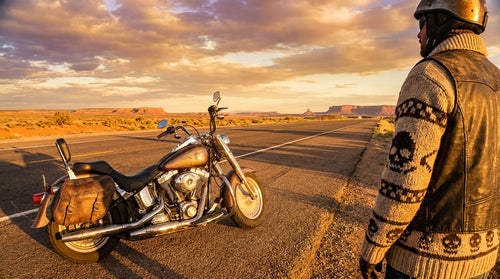
For riders who want a classic leather look, a steampunk or skull-themed leg bag adds some personality to the setup.

Crossbody and Sling Bags for Riding
A crossbody motorcycle bag sits diagonally across your chest, with the pouch resting on your back or side. The Viking Cycle messenger line runs about 8 liters, big enough for a tablet, phone, and rain layer.
Sling bags are smaller, usually 3 to 5 liters, and sit on your chest. They work well for quick-access items on sport or naked bikes where you lean forward. The strap crosses one shoulder, so you can swing it to the front without taking it off.
Both styles work for riders who hate leg bags rubbing their thigh. The trade-off is that a crossbody bag can shift if you are riding aggressively through twisties. A chest strap or stabilizer clip fixes that. For biker clothing layering, a sling sits comfortably over a leather jacket or vest.


Saddlebags and Tail Bags: When You Need Real Cargo Space
If you are packing for an overnight or a full weekend rally, body-worn bags are not enough. Saddlebags hang on either side of the rear wheel and range from 15 liters per side (soft throw-overs) up to 35+ liters per side (hard cases like the Harley Tour-Pak system).
Soft saddlebags made from full-grain leather last longer than synthetic ones, but they weigh more. A pair of 20-liter leather saddlebags typically weighs 8 to 12 lbs empty. PU leather bags weigh half that but crack after two or three seasons of sun exposure.
Tail bags strap to your rear seat or luggage rack. They are the go-to for solo riders who do not need side bags. A 25-liter tail bag can hold a change of clothes, toiletries, and chargers for a one-night trip.

Biker Bag Comparison: Side by Side
| Bag Type | Capacity | Best For | Price Range | Drawback |
|---|---|---|---|---|
| Drop Leg | 1 to 3 L | Daily carry, essentials | $35 to $90 | Thigh rub on long rides |
| Crossbody / Sling | 3 to 8 L | Quick access, sport bikes | $40 to $70 | Can shift in hard turns |
| Saddlebags (soft) | 15 to 25 L each | Weekend trips, touring | $80 to $250 | Heavier in leather |
| Tank Bag | 5 to 15 L | Maps, snacks, phone mount | $30 to $120 | Blocks tank access |
| Tail Bag | 10 to 30 L | Solo overnights, rallies | $50 to $190 | Needs rack or strap points |
| Hip / Waist Pack | 1 to 2 L | Minimalist, short rides | $20 to $45 | Very limited space |
Leather vs Synthetic: What Actually Holds Up
Real leather biker bags get better with age. Full-grain cowhide develops a patina, resists scuffs, and can last 10+ years if you condition it once a season with Lexol or a similar product. The Milwaukee Leather brand uses 1.1 to 1.2 mm cowhide on their saddlebags, which is thick enough to resist road rash but still flexible.
Synthetic bags, usually made from 600D or 1680D nylon, weigh less and handle rain better out of the box. They cost 30 to 50% less than leather. But they fade in UV light and the stitching tends to fray where the bag meets the strap after heavy use.
The bottom line: if you ride year-round and want gear that lasts, go with real leather. If you ride occasionally in mixed weather and want something lighter, a quality nylon bag with YKK zippers will do the job for two to three seasons. What you want to avoid is PU "faux leather" sold on no-name marketplace listings. It peels within months and offers zero long-term value.

5 Mistakes Riders Make Buying Biker Bags
1. Buying Too Big
A 10-liter leg bag sounds great until it is flopping against your knee at 70 mph. Match the bag size to what you actually carry. Most daily riders need 2 to 3 liters, not 10.
2. Ignoring Strap Quality
Cheap bags use thin nylon webbing and plastic buckles. At highway speed, a plastic buckle can crack from vibration. Look for bags with metal hardware or reinforced polymer clasps. YKK zippers are a quick quality check.
3. Skipping the Test Fit on the Bike
A biker bag that feels good standing up can sit differently once you are in riding position. A saddlebag can rub your exhaust pipe. A leg bag can block your clutch lever on a shorter rider. Always test it on the bike before a long ride.
4. Choosing Looks Over Water Resistance
Getting caught in a 20-minute downpour with a bag that has no rain flap will soak your phone and wallet. If your bag is not waterproof, keep a $3 dry bag inside it for electronics.
5. Buying No-Name Marketplace Bags
A $12 leg bag from an unknown seller looks fine in photos. In person, the "leather" is painted cardboard. The zippers jam after two rides. The stitching pops at the seams. You end up buying a second bag within three months. Biker bags built with real materials cost more upfront but save money in the long run. That is the American Legend Rider approach: gear that lasts, not gear you replace.
How to Pick the Right Biker Bag for Your Ride
Start with one question: what do you need to carry, and for how long? If it is just a phone, wallet, and keys for a Saturday cruise, a drop leg bag is all you need. If you are packing for a weekend at Sturgis, pair saddlebags with a tail bag.
For riders who commute, a crossbody sling handles the daily load without bulk. For touring riders, a full saddlebag setup plus a tank bag gives you access to everything without stopping.
Whatever style you pick, go with real materials, solid hardware, and a design made for motorcycle riding. Generic fashion bags were not built for 70-mph wind, engine heat, and road grime. If you are ready to shop, the motorcycle bags collection is where to start.

No comments yet. Be the first rider to weigh in.