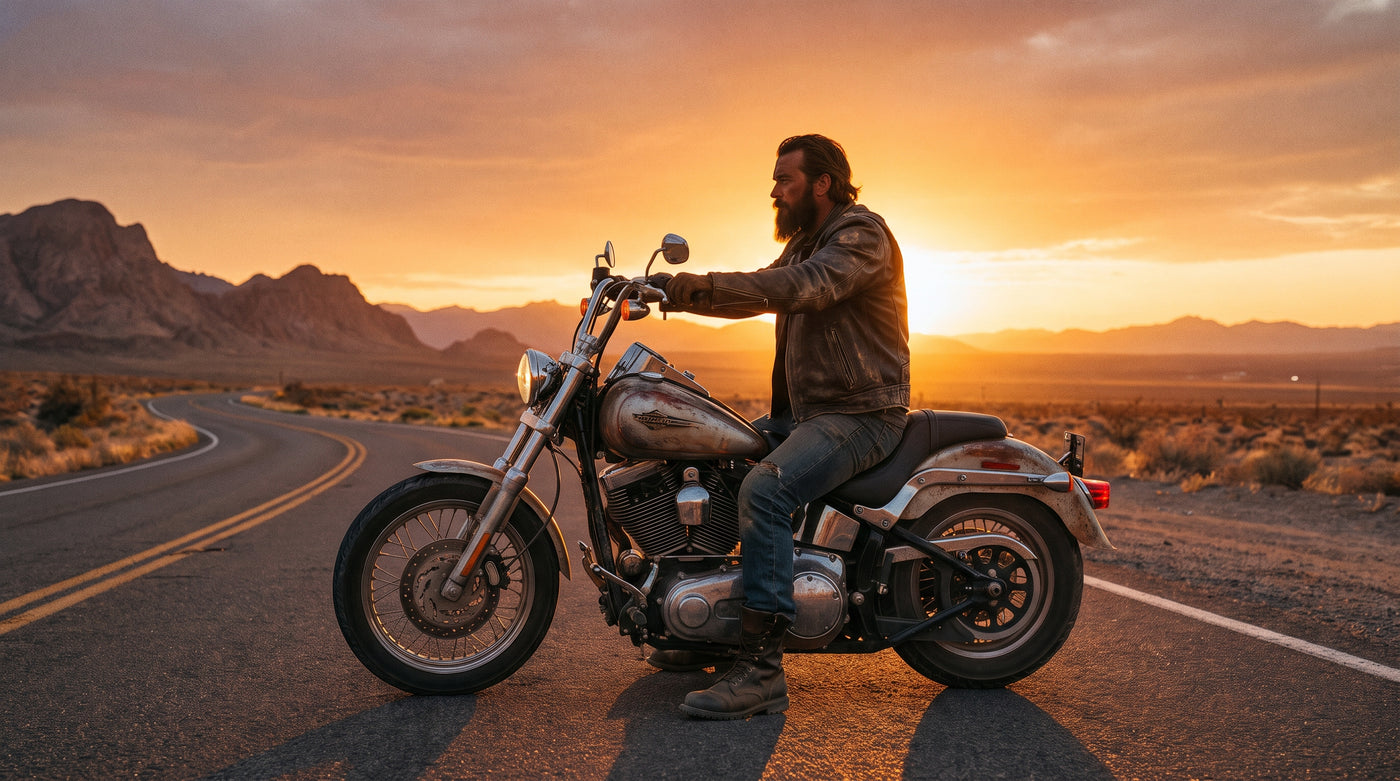
Three riders showed up to a weekend rally last spring wearing brand-new "biker outfits" they had ordered off a random marketplace. One guy's jacket started peeling at the shoulders before the first pit stop. Another's boots had zero ankle support and left him limping by day two. The third wore a polyester vest that trapped so much heat he stripped it off by mile 40. A biker outfit for men is not a costume. It is functional gear that either holds up on the road or falls apart when you need it most.
This guide breaks down every piece of a ride-ready biker outfit, from the jacket that anchors the look to the boots that keep your feet on the pegs. You will learn which materials last, which styles match different types of riding, and how to avoid the most common mistakes that waste money and ruin rides. If you are building a biker outfit for the first time or upgrading what you already own, every section targets one decision you need to make.
What Goes Into a Real Biker Outfit for Men
A proper male biker outfit starts with five core pieces: a leather jacket, riding boots, a vest or overshirt, a base layer or tee, and gloves. Everything else (sunglasses, wallet chain, bandana) is secondary. Getting the five right matters because each one serves a double purpose. It protects you on the bike and defines the look when you step off it.
The classic Schott 618 Perfecto, the jacket Marlon Brando wore in The Wild One, weighs about 5 lbs in 3 oz steerhide. That weight is the baseline for what "real leather" feels like. If you pick up a jacket and it feels like a windbreaker, it probably is one with a leather-look coating. The same principle applies to every piece: quality biker gear has weight to it because the materials are thick enough to provide actual protection.
Budget matters, but not the way most guys think. A full biker outfit built from quality pieces runs $500 to $900 for jacket, boots, vest, shirt, and gloves. Cheap marketplace bundles cost $150 and last one season. The per-ride cost of the quality set drops below the cheap set within the first year if you ride twice a week.
The Leather Jacket Is the Centerpiece of Every Biker Outfit
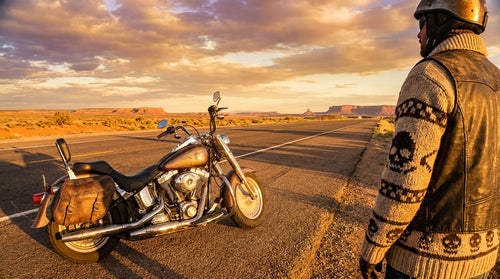
No single piece defines a biker outfit like the jacket. It is what people see first and what protects you most. For motorcycle riding, you want cowhide or buffalo hide cut at 1.0 to 1.2 mm thickness. That range is thick enough to resist road rash in a slide at 30 mph but flexible enough to let you move your arms freely over the bars.
Two jacket styles dominate the biker world. The asymmetrical zip (like the Perfecto) sits slightly off-center to keep the zipper from pressing into your chest when you lean forward. The straight zip (cafe racer style) runs up the middle and pairs better with a slim fit. Both work on a motorcycle. The choice comes down to your build and which riding position you use. Cruiser riders who sit upright tend to favor the asymmetrical. Sport and standard riders who lean forward often prefer the cafe racer cut.
Avoid jackets labeled "fashion leather" or "PU leather." These are plastic coatings bonded to fabric. They crack along the fold lines within three to six months of regular wear and offer zero abrasion protection. A real leather biker jacket develops a patina over time and breaks in to your body shape after about 20 to 30 wears.

Picking Boots That Match a Biker Outfit for Men
The wrong boots ruin the entire look and make long rides painful. A proper pair of biker boots sits at least 8 inches tall, covers the ankle, and has an oil-resistant rubber outsole that grips wet pavement and metal foot pegs. The Chippewa 27899 11-inch engineer boot is a reference point in this category: Goodyear welt construction, Vibram sole, and a 12-inch shaft for serious shin coverage.
For biker outfits, black is the default boot color because it hides chain grease, oil spots, and road grime that would stain lighter leathers after one ride. Pull-on styles (engineers and harness boots) give you a cleaner silhouette under straight-leg jeans. Lace-ups with a side zip offer more fit adjustability and faster on-off for daily commuters.
Match the boot height to your bike. Cruisers with forward controls work best with 10 to 12 inch shafts that protect your shins from engine heat. Standard and sport riders do better with 8 inch boots that allow more ankle flexion in a forward lean. If you need help picking, the leather motorcycle boots collection covers both styles.
Biker Vests and the Layering System
A vest is the most versatile piece in a biker outfit. It adds a layer of protection, gives you a place to mount club patches or pins, and works as a standalone top in warm weather or as a mid-layer under a jacket when the temperature drops. The two main vest types for riders are leather and denim, and each has a different job.
A leather vest made from 1.0 mm cowhide weighs about 2 lbs and provides genuine wind blocking and minor abrasion resistance. Leather vests look sharpest over a plain black or white tee and pair naturally with dark jeans and engineer boots. Denim vests are lighter (around 1 lb), breathe better in summer, and accept patches more easily because the fabric takes stitching without special tools.
The layering system works in three tiers: base tee, vest or overshirt, and jacket. In 80-degree heat, the tee and vest alone give you a complete biker look without overheating. Below 60 degrees, add the leather jacket over the vest. Below 45 degrees, add a thermal base layer under the tee. This system means you can ride comfortably across a 40-degree temperature range without buying separate outfits for each season. Check the men's motorcycle vest collection for real leather and denim options.

Biker Shirts and Base Layers That Work on the Road
The shirt under your jacket or vest matters more than most guys realize. A 100% cotton tee in a heavyweight 6.1 oz fabric (the same weight Hanes Beefy-T uses) absorbs sweat and feels comfortable against skin. It does not stick to your back the way polyester does at highway speed when wind pushes the fabric flat. Cotton also breathes through a leather jacket, which traps heat from your body and the engine.
For biker outfits specifically, stick to solid colors or simple graphics. Black, white, and charcoal grey are the foundation. Skull prints, motorcycle brand logos, and club-style graphics all fit the aesthetic, but avoid anything with more than two colors or photographic prints that clash with the rest of the outfit. The goal is to look like a rider, not a walking billboard.
Moisture-wicking synthetics work for sport riding at high speeds where airflow cools the fabric, but they feel clammy at low speeds and in stop-and-go traffic. If you split your riding between highway and city, cotton is the safer bet. A three-pack of quality biker tees in black, white, and grey covers every outfit combination you will need.

Classic vs. Modern Biker Outfits Compared
The classic biker look has not changed much since the 1950s. The modern version borrows the same DNA but adds technical materials and a slimmer fit. Here is how they stack up piece by piece.
| Piece | Classic Biker Outfit | Modern Biker Outfit |
|---|---|---|
| Jacket | Asymmetrical zip, heavy steerhide, loose fit | Cafe racer cut, cowhide or goatskin, slim fit |
| Boots | Engineer or harness, 11+ inches, pull-on | Lace-up tactical, 8 inches, side zip |
| Vest | Leather with club-style patches | Denim, minimal graphics or clean leather |
| Shirt | Plain white or black cotton tee | Moisture-wicking henley or fitted tee |
| Pants | Straight-leg dark denim, boot cut | Slim-fit riding jeans with Kevlar lining |
| Accessories | Wallet chain, bandana, aviator sunglasses | Riding gloves, neck gaiter, wrap-around shades |
| Best for | Cruisers, choppers, rallies | Standard, sport, daily commuting |
Neither style is better overall. Classic works when you want the timeless American biker look and ride a cruiser or chopper. Modern works when you ride a standard or sport bike and want gear that performs on a daily commute without looking out of place when you walk into a meeting. Most riders end up with elements of both, which is fine. A cafe racer jacket over a classic white tee with engineer boots is one of the strongest biker outfit combinations out there.
How to Build a Biker Outfit for Hot Weather
Summer riding is where cheap biker gear fails hardest. Synthetic jackets trap heat like a trash bag. PU boots make your feet sweat until your socks are soaked. A smart summer biker outfit strips down to the essentials while keeping protection and style intact.
Start with a perforated leather jacket or a leather vest worn solo. Perforated cowhide (small holes punched through the leather in a grid pattern, typically 2 to 3 mm spacing) lets airflow pass through while maintaining most of the abrasion resistance of solid leather. The Roland Sands Ronin jacket is a good example of this approach, with perforated panels across the chest and back where airflow matters most.
Swap heavyweight jeans for riding jeans with stretch denim. Brands like Saint Unbreakable use single-layer Dyneema-woven denim that looks and feels like regular jeans but passes CE Level A abrasion tests. For boots, choose a shorter 7 to 8 inch pair with a breathable lining. Fingerless leather gloves let your fingers breathe while protecting your palms, which take the worst impact in a fall.
The summer biker outfit formula: perforated jacket or leather vest, cotton tee, stretch riding jeans, short-shaft boots, fingerless gloves. That setup keeps you under 8 lbs of total gear weight while still looking like someone who actually rides.
5 Mistakes Guys Make With Biker Outfits
1. Buying the whole outfit from one marketplace seller. Bundled "biker costume" kits use the cheapest materials across every piece. The jacket is PU, the boots are vinyl, and the vest is thin enough to see through. Buy each piece separately from brands that specialize in that specific item. Your jacket maker does not need to also make your boots.
2. Ignoring fit for the sake of style. A jacket that looks great hanging on a rack but restricts your arm movement over the bars is dangerous. You need full reach to the grips without the jacket riding up and exposing your lower back. Try everything on in your actual riding position (arms forward, slight lean) before buying.
3. Matching everything to the same shade of black. An all-black outfit from head to toe can look flat and one-dimensional. Mix textures and tones. Matte black leather jacket, faded black denim, and glossy black boots create depth. A white or grey tee underneath breaks the monotone and adds contrast where it matters.
4. Skipping gloves because they "do not match." Your hands hit the pavement first in almost every type of fall. A pair of leather riding gloves costs $40 to $80 and protects the most vulnerable part of your body on the bike. Gauntlet-style gloves with a wrist closure match a classic biker outfit. Short-cuff gloves with knuckle armor fit the modern look. Either way, wear them.
5. Treating riding gear and street wear as the same thing. A fashion leather jacket from a clothing brand has thinner hide, no armor pockets, and decorative zippers that snag on tank bags. A motorcycle-specific jacket has pre-curved sleeves, CE armor pockets, and reinforced stitching at impact zones. They can look identical on the street, but only one protects you at 45 mph.
Putting a Biker Outfit Together That Goes the Distance
The best biker outfit for men is the one you can ride 10,000 miles in and still wear to a bar afterward. Real leather, solid boots, a vest that layers properly, and a shirt that does not fall apart after ten washes. That combination has defined motorcycle style for 70 years because nothing works better for the way riders actually live.
If you are putting your first real outfit together or upgrading from gear that did not hold up, the leather jackets collection is a solid starting point. Start with the jacket, build outward from there, and ride in everything before you buy the next piece.

No comments yet. Be the first rider to weigh in.