
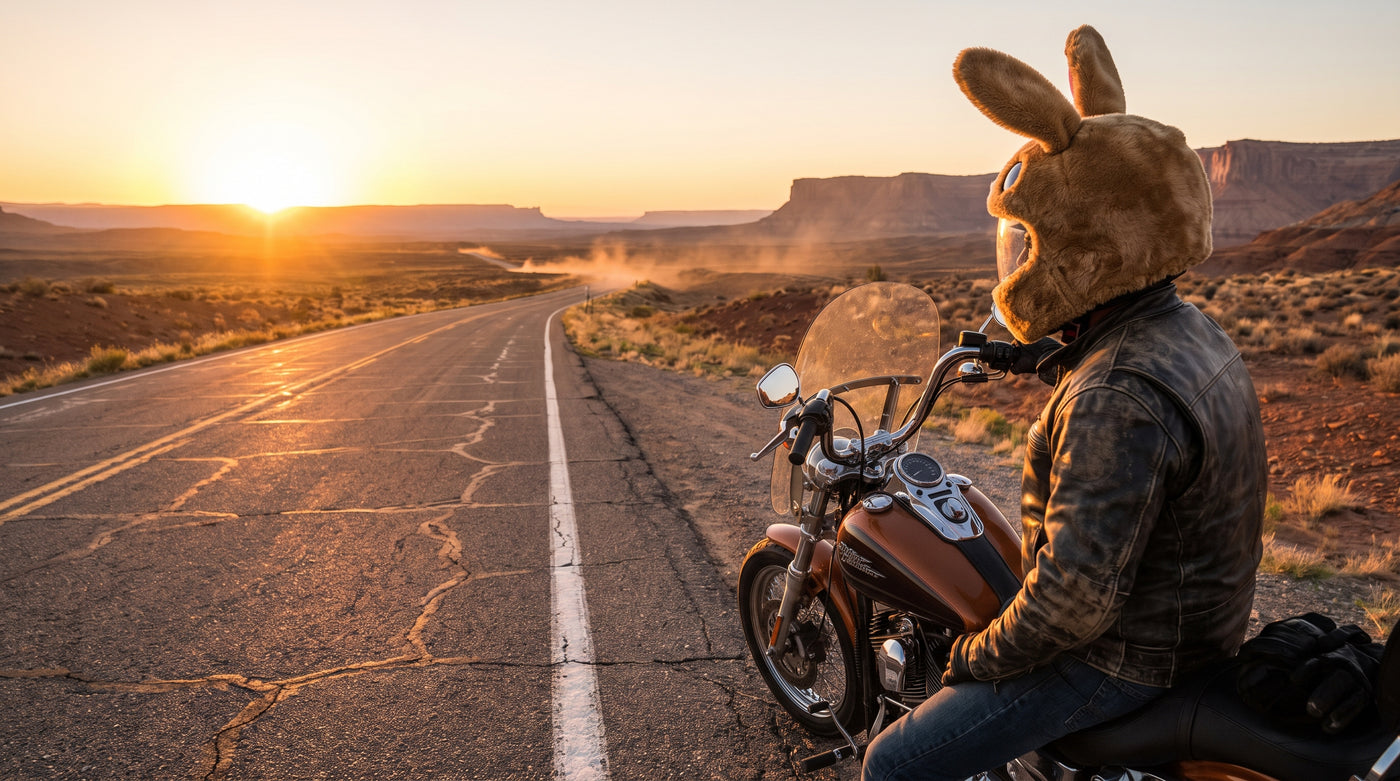
A rider in a matte black full-face pulls up to a group ride with two plush bunny ears sticking straight up from the helmet. Every head turns. Half the group laughs. The other half asks where to get one. That is exactly the effect a bunny helmet cover is built for, and it takes about 30 seconds to install.
This guide breaks down the three most popular bunny helmet cover colors, how the universal fit system works on different helmet shapes, what changes (and what doesn't) at highway speed, and the buying mistakes that lead to returns. If you ride and want a cover that actually stays put, this is the page to read before you order.
What Is a Bunny Helmet Cover?
A bunny helmet cover is a plush fabric shell with two upright ears that stretches over a standard motorcycle helmet. Most covers use an elastic hem at the base, similar to a fitted sheet, which grips the helmet lip and keeps the cover from peeling off in wind.
The typical cover weighs between 200 and 350 grams, so it adds almost nothing to the roughly 1,400-gram weight of a standard full-face helmet. The ears stand 15 to 20 cm tall on most models. Inside, a soft lining protects the helmet finish from scratching.
Bunny covers started as a crossover from anime and cosplay culture in Japan and South Korea. Over the past three years they've become a fixture at bike nights, charity rides, and casual group rides across the U.S. They're purely cosmetic. They don't affect your helmet's DOT or ECE rating because they sit on the outside of the certified shell.
Riders use them for charity poker runs, Halloween rides, group photo ops, and just daily personality on the commute. Some couples buy matching pairs in different colors to ride together.

Black, White, or Gray: Picking Your Bunny Helmet Color
The three colors riders search for most are black, white, and gray. Each fits a different look and has practical trade-offs worth knowing before you pick.
Black Bunny Helmet Cover
Black is the top seller by a wide margin. It matches dark gear, doesn't show road grime as fast, and looks more "biker" than the lighter options. On Google, "black bunny helmet cover" is the most-searched color variant. If you ride in mostly dark leathers and a matte or gloss black lid, this is the default choice. The dark fabric also holds up better after multiple washes since fading isn't visible.
White Bunny Helmet Cover
White stands out in traffic. On a sunny day it also runs slightly cooler because it reflects more light, though the difference is marginal since the plush is thin. White does stain more easily, especially after riding through bugs or light rain, so plan to hand-wash it every few weeks. Riders with white or silver helmets love this option because it blends into the base color and makes the ears pop without clashing.

Gray Bunny Helmet Cover
Gray splits the difference. It hides dirt better than white, looks neutral against silver and gunmetal helmets, and pairs well with hi-vis vests without clashing. If you can't decide, gray is the safe pick. It also photographs well, which matters if you're posting ride shots on social media.

Bunny Helmet Cover Color Comparison
| Feature | Black | White | Gray |
|---|---|---|---|
| Visibility | Low (blends with dark gear) | High (stands out in traffic) | Medium |
| Dirt resistance | Best (hides grime) | Worst (shows stains fast) | Good |
| Best gear match | Black leathers, matte lids | Light gear, hi-vis setups | Silver, gunmetal helmets |
| Heat in sun | Slightly warmer | Slightly cooler | Neutral |
| Wash frequency needed | Every 4-6 weeks | Every 2-3 weeks | Every 3-4 weeks |
How a Bunny Helmet Cover Fits Your Motorcycle Helmet
Most bunny covers are labeled "universal fit," and that's mostly accurate. The elastic hem stretches to wrap helmets with a circumference between 56 and 64 cm, which covers sizes M through XXL in most brands like HJC, Shoei, Bell, and Bilt. Here's how to put one on:
- Open the visor or flip up the chin bar if you're on a modular.
- Stretch the cover opening wide with both hands.
- Slide it over the top of the helmet, front to back, like pulling on a beanie.
- Tuck the elastic hem under the helmet lip all the way around.
- Straighten the ears so they point up, not sideways.
The whole process takes 20 to 30 seconds once you've done it twice. On a half-shell helmet (like a classic DOT half-face), the fit is tighter because the cover wraps a smaller surface area. The ears may lean slightly forward, which some riders actually prefer since it gives the look more character.
On a full-face with a pronounced chin bar (like a Shoei RF-1400 or an HJC i71), the cover stretches further and sits a bit looser at the chin. A small binder clip on the inside, hidden under the chin, keeps it snug if you're riding above 70 mph. Some riders also run a thin rubber band around the base of each ear to keep them upright in strong crosswinds.
Will a Bunny Helmet Cover Change How Your Helmet Performs?
This is the question every rider asks before committing. Here's what actually changes and what doesn't.
Wind Resistance
At city speeds (under 45 mph), you won't notice a difference. Above 65 mph, the ears catch some wind and you'll feel a slight backward tug, roughly equivalent to turning your head 10 degrees to the side. It's noticeable but not uncomfortable. Riders who commute at highway speed sometimes trim the ear tips by 2 to 3 cm to reduce drag without losing the look.
Safety
The cover sits on top of a DOT-certified shell. It doesn't change the impact-absorption layer, the EPS liner, or the chin strap mechanism. In a slide, the plush material will shred off, leaving the real helmet underneath to do its job. Your safety rating stays exactly the same. No certification body considers an external fabric cover a modification to the helmet's safety structure.
Noise
Plush fabric flutters at speed, which adds a soft whooshing sound. It's quieter than what earplugs block, so most riders don't notice it over engine and wind noise. If you ride with a Bluetooth comm unit like a Cardo Packtalk (which tops out at 45 dB output), the cover doesn't interfere with speaker clarity.
Temperature
A thin plush layer adds minimal insulation. In summer above 90 degrees F, you might feel 1 to 2 degrees warmer at the crown. In cooler weather, that same layer actually helps retain a bit of warmth. It's not a significant factor either way.
Bunny Helmet Cover vs. Full Bunny Helmet
Some riders search for a "motorcycle bunny helmet" expecting an all-in-one helmet with built-in ears. Those exist, but they're a different product with different trade-offs. Here's how they compare:
| Factor | Bunny Helmet Cover | Full Bunny Helmet |
|---|---|---|
| Price range | $25 to $45 | $80 to $200+ |
| Removable | Yes, in seconds | No (ears are molded in) |
| DOT certified | Uses your existing DOT lid | Check the label (many are not) |
| Helmet choice | Works with any helmet you own | Locked to one helmet |
| Wind at speed | Ears flex and flatten slightly | Rigid ears catch more drag |
The cover wins on flexibility. You keep your trusted, safety-rated helmet and add personality when you want it. When you're commuting to work and don't want the ears, it comes off in five seconds and fits in a tank bag. A full bunny helmet locks you into one look and one safety standard that may or may not meet DOT requirements.
For riders who already own a quality lid, the cover is the smarter move. For someone building a cosplay or show bike that won't see highway speed, the full helmet can work, but always verify it carries a real DOT sticker, not a decorative one. The difference matters if you ever get pulled over or, worse, if you need the helmet to actually protect you.
5 Common Mistakes When Buying a Bunny Helmet Cover
These are the issues that lead to returns, bad reviews, and disappointed riders.
1. Ignoring Helmet Shape
Not all helmets have the same profile. A Shoei GT-Air II has a wider, rounder shell than an AGV K6, which is narrower and taller. Universal covers fit both, but the ear position shifts. On a narrow helmet the ears tilt inward. Check the product photos with a helmet similar to yours before ordering.
2. Buying the Cheapest No-Name Option
Marketplace covers under $12 often use thin polyester fleece that pills after two rides and fades after one wash. The stitching at the ear base fails first, leaving you with a floppy-eared mess at 50 mph. Spending $30 to $40 on a cover with reinforced ear seams and a thicker elastic hem means it lasts a full riding season or longer. Quality materials, real stitching, and a tested elastic band make the difference between a cover that lasts and one that ends up on the highway shoulder.
3. Not Planning for Rain
Plush fabric absorbs water. A 20-minute rain shower turns the cover into a soggy sponge that takes hours to dry. If you ride in variable weather, carry a gallon-size zip bag in your saddlebag and pull the cover off when clouds roll in. Some riders apply a light spray of Scotchgard fabric protector, which buys about 10 minutes of water resistance before soaking through.
4. Skipping the Chin Tuck
At highway speed, wind gets under the cover's front edge and peels it backward. Tucking the elastic under the chin bar (or clipping it with a small binder clip hidden inside) prevents this. Riders who skip this step lose covers on the freeway, and that's a road hazard for the car behind them.
5. Only Thinking About Color
Ear height matters more than most buyers realize. Covers with 20 cm ears look dramatic at a standstill but catch significantly more wind above 60 mph. If you ride highways regularly, look for covers with 12 to 15 cm ears. They still read as "bunny" but don't act as sails. Check the product listing for ear dimensions before you buy.
Picking the Right Bunny Helmet Cover for Your Ride
If your gear runs dark, the black bunny helmet cover is the one most riders grab first. If you want visibility or ride in a lighter setup, white or gray both work well.
The key is getting a cover with solid elastic, reinforced ear stitching, and material that can handle a few washes without falling apart. That's where quality matters more than price. If you're shopping for motorcycle helmets or helmet accessories, the ALR helmet collection is where I'd start. Real gear, built for real riding.


No comments yet. Be the first rider to weigh in.