
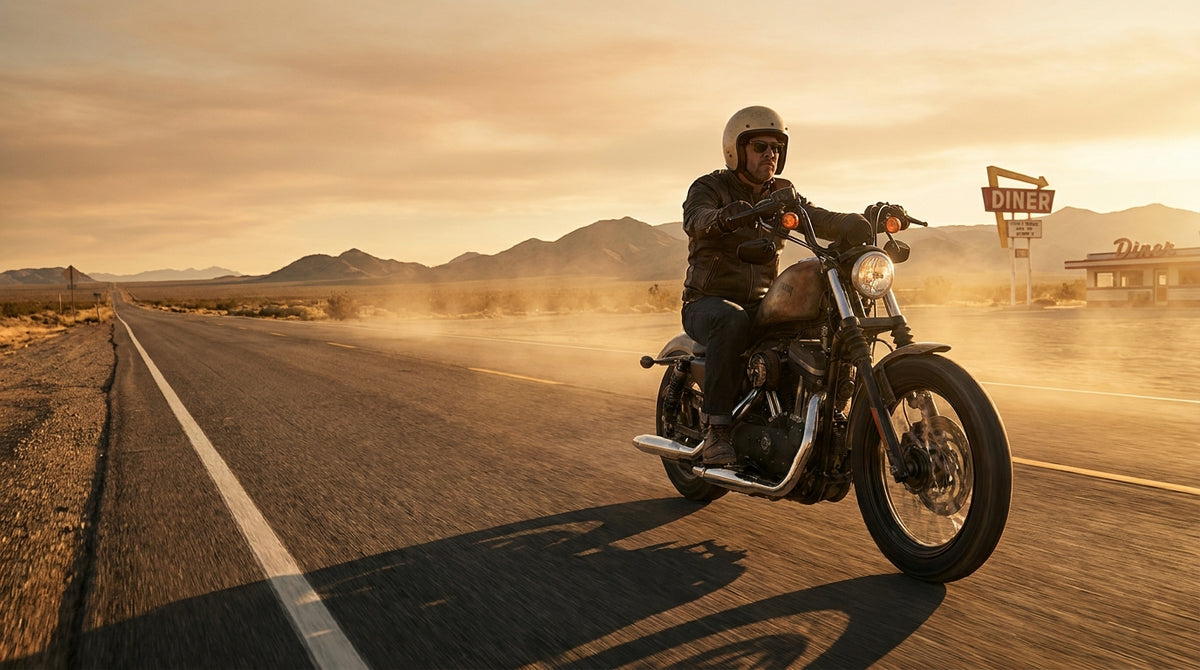
Search "cafe racer helmet" online and you'll scroll through page after page of cheap open-face lids with retro paint and no safety rating listed anywhere. They look sharp in the product photos. They also crack on impact because there's no DOT or ECE certification behind the shell. The real challenge with cafe racer helmets is finding one that nails the vintage stripped-down look and passes an actual safety standard. That combination is rarer than most riders expect.
This guide breaks down every cafe racer helmet style on the market in 2026. Open face, retro full face, bubble visor, bare goggles. You'll know which shells carry a real DOT sticker, which brands hold up on actual rides, and how to match the right helmet to your cafe build without blowing your budget.
What Makes a Cafe Racer Helmet Different
Cafe racers stripped everything unnecessary off the motorcycle. The helmet follows the same philosophy. A cafe racer helmet has a round, low-profile shell with minimal vents, no oversized sun visor, and no bulky modular chin bar. Think Bell 500 from 1966, the helmet that started this entire category and defined the shape riders still want today.
Most cafe racer helmets fall into two camps: three-quarter open face (the most popular style) and retro full face. Both keep the shell shape simple and smooth. No aggressive aerodynamic ridges, no integrated Bluetooth housing, no dropdown sun shields. The whole point is a helmet that looks like it belongs on a 1968 Triton or Norton Commando, even if the EPS liner inside uses current safety engineering.
Weight is part of the equation. A Bell Custom 500 weighs roughly 2.1 lbs (950g) in size medium. Compare that to a full-featured adventure helmet at 3.5+ lbs, and you feel the difference on a 3-hour ride. Cafe helmets sit lower on the head, hug the skull, and produce less neck fatigue over distance. That's not just cosmetics. It's function following form, and it's why riders who switch to a low-profile shell rarely go back to a heavier lid.

Best Open Face Cafe Racer Helmets
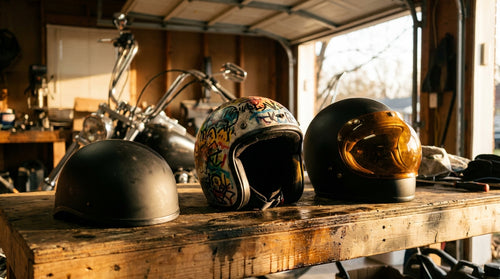
The open-face three-quarter shell is the default choice for most cafe racer builds. It shows your face, lets you wear goggles or aviator sunglasses, and keeps the silhouette tight against your head. This is the style you'll see at every vintage rally, distinguished gentleman's ride, and Sunday morning meet.
The Biltwell Bonanza and Bell Custom 500 are the two most recognized names in this space. The Bonanza uses a hand-painted ABS shell with DOT FMVSS 218 certification, retailing between $100 and $160 depending on the colorway. Bell's Custom 500 uses a fiberglass composite shell and has been in production since the 1960s. The current version is certified to both DOT and ECE 22.06.
A few things to watch for with open-face helmets:
- No chin protection. At highway speeds, an open face leaves your jaw fully exposed. For city riding on a cafe build, most riders accept this tradeoff. For regular highway commuting at 70+ mph, it's a real risk.
- Wind noise is higher. Without a chin bar or sealed visor, expect more noise above 45 mph. A good pair of foam earplugs rated at 32 dB NRR cuts this significantly.
- Snap-on visors work well. Most open-face cafe helmets accept a 3-snap peak visor that adds rain and sun coverage without killing the clean profile.
- Padding breaks in. A brand-new cafe helmet should feel snug, almost uncomfortably tight. The cheek pads compress about 15 to 20 percent over the first few weeks and settle into your head shape. If the helmet feels comfortable in the store, it'll be too loose at speed.
If you want the cafe racer open-face look with gear that actually lasts, the cafe racer helmet collection has DOT-certified picks at every price point.

Retro Full Face Cafe Racer Helmets
Full face cafe racer helmets are a smaller category, but they're gaining ground among riders who want vintage aesthetics with real chin protection. The concept: a smooth, round full-face shell that looks like it rolled off a 1970s grand prix grid but protects like a helmet built this year.
The Bell Bullitt leads this segment. Its fiberglass shell has a flat face port and round profile that reads vintage racing from across a parking lot. Underneath it uses multi-density EPS and meets DOT FMVSS 218. It weighs about 3.2 lbs (1,450g) in medium. The Simpson Street Bandit is another strong option, with a tinted shield and aggressive chin profile, also DOT rated. Both run between $300 and $500 depending on graphics.
These helmets run warmer than an open face since the chin bar blocks natural airflow. Most retro full-face models have two to four small vents, compared to ten or more on a modern sport helmet. If you ride in summer heat, plan on shorter sessions or swap in a moisture-wicking liner that dries fast between stops.
For a deeper comparison of full-face options across all styles, check out our full face motorcycle helmet guide for DOT picks and sizing details.

Shell Materials: Fiberglass vs ABS vs Polycarbonate
The shell material affects weight, price, and how the helmet handles impact energy. Most cafe racer helmets use one of three materials, and the difference is worth understanding before you commit your money.
Fiberglass composite is the premium option. It's lighter than plastic, distributes impact force across a wider area, and allows manufacturers to build thinner shells without sacrificing protection. The Bell Custom 500 and Bell Bullitt both use fiberglass. Expect to pay $150 to $500 for a fiberglass cafe helmet.
ABS (acrylonitrile butadiene styrene) is the workhorse plastic used in most mid-range helmets. It's durable, affordable, and passes DOT testing without issues. The Biltwell Bonanza and TORC T-50 both use ABS shells. Price range: $80 to $200. ABS helmets weigh about 100 to 200 grams more than fiberglass in the same size, which adds up on longer rides.
Polycarbonate is similar to ABS but slightly more impact-resistant per thickness. Some budget-tier cafe helmets use it. It works fine for DOT certification but tends to run the heaviest of the three. If a listing says "thermoplastic" without specifying which type, it's usually polycarbonate or a blend.
For most riders, ABS gives the best balance of cost and performance. Fiberglass is worth the premium if you ride daily and notice weight differences over longer distances. Polycarbonate gets the job done for weekend-only builds where the budget is tight.
Vintage Cafe Racer Helmets: Real Retro vs Reproduction
Some riders want an actual vintage helmet from the 1960s or 1970s. Fair enough, they look incredible hanging on a wall. But there's a safety problem that matters: EPS foam degrades over time. The Snell Memorial Foundation recommends replacing any helmet older than five years. A 50-year-old shell with dried-out, brittle foam offers about as much crash protection as a baseball cap.
If you want the vintage cafe racer helmet aesthetic, buy a modern reproduction that uses current impact-absorbing materials. Companies like Biltwell, Bell, and TORC make helmets that look straight out of 1972 but use fresh EPS and DOT-certified construction. The TORC T-50 is a solid example: fiberglass shell, retro paint schemes, DOT sticker, roughly $80 at retail.
A real vintage helmet belongs on the wall or in a display case. It's a piece of motorcycle history, and it's worth preserving. Ride in a modern reproduction that will actually protect your head, and save the original for bike nights and shows.
Cafe Racer Helmet and Goggles: How to Pair Them Right
Goggles are the signature cafe racer accessory. An open-face helmet with motorcycle goggles is the defining look of the cafe scene, and it's stayed that way for 60 years running. But fit matters more than style when you're at speed.
The goggle strap needs to sit in the channel at the back of the helmet shell. Most cafe helmets have a slight groove or flat area at the rear for this purpose. If the strap rides up over a ridge, the goggles shift forward at speed and leak wind from the bottom edge. Look for goggles with adjustable elastic straps at least 1 inch wide. Thin straps tend to roll, lose tension, and let the goggles bounce around.
Lens color matters for riding conditions. Clear or light-yellow lenses work best for overcast days and night riding. Smoke or amber lenses cut glare during sunny highway stretches. Avoid dark-tinted goggles if you ride at dusk or through tunnels regularly. Brands like Biltwell (Moto 2.0) and 100% make goggles specifically shaped to fit cafe-style helmet openings, with frame contours designed to match the eye port closely.
For a full breakdown on lens types, anti-fog coatings, and fit by face shape, check out our vintage motorcycle goggles guide.

Cafe Racer Helmet Styles Compared
| Style | Coverage | Weight (avg) | Goggle-Friendly | Price Range |
|---|---|---|---|---|
| Open Face (3/4) | Top, sides, back | 2.0 to 2.4 lbs | Yes | $80 to $200 |
| Retro Full Face | Full head + chin | 3.0 to 3.5 lbs | No (uses shield) | $250 to $500 |
| Half Helmet (skull cap) | Top only | 1.5 to 2.0 lbs | Yes | $40 to $120 |
| Bubble Visor Open Face | Top, sides + face shield | 2.2 to 2.6 lbs | No (built-in visor) | $100 to $250 |
For most cafe racer builds, the open-face three-quarter helmet hits the sweet spot of coverage, weight, and classic styling. If you ride highways regularly or commute in rain, a retro full face is the safer and drier option. Half helmets run lighter and cooler but leave the jaw and chin fully exposed, which is the zone that takes roughly 35% of crash impacts according to NHTSA-cited research.
5 Mistakes Riders Make Buying a Cafe Racer Helmet
1. Buying a helmet with no DOT or ECE label. Some imported "cafe racer helmets" on Amazon and eBay ship with zero safety certification. A genuine DOT sticker is permanently applied by the manufacturer during production. It's not a peel-and-stick aftermarket decal. If the listing doesn't mention FMVSS 218 or ECE 22.06, walk away.
2. Sizing by hat size instead of head circumference. Cafe racer helmets run snug because the shell is designed low-profile. Measure your head at the widest point above your ears with a soft tape measure. A Biltwell medium fits 57 to 58 cm heads. Bell's medium also fits 57 to 58 cm, but the internal shape is rounder, which matters if your head leans more oval. Always check the brand's own size chart before ordering.
3. Ignoring the goggle/visor decision before buying. If you plan to wear goggles, make sure the helmet has a smooth rear channel for the elastic strap. If you want a snap-on peak visor, confirm the helmet has 3-snap mounts above the brow. Some cafe helmets ship with neither, and drilling snap holes into the shell after purchase can crack the paint or weaken the structure.
4. Wearing a vintage helmet for actual riding. A helmet older than five years has degraded EPS foam. A 1970s original might look incredible and fetch $300 on eBay, but it won't protect your head in a real crash. Put it on display at home. Ride in a current reproduction.
5. Picking a helmet that doesn't match the bike's proportions. A big, bulky modular helmet looks wrong on a lean cafe racer. The helmet should sit tight to the head with a profile that matches the bike's minimalist lines. Try the helmet on and check a mirror from your riding posture. If the shell looks oversized relative to the bike, try a different brand that runs a more compact shape or size down one shell.
Finding the Right Cafe Racer Helmet for Your Build
The best cafe racer helmet is the one you'll actually wear on every single ride, not just the one that looks best parked in the garage. Start with your safety requirements (DOT at minimum, ECE 22.06 if you want the stricter European standard), narrow by style (open face or retro full face), and then pick the shell that fits your head shape and your bike's personality.
A quality shell with real impact protection and clean vintage lines is worth paying for once. It beats replacing a cheap no-name helmet every season because the liner fell apart or the shell cracked from UV exposure. Good gear holds its value, protects your head, and looks better with age and road miles.
If you're shopping for one, the cafe racer helmet collection is where I'd start. Every helmet there carries DOT certification and ships from a real warehouse with rider support behind it.

No comments yet. Be the first rider to weigh in.