
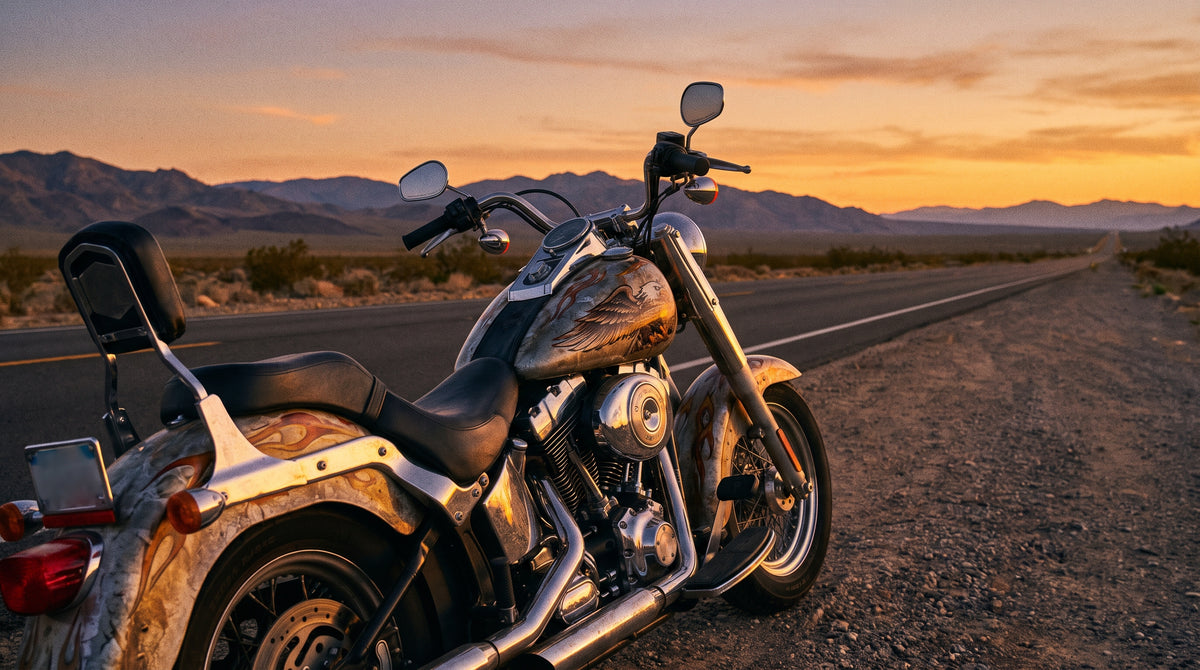
A single rock chip from a highway semi can gouge through $800 worth of custom paint in half a second. That is a real number riders learn the hard way, usually after they have already paid for the fresh coat. Graphic stickers for motorcycle protection sit between your paint and the road, absorbing hits from gravel, road debris, and daily wear that slowly ruins a finish.
These stickers range from $8 tank pads to $300 full-coverage graphic kits. This guide breaks down the actual cost of graphic stickers for motorcycle protection by type and material, where to place them for maximum coverage, how long they last, and which options give you the best protection per dollar. No filler, just numbers and specifics riders can use before buying.
What Graphic Protection Stickers Actually Do for Your Bike
Graphic protection stickers serve two jobs at once: they shield your paint from physical damage and they add visual style. A quality 6-mil cast vinyl sticker absorbs the impact of road debris, gravel spray, and minor contact that would otherwise chip or scratch your finish down to bare metal.
The protection layer matters more than most riders think. A standard motorcycle paint job costs $1,500 to $3,000 at a reputable shop, and even a small touch-up runs $200 or more. A $15 graphic sticker on your tank will not stop a direct hit from a deer, but it handles the daily abuse that slowly destroys paint over thousands of miles. Belt buckle scratches, knee rub, jacket zipper contact, parking lot door dings from the car next to you. These small hits add up faster than a pothole on a Michigan back road.
3M's cast vinyl, used in most premium motorcycle stickers, is rated for 7 to 12 years of outdoor UV exposure. That is the same material used on commercial fleet wraps sitting in Arizona sun year-round. When you compare a $20 sticker to a $400 paint touch-up, the math is obvious.
How Much Do Motorcycle Graphic Stickers Cost? (Type-by-Type Breakdown)
Prices vary widely depending on coverage area, material, and whether you go with generic or brand-specific graphics. Here is what each category actually costs in 2026:
| Sticker Type | Price Range | Coverage | Typical Lifespan |
|---|---|---|---|
| Tank Pads / Knee Grips | $8 - $25 | Tank sides only | 2 - 4 years |
| Reflective Safety Stickers | $10 - $30 | Helmet, fenders, rims | 3 - 5 years |
| 3D Metal-Style Decals | $15 - $40 | Accent areas | 5 - 8 years |
| Graphic Kit (Partial) | $60 - $150 | Tank, fenders, side panels | 3 - 6 years |
| Full Graphic Wrap Kit | $150 - $350 | Full body coverage | 4 - 7 years |
| Clear PPF (Paint Protection Film) | $200 - $500+ | Full or partial body | 5 - 10 years |
The sweet spot for most riders is the $15 to $60 range. A set of quality graphic stickers in that bracket protects the high-contact zones (tank, fender edges, frame) without wrapping your entire bike. Full graphic kits make sense if you are covering up damaged paint or want a complete color change without the $2,000+ cost of a full repaint.
One thing the table does not show: installation cost. DIY is free. Professional application adds $50 to $150 depending on coverage area and your local shop rates. More on that below.

Best Materials for Motorcycle Stickers: What Holds Up
The material determines everything: how long the sticker lasts, how well it protects, and how cleanly it peels off when you want a change. Here are the three main options riders choose between.
Cast Vinyl (The Industry Standard)
Cast vinyl is made by pouring liquid vinyl onto a sheet and baking it. This creates a thin (2-4 mil), conformable film that wraps around curves without lifting at the edges. 3M's 1080 series and Avery Dennison's Supreme Wrapping Film are the two names you will see most. A cast vinyl sticker rated for outdoor use handles UV, rain, and temperature swings from -40F to 200F without cracking. Expect 5 to 7 years on a motorcycle that sleeps in a garage, and 3 to 4 years on a bike parked outside full-time.
Calendered Vinyl (Budget Option)
Calendered vinyl is squeezed through rollers instead of cast. It is thicker (3-6 mil), stiffer, and roughly 40% cheaper. It works fine on flat surfaces like saddlebag panels and fender sides, but it struggles on tight curves. On a motorcycle gas tank with compound curves, calendered vinyl often lifts at the edges within 12 to 18 months. The upfront savings look good until you factor in replacement costs from early failure.
Polyurethane PPF (Maximum Protection)
Paint Protection Film is a clear or lightly tinted polyurethane layer, usually 8 mil thick, that self-heals minor scratches when exposed to heat. XPEL Ultimate Plus and 3M Pro Series are the top products in this category. PPF gives the best physical protection of any option on this list, but it costs 3x to 5x more than vinyl stickers and requires professional installation for a clean finish. PPF makes sense for bikes with $5,000+ custom paint jobs where a single scratch is expensive.
Where to Apply Graphic Stickers for Motorcycle Protection
Not every square inch of your bike needs coverage. Focus your budget on the five spots that actually take hits.
- Gas Tank (Top and Sides): The single most damaged surface on any motorcycle. Belt buckles, jacket zippers, and knee contact create swirl marks and scratches within weeks of a fresh paint job. Harley-Davidson's OEM tank protectors for the Street Glide cover roughly 60 square inches per side. A tank pad or graphic wrap here pays for itself immediately.
- Front Fender (Leading Edge): Takes the worst rock spray from the front tire. A 3-inch strip of clear PPF or a graphic sticker along the leading edge catches 90% of the debris that would otherwise chip your paint at highway speed.
- Frame and Triple Tree: Boots, gloves, and cargo straps constantly rub against frame tubes and the triple tree area. A wrap here prevents the slow grinding that removes clear coat over a single riding season.
- Swingarm and Chain Guard Area: Chain lube fling, road tar, and rear tire spray all hit this zone. A protective sticker makes cleanup easier and prevents chemical staining from chain lubricant, which eats into bare clear coat within about 6 months of exposure.
- Saddlebag Lids and Sides: Touring riders know this one. Loading and unloading cargo scratches saddlebag surfaces constantly. A graphic sticker here doubles as personalization and armor against daily use.

DIY vs. Professional Install: The Real Cost Difference
Applying motorcycle stickers yourself saves money, but the gap is smaller than most riders expect.
A DIY application requires a spray bottle with soapy water, a plastic squeegee (usually included with quality stickers), a heat gun or hair dryer, and about 45 minutes of patience. The sticker itself is your only cost. Most riders with steady hands can handle flat-surface applications on saddlebags, fenders, and frame tubes without problems.
Professional installation typically adds $50 to $150 on top of the sticker cost, depending on coverage area and your local market. A full tank wrap installation at a vinyl shop averages $75 in labor for a standard cruiser tank. The pro advantage shows up on compound curves. A Harley-Davidson Fat Boy tank has a curved profile that punishes sloppy application with air bubbles and edge lifting. If you have never applied vinyl before, the tank is not the place to learn.
Here is a realistic cost comparison for a tank graphic kit priced at $80:
- DIY total: $80 (sticker only) + $0 labor = $80
- Pro install total: $80 (sticker) + $75 (labor) = $155
- DIY redo after a botched first try: $80 (replacement) + $80 (original) = $160
That last line is the one most riders forget. A ruined sticker during installation means buying another one. For anything covering more than 100 square inches on a curved surface, professional installation is the safer bet.
How Long Do Motorcycle Graphic Stickers Last?
Lifespan depends on three things: material quality, UV exposure, and whether your bike lives in a garage or sits outside year-round.
A quality cast vinyl sticker on a garaged motorcycle lasts 5 to 7 years before the adhesive weakens or colors start to fade. The same sticker on a bike parked outdoors in Phoenix or Miami might show fading after 3 years because of constant UV bombardment. 3M rates their 1080 series at 12 years for vertical surfaces (like a building sign), but a motorcycle tank angled toward the sun and subjected to heat cycling degrades faster than that spec suggests.
Reflective stickers, like the ones used on helmets and biker accessories, use a micro-prismatic reflective layer bonded to vinyl. These tend to last 3 to 5 years because the reflective layer is more sensitive to abrasion and UV than solid-color vinyl.
PPF lasts the longest, with XPEL and 3M products warranted for 10 years on automotive surfaces. On a motorcycle, real-world durability is closer to 5 to 8 years because of harsher vibration and more direct exposure to road elements.
One tip that genuinely extends sticker life: apply a spray ceramic coating (like Chemical Guys HydroSlick at about $20 a bottle) over your stickers twice a year. The ceramic layer acts as a UV shield for the vinyl underneath and adds roughly 18 to 24 months of usable life.
5 Common Mistakes Riders Make with Protection Stickers
These are the errors that waste money or leave your paint worse off than before.
- Applying stickers over dirty paint. Even a thin layer of road film or wax residue prevents proper adhesion. Use isopropyl alcohol (90%+ concentration) to wipe the surface first. Household glass cleaners leave ammonia residue that weakens adhesive bond strength by up to 35%, according to 3M's application guidelines.
- Choosing calendered vinyl for curved surfaces. Calendered vinyl is cheap, but it does not stretch. On a compound curve like a gas tank, it wrinkles or lifts within months. Always use cast vinyl on any surface with more than a slight bend.
- Skipping the heat gun during application. Vinyl needs heat (around 150F from a heat gun held 6 inches away) to conform to curves and activate the adhesive fully. Cold application looks fine for a week, then edges start peeling. A $15 heat gun from any hardware store solves this permanently.
- Leaving old sticker adhesive behind. Pulling off an old sticker and slapping a new one over the leftover adhesive residue creates an uneven surface that shows through the new graphic. Use Goo Gone or 3M adhesive remover, then clean with isopropyl alcohol before the new application.
- Buying the cheapest stickers from unknown sellers. A $3 motorcycle sticker from a random marketplace listing often uses PVC instead of vinyl. PVC yellows in sunlight within 8 to 12 weeks and leaves a sticky residue that can damage clear coat when removed. The extra $10 to $15 for a vinyl sticker from a known brand saves you a paint correction bill later. If you want motorcycle stickers that actually last, look for cast vinyl with outdoor UV ratings.
Are Motorcycle Protection Stickers Worth the Money?
For most riders, yes. The cost of graphic stickers for motorcycle protection ranges from $8 for a basic tank pad to $300+ for a full graphic kit. Compare that to a $1,500 repaint or a $400 touch-up, and stickers are the obvious move for anyone who actually rides their bike instead of keeping it in a showroom.
Start with the high-contact areas: tank, front fender edge, and frame tubes. A $30 to $50 investment in those three spots prevents roughly 80% of the cosmetic damage most bikes accumulate in a typical riding season. Once you see what a season of gravel spray does to an unprotected fender, you will not ride without coverage again.
If you are looking for graphic stickers built from real vinyl and designed for riders, American Legend Rider's sticker collection is a solid starting point. Quality materials, honest prices, no mystery marketplace vinyl.


No comments yet. Be the first rider to weigh in.