
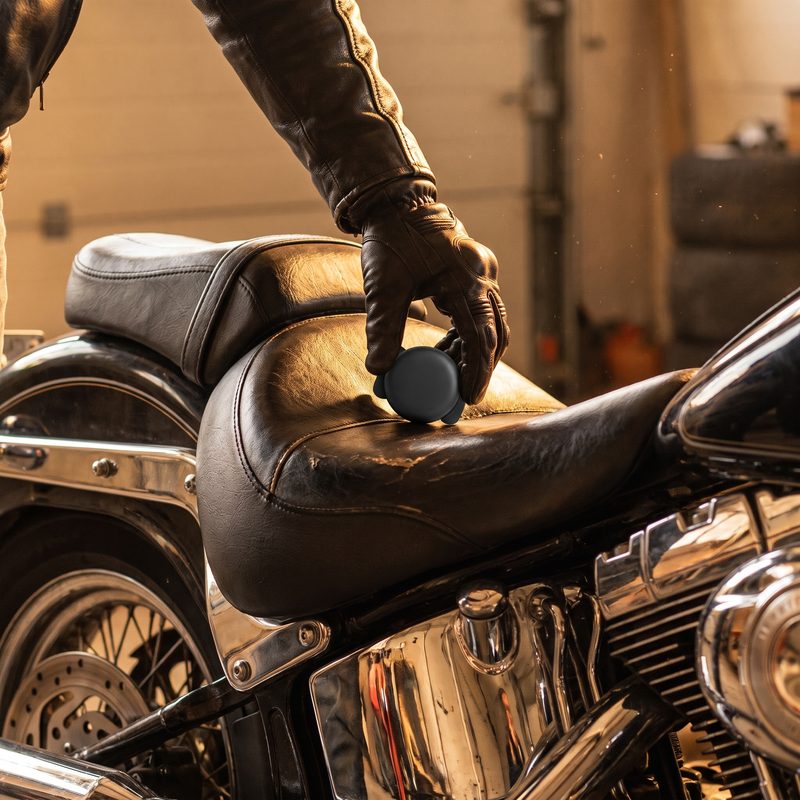
The difference comes down to how the tracker reports its location — and it's the difference between knowing where your bike is and hoping someone walks past it.
GPS trackers determine their own position from satellites and send it to your phone over a cellular connection. That means live location, anywhere with cell coverage, at any distance. Your bike is in a van three states away? You can still see it.
Bluetooth trackers (AirTag-style tags) have no GPS and no cellular connection. They're detected by phones that happen to pass nearby, which relay the position. In a dense city this can work surprisingly well. But:
- In a garage, a shipping container, or a rural area, no passing phones means no location.
- Updates are whenever someone wanders by — not live.
- Thieves know these tags well; some phones even alert a thief that a tag is traveling with them.
Honest verdict: Bluetooth tags are cheap and better than nothing, and some riders run one as a decoy alongside real tracking. But for theft recovery — the moment you're on the phone with police needing a current location — GPS is the tool that does the job. Look for one with motion alerts and long battery life, and hide it well.




No comments yet. Be the first rider to weigh in.