
Yes — for one specific piece of the problem. A backrest fights posture collapse, and if that's what's wearing you down, it helps noticeably.
Here's the mechanic: on a cruiser, your spine has nothing behind it. Every acceleration pulls your torso backward, and your lower-back muscles fire constantly to hold you upright against it. For the first hour you don't notice. By hour two those muscles fatigue, you start to slouch, your pelvis rolls back, and the classic C-shaped slump loads your lumbar discs unevenly. That's the slow burn a lot of riders feel building as the day goes on. A rider backrest gives those muscles somewhere to rest — you can periodically lean in, let them recover, and hold a neutral spine far longer. Riders who tour with one usually won't go back.
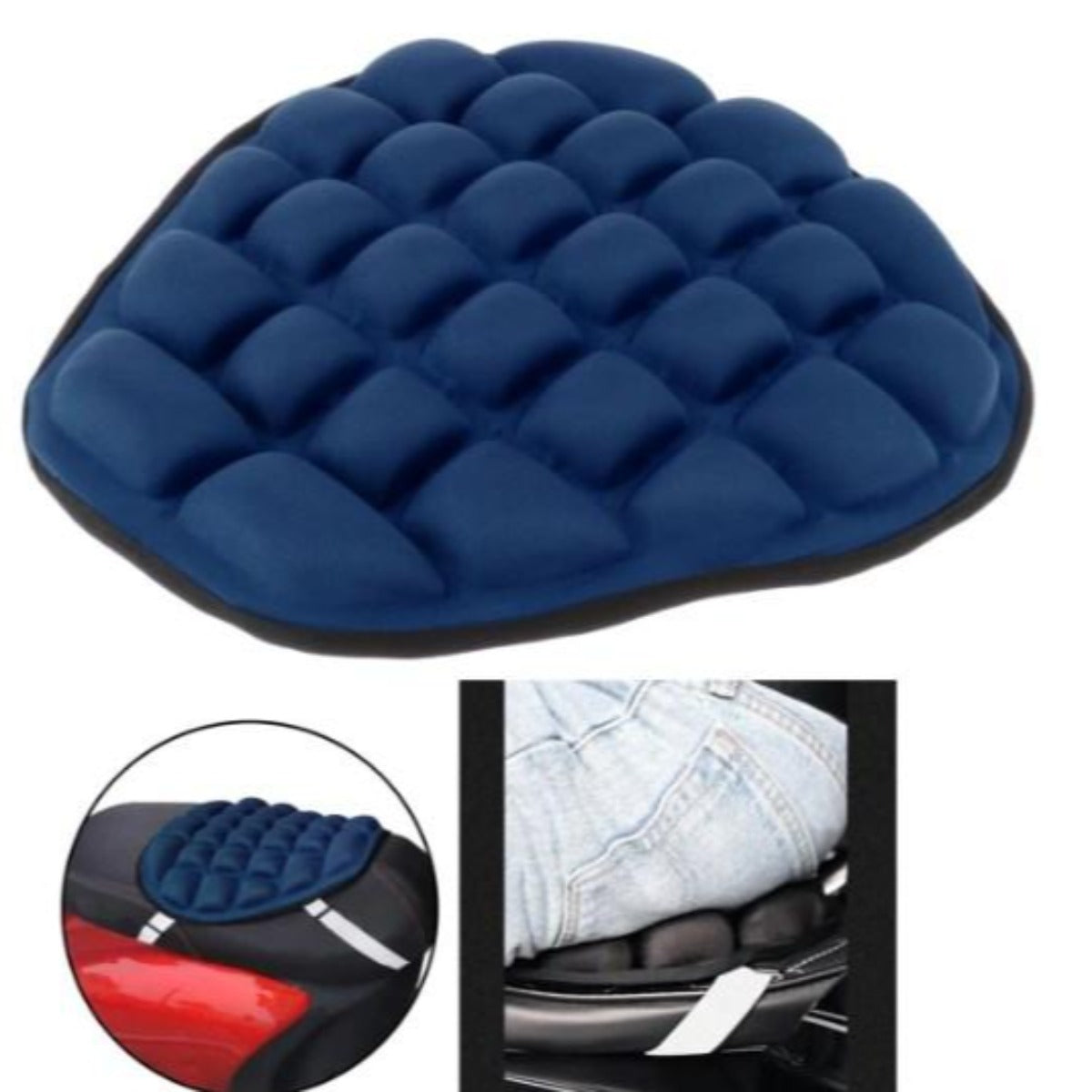
What a backrest does not touch: the pressure concentrated on your sit bones and tailbone, and the vibration hammering up through the seat. Those are the other two-thirds of the discomfort equation, and they need a different tool — the contact-point layer, where spreading the load and absorbing shock is the job.
Best results come from stacking the layers: a backrest for posture support, a smart break rhythm for circulation, and pressure management at the seat itself. Fix all three and the last 30 minutes of a ride stops being something you dread.



No comments yet. Be the first rider to weigh in.