
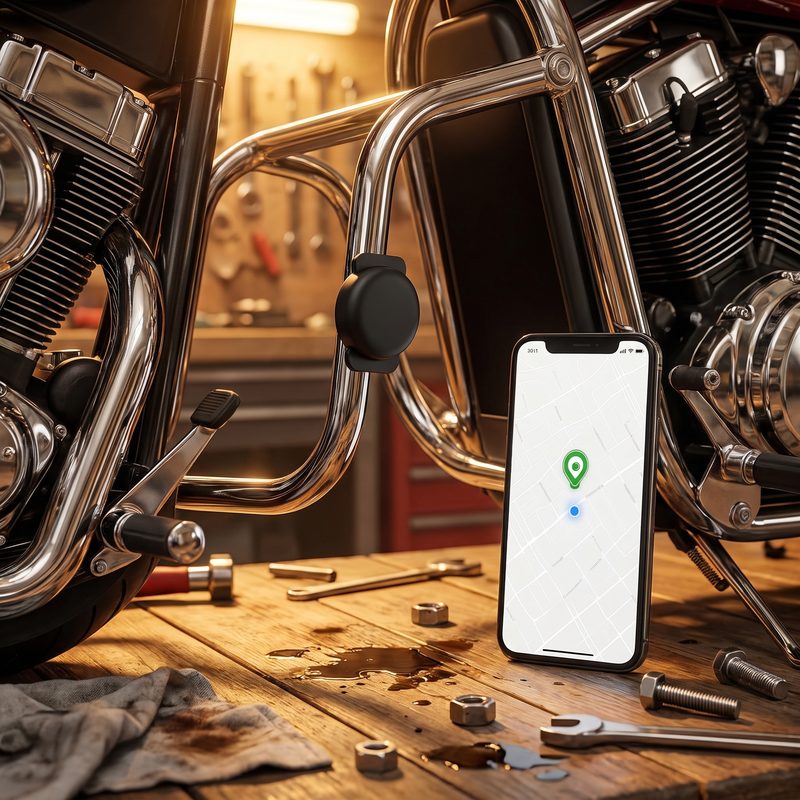
It depends entirely on the type of tracker. Hardwired trackers that tap into your bike's battery usually benefit from professional installation — you're splicing into the electrical system, and a bad connection can drain the battery or throw electrical gremlins on a modern bike. If you're not comfortable with wiring, a shop will typically do it in under an hour.
Battery-powered trackers, on the other hand, are genuinely DIY. A magnetic tracker installs in seconds: you stick it to any steel surface on the bike — under the fender, inside the frame, under the seat pan — and pair it with the app on your phone. No wiring, no tools, no shop visit.
There's also a security argument for the DIY route:
- You choose the hiding spot yourself, so nobody else knows where it is.
- You can move it between bikes, or onto an ATV or trailer.
- No install records at a shop that could identify the location.
The trade-off is battery life — a self-powered unit needs its battery replaced periodically (good ones run roughly 9–12 months per battery). For most riders, that once-a-year swap is a fair price for a tracker no thief knows to look for.




No comments yet. Be the first rider to weigh in.