
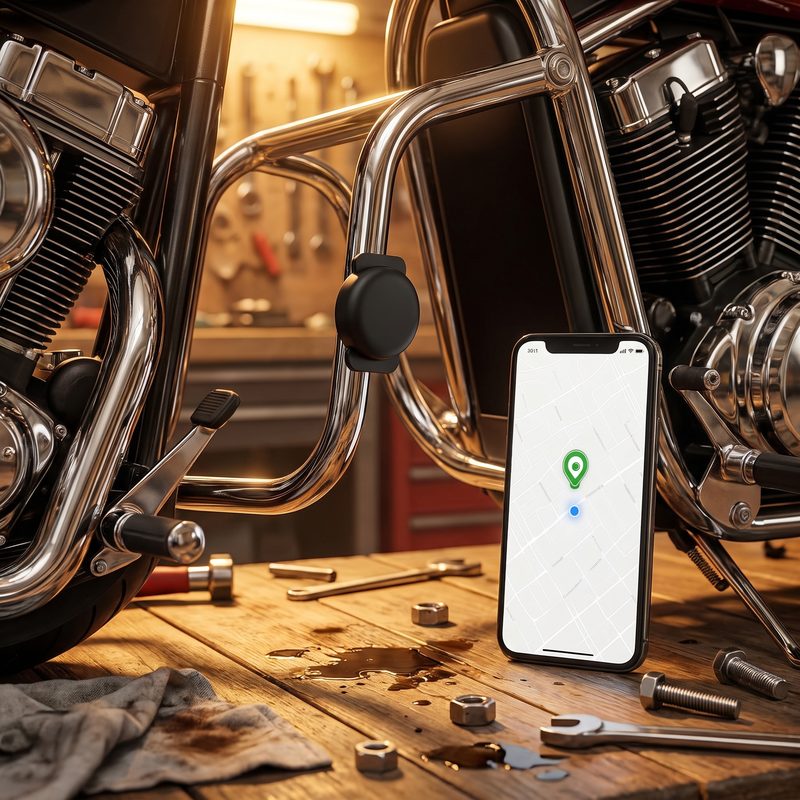
Partially — and it's better to know the honest limits before you need them. A metal building interferes with the two signals a tracker uses in different ways:
- GPS satellite signals are weak and struggle to penetrate steel roofing and walls. Inside a metal garage, your tracker may show a position that drifts, or it may fall back on cell-tower positioning, which is accurate to a neighborhood rather than a parking spot.
- Cellular signals are stronger and usually still get through, which matters more than you'd think — it means the tracker can still communicate even when its GPS fix is fuzzy.
Here's why that combination still protects you: the motion sensor doesn't need satellites. If someone disturbs your bike inside the garage, the movement alert still reaches your phone. And the moment the bike is wheeled outside, the tracker reacquires satellites within moments and starts reporting sharp, live positions — which is precisely when tracking matters, because a stolen bike doesn't stay in your garage.
Practical tips: check the app while the bike is parked inside so you know your garage's baseline behavior, and if the reported position seems stuck or vague indoors, don't panic — that's physics, not a broken tracker. Watch for the alert; trust the tracking once the bike moves.




No comments yet. Be the first rider to weigh in.