
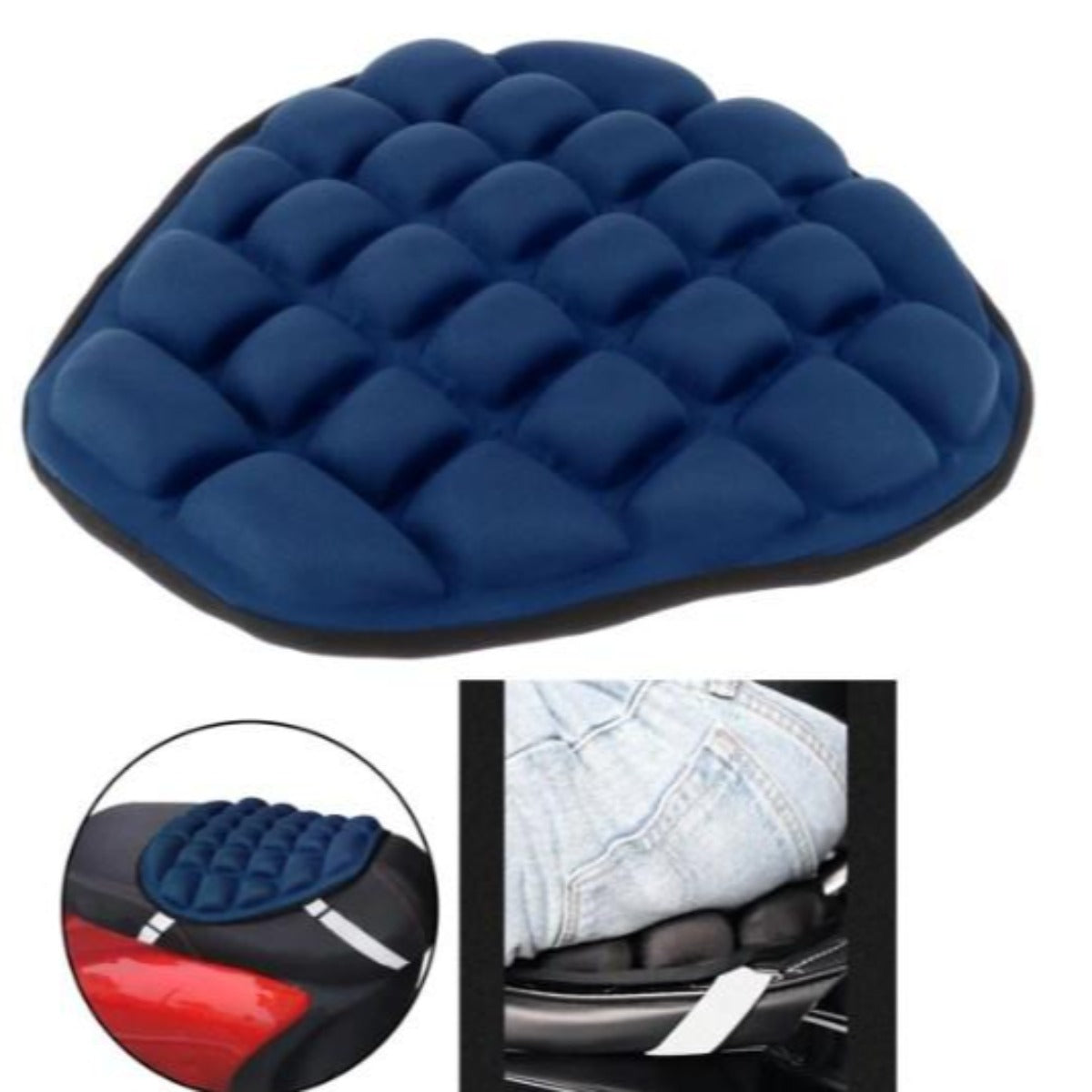
A hard seat doesn't damage your spine directly — but it starts a chain reaction that ends in back pain. Here's the sequence. Hard, flat surfaces concentrate your entire body weight on three small points: two sit bones and, if you slouch, the tailbone. That concentrated pressure compresses soft tissue and restricts blood flow, which is why the ache starts in your backside. Then comes the part that gets your back: your body instinctively squirms away from the sore spots — rolling the pelvis back, sliding forward, leaning to one side. Every one of those escape postures flattens your lumbar curve and loads your discs and ligaments unevenly. The seat hurt your backside; the compensation hurts your back.
Hard seats also transmit every bump and vibration straight through, with nothing absorbing the shock before it reaches your spine — a real factor on motorcycles, tractors, and trucks.
Interestingly, the answer isn't maximum softness. Very soft foam lets you sink until you're wobbling on an unstable base, and your muscles work overtime to stabilize. What your body actually wants is distribution: firm enough to support you, spread enough that no single point takes a beating. That's the principle behind air-cell cushions — dozens of interconnected cells shift air between them so your weight spreads across the whole seat, while the air layer soaks up the shocks a hard seat would pass straight to your spine.



No comments yet. Be the first rider to weigh in.