
Hugely — your suspension is the first line of defense between the road and your spine, and on a lot of bikes it's set up for someone who isn't you.
Most motorcycles leave the factory with generic settings, and many riders never touch them. If the preload isn't set for your actual weight — with gear, and luggage if you tour — the suspension either wallows or, more commonly for heavier riders, rides too deep in its travel and bottoms out on hits it should have absorbed. Every one of those bottoming events is a spike delivered straight up your spine.
What's worth checking, in order:
- Sag: have a shop (or a friend with a tape measure) set static and rider sag for your weight. This is the single highest-value suspension adjustment, and often free.
- Worn components: shocks and fork oil degrade slowly, so you don't notice — but a worn-out shock passes hits through almost unfiltered. If your bike has serious miles on original suspension, that's a prime suspect.
- Damping: too much compression makes every sharp edge feel like a hammer; too little rebound turns washboard roads into a pogo stick.
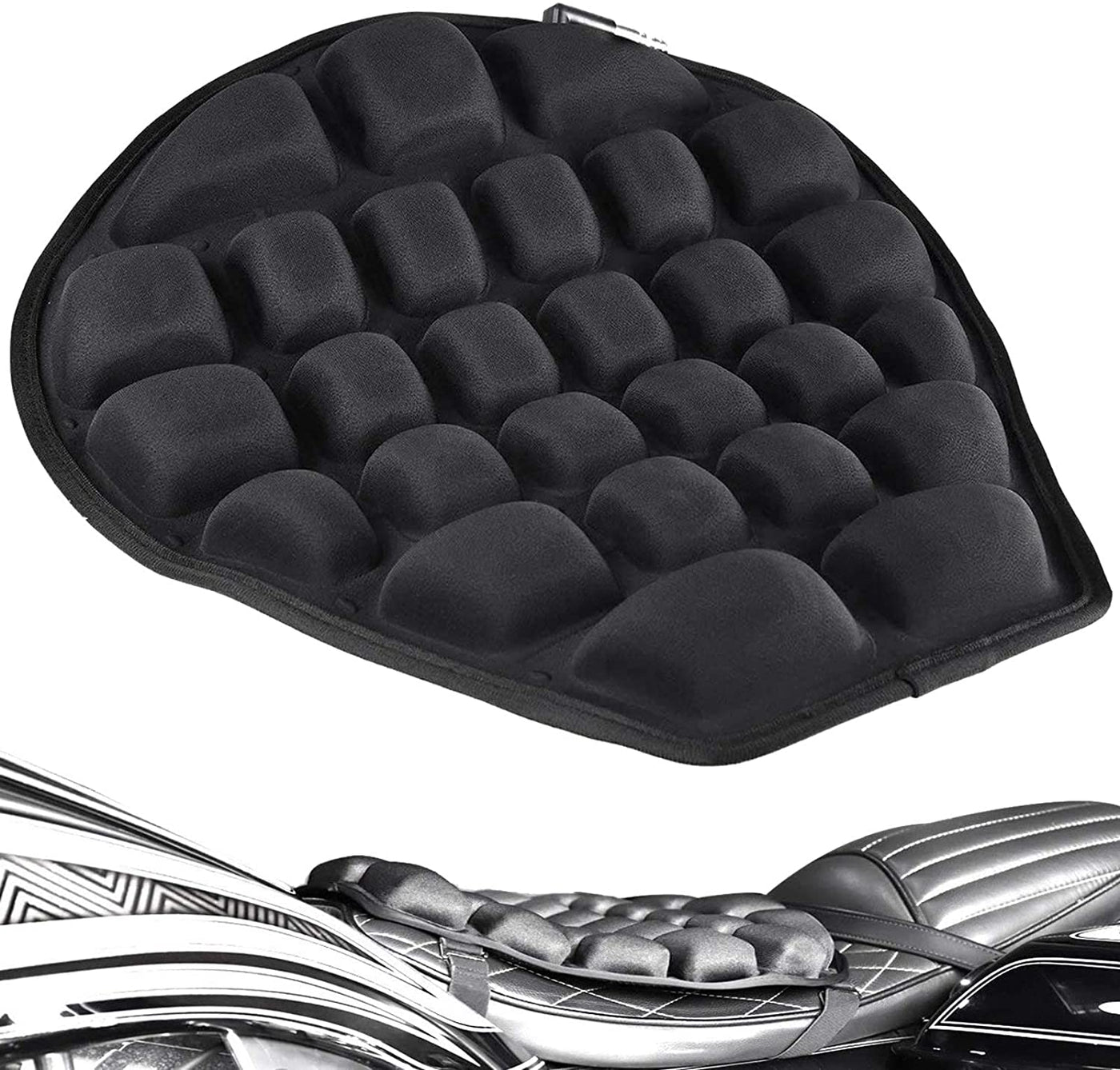
Think of it as a stack: tire pressure, then suspension, then the seat contact point. Suspension handles the big hits; the seat layer handles the constant vibration and the pressure points the suspension can't touch. Riders with back trouble get the best results fixing both ends — sag set properly, and pressure spread where they actually sit.




No comments yet. Be the first rider to weigh in.