The second you crack 60 mph on an open stretch of highway, the half helmet vs full helmet debate stops being theory. It becomes wind in your ears, pressure on your neck, bugs in your face, and one hard question every rider has to answer for themselves - what matters most on your ride?
There is no fake-tough answer here. Both styles have a place. The right pick depends on how you ride, where you ride, how much protection you want, and how much comfort you are willing to trade for that stripped-down open-road feel.
Half helmet vs full helmet: the real difference
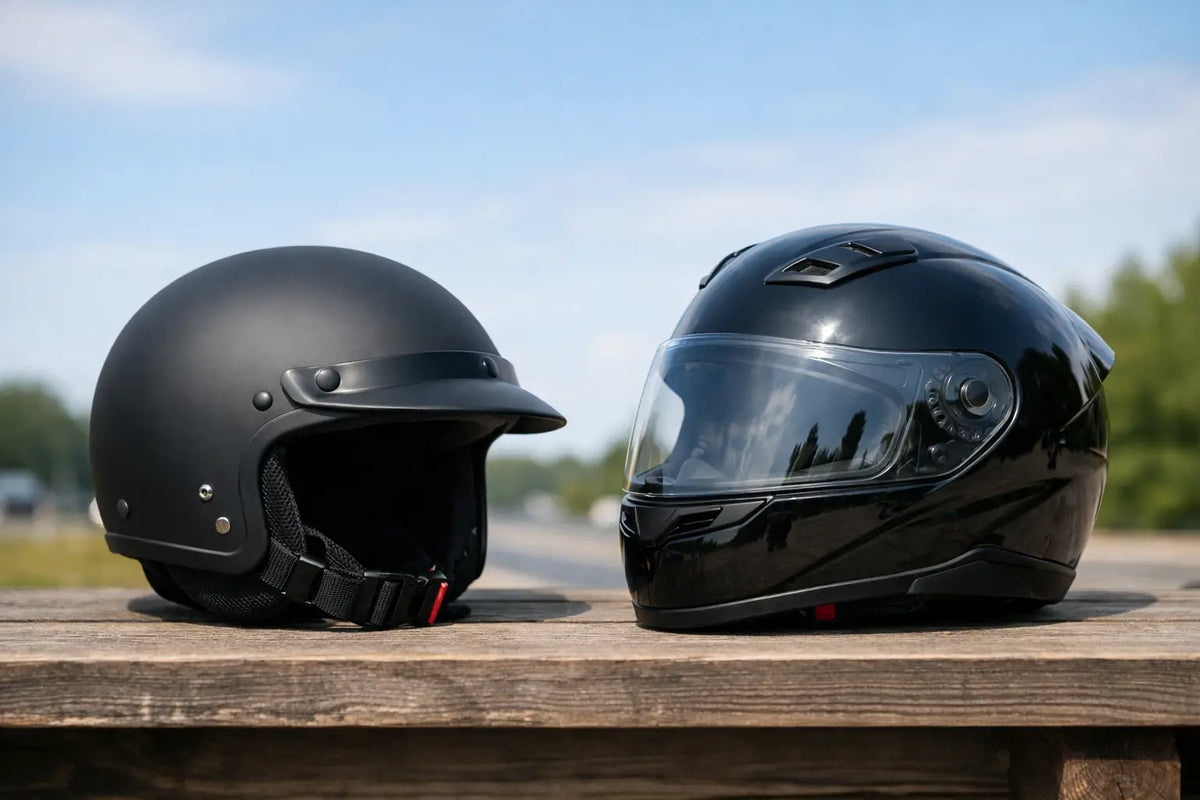
A half helmet covers the top of your head and usually sits above the ears, leaving most of your face exposed. It is the classic cruiser look a lot of riders want because it feels lighter, less boxed-in, and more connected to the road.
A full helmet wraps the entire head and includes a chin bar and face shield or visor setup. It gives you more coverage, more weather protection, and a much more controlled riding environment when speeds climb or conditions turn ugly.
That basic design difference affects everything else - safety, fatigue, visibility, noise, heat, communication, and even how long you want to stay in the saddle.
Protection is where full helmets pull ahead
If your first concern is impact protection, a full helmet is the stronger play. The chin bar matters. Your jaw and lower face are exposed in a half helmet, and that is not a small detail when things go sideways.
A full helmet also does a better job shielding your face from road debris, kicked-up gravel, rain, insects, and cold air. On longer rides, that protection does more than keep you comfortable. It reduces distraction. And fewer distractions mean better focus.
That said, riders do not choose half helmets because they think they are the safest option. They choose them because they want lighter weight, more airflow, easier visibility around the face, and that raw open-air riding experience. If that is your priority, a half helmet delivers it better than a full helmet ever will.
So if the question is which one protects more, the answer is simple: full helmet. If the question is which one feels freer, that answer usually goes to the half helmet.
Comfort depends on the kind of ride
A lot of riders assume half helmets are automatically more comfortable. Sometimes that is true. Sometimes it is not.
Around town, at lower speeds, a half helmet can feel easy and natural. It is lighter, less enclosed, and often quicker to throw on for a short ride. If you are cruising local roads, hitting bike nights, or rolling through warm weather with no interest in feeling sealed off, a half helmet makes a lot of sense.
But on highway runs, that open design can work against you. Wind buffeting wears you out. Noise wears you out. Constant blast against your face wears you out. What starts as freedom can turn into fatigue after an hour or two.
A full helmet feels warmer and more enclosed, but it also creates a more stable pocket around your head. Good ventilation helps with airflow, and the face shield cuts down on direct wind pressure. On a longer ride, many riders end up feeling less drained in a quality full helmet than in a half helmet.
So comfort is not just about weight. It is about what kind of punishment your body takes over time.
When a half helmet feels best
A half helmet usually shines on short cruiser rides, casual local trips, parade runs, and hot-weather days when airflow matters more than isolation. It also appeals to riders who hate the closed-in feeling of a full-face lid.
When a full helmet feels best
A full helmet usually wins on interstate miles, colder weather, unpredictable traffic, and all-day riding where noise reduction and weather protection start paying off in a big way.
Noise, weather, and road grime are not small issues
This is where a lot of new riders change their mind after a few real rides.
A half helmet gives you the sound of the engine, the road, and the world around you in a more direct way. Some riders love that. It feels alive. It feels honest. It feels like riding instead of sitting inside gear.
The downside is that wind noise can get brutal fast. Add in rain, dust, cold air, or a bug strike at speed, and the cool factor starts fading. Most half-helmet riders end up relying on glasses, goggles, or some kind of eye protection because exposed eyes on the road are a bad plan.
A full helmet cuts down that chaos. It is quieter, cleaner, and better in bad weather. If you commute, ride early mornings, travel across seasons, or spend time on faster roads, that extra barrier matters more than many riders expect.
Style matters, and riders know it
Let us not pretend this choice is only technical. Style is part of the decision.
A half helmet has a stripped-down cruiser look that fits a lot of V-twin riders, old-school builds, and riders who want minimal bulk. It puts your face out there. It shows your shades, your bandana, your attitude. For many riders, that look is not secondary. It is part of the whole identity.
A full helmet leans more aggressive, more performance-driven, and more all-condition practical. It can still look badass, but it sends a different message. It says you are geared for distance, weather, and protection first.
Neither choice is wrong. But if you ride because the culture matters as much as the machine, looks are part of the buy. Anyone saying otherwise is selling something.
The best helmet for your bike is really about your riding habits
The best answer to half helmet vs full helmet is usually tied to what your calendar looks like, not what your bike looks like parked.
If most of your rides are short, fair-weather, and local, a half helmet may fit your lifestyle just fine. If your miles stack up on highways, in changing temperatures, or during long weekend runs, a full helmet starts earning its keep every time the weather shifts or your speed stays up.
There is also the middle-ground rider - someone who loves cruiser style but still wants more coverage than a half helmet gives. That rider often ends up looking at a three-quarter helmet or a modular option. Those are not perfect replacements for either style, but they exist for a reason. A lot of riders want some open-air feel without giving up every layer of protection.
Fit matters more than helmet type
A cheap, bad-fitting full helmet is not a smart buy just because it covers more. A loose half helmet is not doing you favors either.
The helmet needs to fit snug without creating pressure points. It should stay stable at speed, sit correctly on your head, and meet the safety standards you expect. If it shifts around, lifts badly in the wind, or gives you a headache after twenty minutes, keep looking.
This is where smart shopping matters. Look at shell shape, interior padding, retention system, weight, ventilation, and shield or visor options. A helmet is not just about category. It is about whether that specific model works for your head and your riding style.
So which one should you buy?
If you want the most coverage, the strongest protection, better weather defense, and a quieter ride, buy a full helmet. It is the tougher choice for serious miles and unpredictable conditions.
If you want minimal weight, more airflow, classic cruiser style, and a direct open-road feel for shorter or more relaxed rides, buy a half helmet. Just go into it with your eyes open about the trade-offs.
A lot of experienced riders end up owning both because one helmet does not cover every situation. That is not overkill. That is matching your gear to the ride.
At American Legend Rider, that is how riders should shop in the first place - not by hype, not by image alone, but by how the gear actually performs when the road stops being easy.
Pick the helmet that fits your miles, your risk tolerance, and your riding style. The best one is the one you will wear every time, without excuses.

No comments yet. Be the first rider to weigh in.