
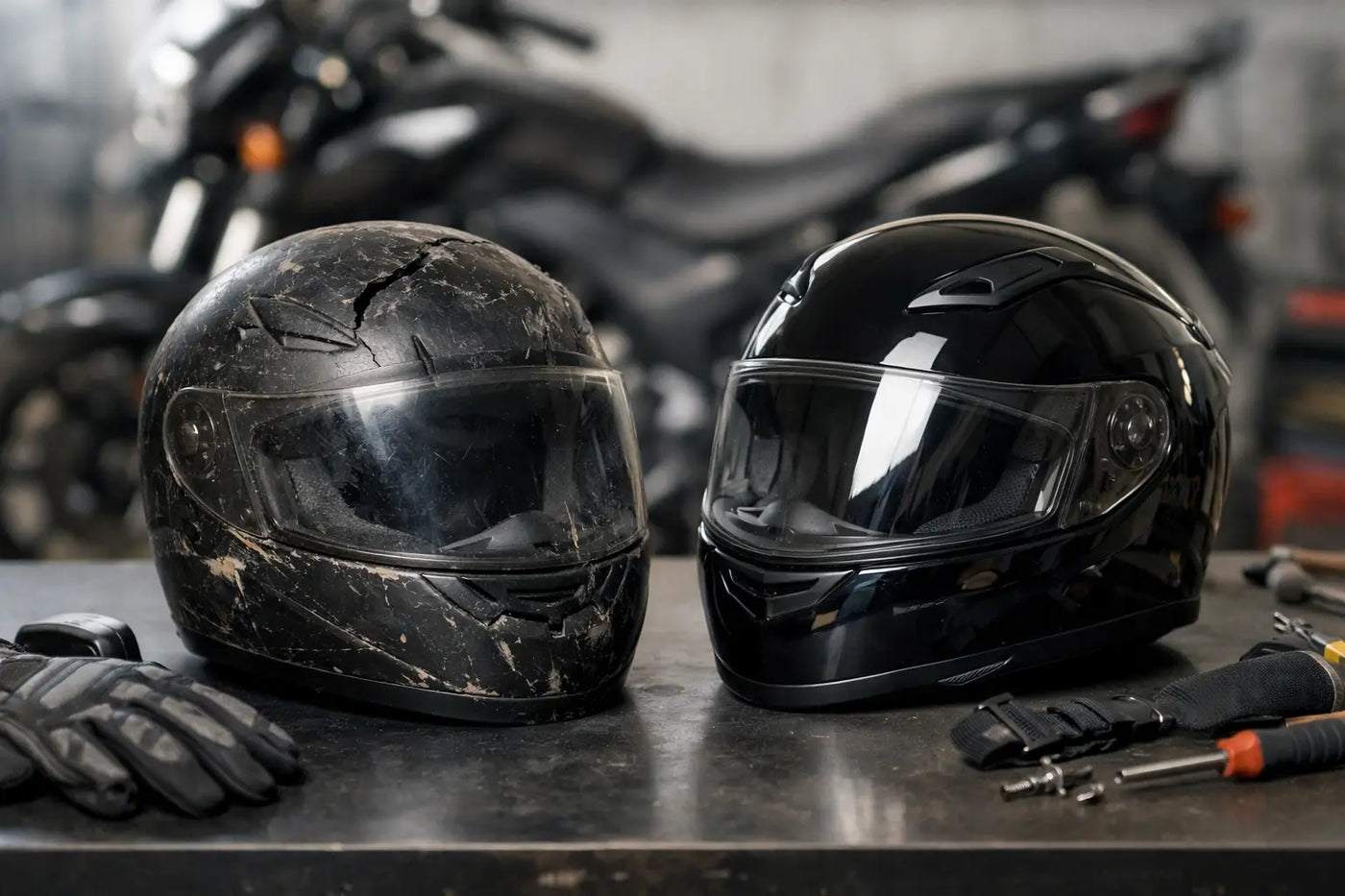
That helmet on your shelf might still look tough, but looks do not mean much once the liner starts breaking down. If you have been wondering when should motorcycle helmets be replaced, the short answer is this: sooner than a lot of riders think, and definitely before age, damage, or wear turns your lid into a gamble.
A motorcycle helmet is not forever gear. It takes abuse from heat, sweat, UV exposure, road grime, drops, and everyday use. Even if you have never hit the pavement, the materials inside the shell and impact liner slowly lose the edge they had when the helmet was new. That matters, because a helmet is not there to look good hanging off your bars. It is there to take a hit when your skull cannot.
When should motorcycle helmets be replaced in most cases?
For most riders, the safest rule is to replace a motorcycle helmet every five years from the date you start using it. Some manufacturers say seven years from the production date, but five years of real-world use is the cleaner standard. If you ride hard, ride often, or store your gear in rough conditions, replacement may need to happen even sooner.
That five-year guideline is not marketing fluff. Helmet liners are made to manage impact by compressing and dispersing energy. Over time, that material can dry out, harden, or weaken. The comfort padding also packs down, which changes how the helmet fits. A loose helmet is not just annoying at highway speed. It can reduce protection in a crash.
If your helmet has been sitting in a garage through hot summers and cold winters, age may be working against it faster than you think. Same goes if it rides around on your mirror, gets tossed in saddlebags, or bakes in the sun on a regular basis.
Replace it immediately after a crash
This is the non-negotiable one. If your helmet has taken a hit in a crash, replace it. Period.
Even if the shell looks fine, the EPS liner inside may have compressed. That liner is built to absorb impact energy once. After that, it may not protect you the same way again. Riders get tripped up here because there is often no dramatic crack or visible break. The damage can be hidden under the shell or under the comfort liner.
The same logic applies if the helmet slammed onto concrete from a decent height, especially if something heavy was inside it or attached to it. A small garage drop from a seat or handlebar is not always catastrophic, but repeated drops and hard impacts add up. If you are not sure whether the hit compromised it, playing tough is a bad strategy. Replace it.
Fit changes are a real warning sign
One of the biggest signs a helmet is ready to retire is a fit that no longer feels right. A proper motorcycle helmet should feel snug all the way around without creating pressure points that make you miserable. If it starts feeling loose, shifting at speed, or lifting more than it used to, that is a problem.
Most of the time, the shell did not change. The interior padding compressed. That sounds minor, but helmet fit is a core part of protection. In a crash, extra movement means less control over how the helmet manages impact.
You should also watch for worn cheek pads, frayed straps, or a retention system that does not feel secure anymore. If the D-rings, buckle, or strap stitching looks beat up, the helmet is telling you its time is up.
Visible damage means do not trust it
Some wear is cosmetic. A few bug stains or minor scuffs from everyday riding are normal. But there is a line between road-worn and compromised.
Replace the helmet if you notice cracks in the shell, crushed foam, peeling interior lining, a visor system that no longer locks or seals properly, or loose parts around the chin bar or face shield hardware. Water intrusion and funky odors that never go away can also signal interior breakdown, especially if the helmet has spent years soaked in sweat and weather.
A battered old helmet might still match the bike and the vibe, but style points do not count in a wreck. Road-ready always beats sentimental.
Heat, sweat, and sunlight wear helmets out faster
Not every rider burns through helmets at the same pace. How you use and store your lid matters.
If you rack up miles in hot states, ride through long summers, or leave your helmet in a truck bed, garage, or saddlebag where it cooks for hours, the materials can degrade faster. Sweat and skin oils also break down liners over time. Riders who commute daily usually put more wear on a helmet in two or three years than occasional weekend riders do in five.
That does not mean low-mileage riders get to ignore age. Even unused helmets have a shelf life. Adhesives age. Foam changes. Materials do not stay fresh forever just because the helmet spent most of its life on a shelf.
How to check the manufacture date
If you are not sure how old your helmet is, check inside for the label. Most helmets have a sticker under the comfort liner or near the EPS liner showing the manufacturing date. If you bought it years ago and cannot remember when, start there.
This is where riders sometimes get caught sleeping. A helmet bought on clearance might already be a couple years old before it ever sees the road. There is nothing wrong with buying a discounted lid, but age still counts. If it was manufactured three years ago and you ride in it for five more, you are already beyond what many brands and safety experts recommend.
Does helmet type change the replacement timeline?
The basic rules stay the same whether you ride in a full-face, modular, open-face, or half helmet. Crash damage, age, fit, and wear still decide when it is time to move on.
That said, some helmet designs have more moving parts. Modular helmets have hinge mechanisms and locking systems that can wear out. If those parts start feeling loose or unreliable, do not talk yourself into keeping it just because the shell still looks solid. Function matters.
Lower-cost helmets can also show their age sooner, especially with heavy use. That does not mean expensive always equals better lifespan, but build quality and interior materials do affect how well a helmet holds up over time.
What riders get wrong about helmet replacement
A lot of riders think no crash means no replacement. Wrong. Time alone can age a helmet out.
Others assume a helmet is fine because it still passes the eyeball test. Also wrong. The most important protective material is not always where you can see it.
Then there is the rider who keeps an old lid around because it is comfortable. Of course it is comfortable. The padding is broken down. That comfort can be exactly what makes it less protective.
And no, adding stickers, repainting the shell, or swapping out parts does not reset the clock. Custom looks are one thing. Structural integrity is another.
If you are on the fence, ask one question
Would you trust this helmet in a hard crash today?
If your answer is anything short of yes, replace it. That hesitation usually comes from something real - age, damage, loose fit, worn internals, or just the feeling that the helmet has had a long life already. Riders know their gear. If your gut says the helmet is past its prime, listen.
Buy your next helmet like it matters
When it is time to replace your lid, do not just grab the first thing that looks mean and matches your jacket. Get the right size, the right certification, and the right design for how you actually ride. Full-face coverage gives the most protection for most street riders, but comfort, ventilation, weight, and visibility matter too, because the best helmet is still one you will wear every single ride.
If you are upgrading, this is also a good time to think about features that improve daily use, like better airflow, a drop-down sun visor, emergency cheek pad removal, or Bluetooth compatibility. Just do not let gadgets outrank fit and protection.
At American Legend Rider, the smart move is simple: treat your helmet like mission-critical gear, not a forever accessory. Your bike can carry scars. Your helmet should not have to carry one hit too many.
A fresh helmet is cheaper than bad luck, and a lot easier to live with.


No comments yet. Be the first rider to weigh in.