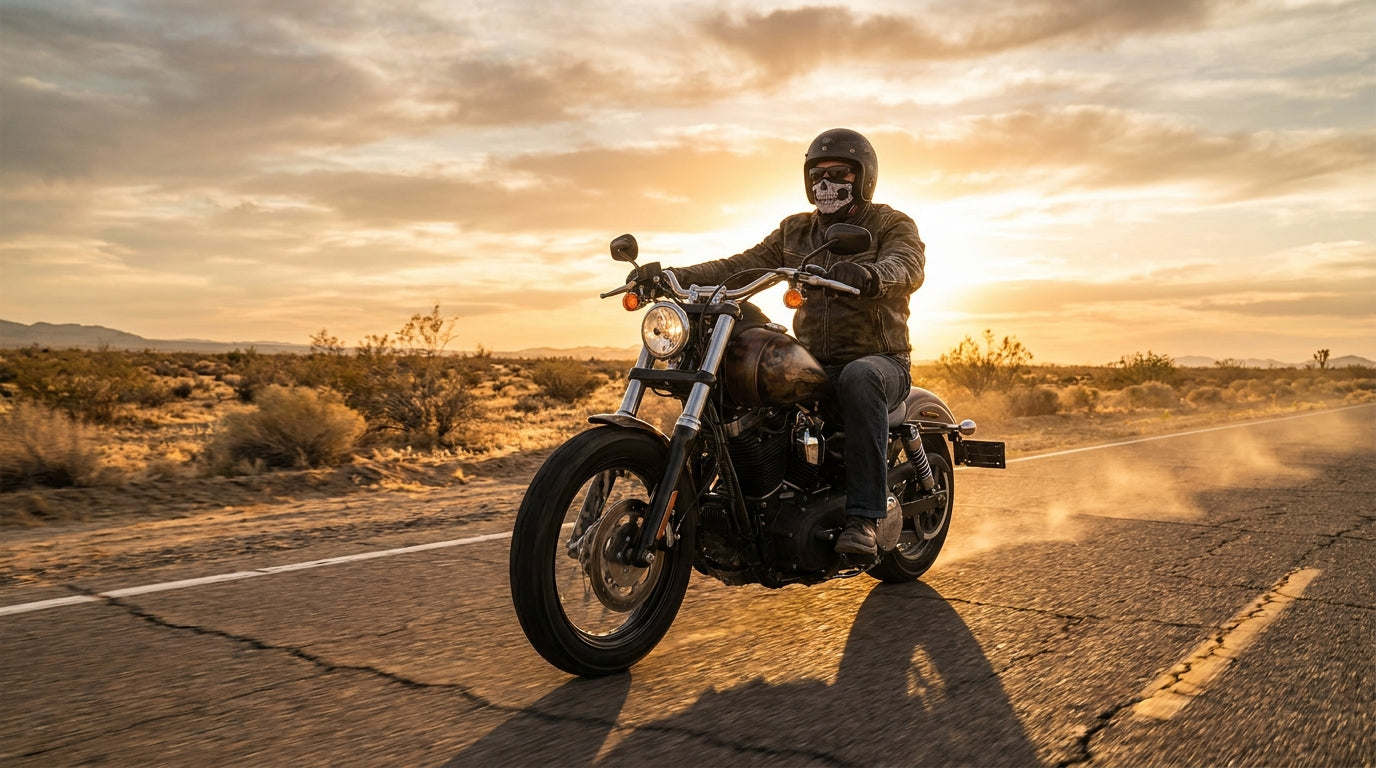
You're doing 70 on a two-lane highway when a June bug nails you square in the mouth. Or maybe it's a cold November morning and the wind cuts through every gap between your helmet and collar. A skull face mask fixes both problems and makes you look like you belong on the road. But not all skull masks are built for actual riding. Some fog your visor in minutes. Others stretch out after two washes. This guide breaks down what works, what doesn't, and what to look for before you spend a dollar.
By the end of this article you'll know which skull face mask material suits your climate, which coverage style fits under your helmet, and which common buying mistakes cost riders money. Whether you want a full-face neoprene skull mask for winter or a thin polyester half-face for summer cruising, the answers are here.
What Makes a Skull Face Mask Different from a Plain Riding Mask
The function is the same: block wind, dust, bugs, and UV. The difference is identity. Skull face masks signal biker culture the way a patch signals a club. They grew out of the custom paint and tattoo world that's been part of motorcycling since at least the 1960s. Today, roughly 6 out of 10 face masks sold on biker gear sites carry a skull or skeleton print, according to sales data from major motorcycle accessory retailers.
But looks only matter if the mask actually performs. A skull face mask for motorcycle use needs to do three things: stay in place at highway speed, breathe well enough to prevent visor fog, and fit under a helmet without creating pressure points. Cheap costume masks fail on all three. Riding-grade masks use materials like 2mm neoprene, four-way stretch polyester, or moisture-wicking microfiber that handle airflow and sweat at the same time.
The best skull face masks also use sublimation printing (where the dye is heat-bonded into the fabric fibers) rather than screen printing. Sublimation won't crack, peel, or fade after washing. Screen-printed masks start looking rough after about 10-15 washes. That means the jaw-bone graphic you liked in the photo turns into a smudged mess within a couple of months of regular use.
Neoprene Skull Face Masks: The Cold-Weather Standard
Neoprene is the same material used in wetsuits, and it's the go-to for cold-weather riding. A standard neoprene skull face mask is about 2mm thick, blocks wind down to roughly 25-30°F, and covers from the bridge of your nose to just below your chin. Most use a Velcro strap at the back for a snug, adjustable fit.
The big advantage is wind protection. At 60 mph, wind chill can drop a 40°F morning to around 25°F on exposed skin. Neoprene stops that dead. The tradeoff is breathability. In temps above 55-60°F, a neoprene mask traps heat and moisture against your face, which fogs visors and gets uncomfortable fast.
Look for neoprene masks with ventilation holes around the nose and mouth. Some brands (like ZAN Headgear, one of the longest-running names in motorcycle face masks since the 1990s) use laser-cut micro-perforations that let moisture escape without letting cold air blast through. That detail separates a $12 mask you'll actually wear from a $7 one you'll stuff in a saddlebag and forget about.
Another thing to check: the stitching along the nose bridge. Cheaper neoprene masks use a flat-cut edge that sits stiff against your face. Better ones have a contoured nose panel or a soft fleece lining along the top edge that conforms to the shape of your nose and cheeks. This small detail makes a big difference on rides longer than an hour. If you ride in cold climates, check out our skull face mask collection for neoprene options built for the road.
Polyester and Microfiber Skull Masks for Warm Weather
Once temps climb above 60°F, neoprene becomes a sweat trap. That's where polyester microfiber masks take over. These are thin (typically 0.3-0.5mm), stretchy, and designed to wick moisture away from your skin. A good microfiber skull mask weighs about 1.5-2 oz total, compared to 3-4 oz for neoprene.
The tube-style (also called a gaiter or buff) is the most popular format. You pull it over your head and position it anywhere from a neck gaiter to a full face cover. The single-piece construction means no stitching lines pressing into your skin under a helmet. For riders in Arizona, Texas, Florida, or anywhere summer temps regularly pass 90°F, this is the only practical option.
Most quality polyester skull masks use four-way stretch fabric. That means the mask pulls evenly in every direction, which keeps the skull graphic centered on your face instead of warping to one side. Two-way stretch masks tend to ride up or slide down at speed because they only flex vertically.
The downside is wind protection. A thin polyester mask does almost nothing against cold air. It also offers less UV protection than neoprene, though most quality microfiber masks still rate UPF 30-50. For dust and bug protection, they work just as well as neoprene. Pair one with a solid motorcycle helmet and you're covered in every sense.
Skull Balaclava Masks: Full Coverage Under the Helmet
A skull balaclava covers your entire head, neck, and face with only the eyes exposed. It's the most coverage you can get from a single piece of gear. The standard design uses a single-layer polyester or spandex blend that adds about 1mm of thickness, meaning it fits under virtually any helmet without changing the fit.
Balaclavas solve the gap problem. With a half-face mask, wind still gets in between the mask edge and your helmet padding. A balaclava skull mask eliminates that gap entirely. Everything from your forehead to your collarbone is sealed. For cold-weather riders who hate the feeling of freezing air sneaking past their helmet, that's a serious comfort upgrade.
Weight matters here. A lightweight polyester skull balaclava runs about 2-2.5 oz. A fleece-lined winter version can hit 4 oz and add 2-3mm of bulk, which might make a tight helmet uncomfortable. If your helmet is already snug, stick with a thin balaclava and layer a neck warmer underneath on the coldest days. Check our balaclava collection for skull designs that fit under any lid.
One more tip: look for balaclavas with a flat-lock stitch rather than an overlocked seam. Flat-lock stitching lies flush against the skin and won't dig into your forehead under helmet pressure. It's a $2-3 difference in price but hours of comfort on longer rides.
Skull Face Mask Styles Compared
Not every skull face mask is the same shape or material. Here's how the main types stack up for motorcycle use:
| Style | Material | Coverage | Best Temp Range | Fits Under Helmet? | Price Range |
|---|---|---|---|---|---|
| Neoprene Half-Face | 2mm Neoprene | Nose to chin | 25-55°F | Yes (no top bulk) | $8-$18 |
| Polyester Tube/Gaiter | Microfiber Poly | Adjustable (neck to full face) | 55-100°F+ | Yes (very thin) | $6-$14 |
| Balaclava (Thin) | Poly/Spandex | Full head + neck | 35-65°F | Yes (1mm thick) | $10-$20 |
| Balaclava (Fleece) | Fleece-Lined Poly | Full head + neck | 10-40°F | Tight helmets may be snug | $14-$25 |
| Bandana/Triangle | Cotton or Poly | Nose to chin (loose) | 50-85°F | Yes (but can shift) | $5-$12 |
For most riders, owning two masks covers the full year: a neoprene half-face for cold months and a polyester tube for everything else. Add a skull balaclava if you regularly ride below freezing.
How to Wear a Skull Face Mask Under a Helmet
The mask goes on before the helmet, every time. Put the mask on, position it where you want the skull design to sit (usually the jaw graphic lines up with your actual jawline), then slide the helmet over it. Pulling a mask up after the helmet is already on creates bunching and pressure spots that get worse the longer you ride.
With half-face neoprene masks, tuck the top edge just under the helmet's chin bar or cheek pads. The Velcro strap sits under the helmet's retention strap at the back. With tube-style masks, pull it up to the bridge of your nose, then put the helmet on. The helmet holds it in place, so there's no strap needed.
Fogging is the number one complaint riders have about wearing a face mask with a helmet. If your mask sends warm breath straight up into your visor, try these fixes:
- Open your visor one click (most helmets have a cracked-open position that vents without exposing your face).
- Use a mask with nose vents or exhaust channels that direct breath downward instead of up.
- Apply an anti-fog insert (Pinlock-type) to your visor. A Pinlock insert runs about $15-25 and eliminates fog entirely.
- Position the mask slightly lower so the top edge sits just below your nostrils, directing your exhale out the sides rather than up into the shield.
For full-face helmet riders, a thinner mask usually fogs less than a thick one because there's less trapped moisture against your skin. If you wear a half-helmet or open-face, fogging isn't an issue, and you can use any thickness you want.
5 Common Mistakes When Buying a Skull Face Mask
These are the errors that lead to returns, bad reviews, and masks that end up in a drawer.
1. Buying a Costume Mask for Riding
Halloween skull masks and airsoft masks look similar in photos. They're rigid plastic or foam, have no ventilation, and zero stretch. At 50 mph, a rigid mask creates wind resistance and pressure on your face that gets painful in minutes. Riding masks are soft, flexible, and aerodynamic. If it doesn't fold flat in your hand, it's not for the highway.
2. Picking the Wrong Material for the Season
Neoprene in July is miserable. Thin polyester in January is pointless. Match the material to the temperature range from the table above. Two masks for $20 total beats one "all-season" mask that works poorly in every season.
3. Ignoring Fit Under the Helmet
A mask that feels great on its own can create hotspots when sandwiched between your face and helmet padding. The cheekbone area is the worst offender. Always test the mask with your helmet on before riding. If you feel any pinching along the cheekbones or jaw, the mask is either too thick or bunched up in the wrong spot.
4. Forgetting About Glasses or Sunglasses
If you wear riding glasses or sunglasses, the top edge of the mask can push them up, fog the lenses, or block the nose bridge. Look for masks with a contoured nose cutout or a flexible nose wire that creates a seal around glasses without pushing them off your face.
5. Machine-Washing Neoprene
Neoprene breaks down in a washing machine. The agitation and heat degrade the rubber compound, making the mask stiff, crumbly, and useless within a few cycles. Hand wash neoprene masks in cold water with mild soap, then air dry flat. Polyester and microfiber masks can go in the machine on a gentle cycle, but skip the dryer to preserve the graphic and stretch.
Where to Start Shopping
The best skull face masks for motorcycle riders are the ones built with riding in mind, not costume wear or generic outdoor gear. That means proper stitching, sublimation-printed graphics that won't peel, and materials rated for airflow and temperature control. Avoid the cheapest options on general marketplaces where there's no product review from actual riders and no guarantee the mask will survive more than a few rides.
If you're looking for your first skull face mask or replacing a worn-out one, our skull face mask collection is where I'd start. Every option there is selected for fit under a helmet and durability on the road, not just the look.


No comments yet. Be the first rider to weigh in.