
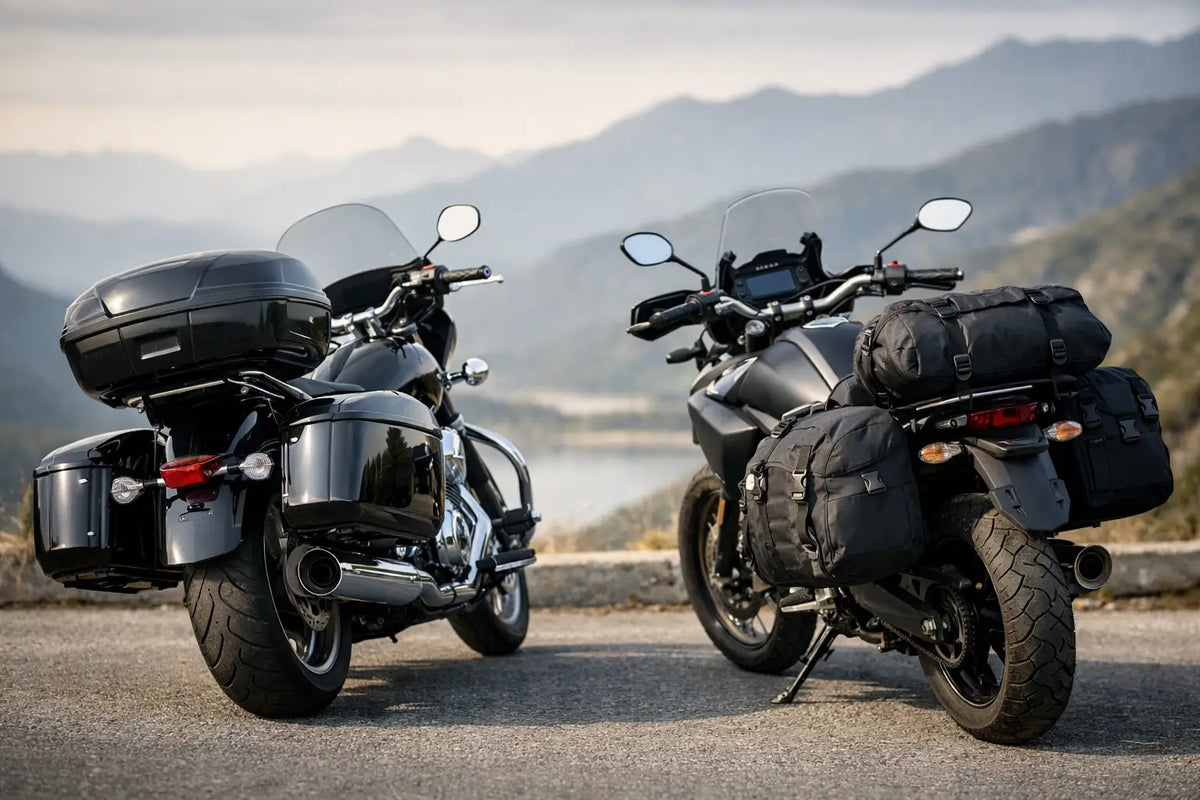
You feel the difference before the first gas stop. Load the bike wrong, and every mile reminds you. That is why hard bags vs soft luggage is not some small gear debate - it changes how your motorcycle carries weight, how fast you pack, how secure your stuff stays, and how confident you feel when the road gets rough.
For some riders, hard bags are the only answer. They want lockable storage, a cleaner factory look, and gear that stays put at highway speed without much babysitting. For others, soft luggage makes more sense because it is lighter, easier on the wallet, and a lot more flexible when the trip is part pavement, part backroad, and part make-it-up-as-you-go. The right choice depends on your bike, your riding style, and how much hassle you are willing to deal with when packing and parking.
Hard bags vs soft luggage: what really changes on the road
The biggest difference is not just the shell material. It is the whole ownership experience. Hard bags tend to feel like part of the motorcycle. Once mounted, they give the bike a more permanent touring setup. You open them fast, close them fast, and usually lock them up when you step away. That matters if you commute, travel overnight, or leave gear on the bike while grabbing food.
Soft luggage feels more adaptable. It can work on more bikes, especially cruisers, sport bikes, dual sports, and stripped-down builds that were never designed around a hard case system. It is easier to remove, easier to compress when not full, and often easier to fit around custom setups. If you ride different kinds of routes and do not want your motorcycle locked into one storage layout, soft bags give you more room to improvise.
Neither setup wins every category. Hard bags bring structure and security. Soft luggage brings lighter weight and versatility. Everything else comes down to trade-offs.
Why many riders choose hard bags
Hard bags make sense when convenience and protection matter more than flexibility. The biggest selling point is security. A locked hard case is not theft-proof, but it is a lot better than a zippered soft bag when your gloves, rain layer, tools, or electronics are sitting on the bike in a parking lot.
They also protect gear better from crushing and impact. If you pack a camera, laptop, extra visor, or anything fragile, a rigid shell gives you more confidence. Weather protection is usually better too, especially with well-sealed lids and purpose-built mounting systems. Riders who deal with long commutes, sudden storms, or multi-day travel often appreciate not having to second-guess whether their gear stayed dry.
There is also the day-to-day ease factor. Hard bags usually open like luggage, not camping gear. You are not messing with straps, rolling tops, or re-tightening attachment points every time you need one item. That sounds minor until you are on day three of a trip, grabbing something five times a day.
The downside is just as real. Hard bags add weight, cost more, and can make the bike feel wider and less forgiving in tight spaces. If you are lane filtering where legal, backing into cramped parking spots, or riding rough roads, that extra bulk matters. They are also less forgiving in a tip-over. A soft bag may scuff. A hard case can crack, bend mounts, or transfer force into the bike.
Where soft luggage earns its place
Soft luggage wins riders over with lower cost, lower weight, and fewer fitment headaches. If you are building a practical setup without dropping serious money, soft bags usually get you on the road faster. That matters for newer riders, budget-conscious riders, and anybody outfitting a second bike.
They also make more sense when the route is not polished and predictable. On uneven roads, gravel, or light off-pavement travel, soft luggage tends to be less punishing in a fall or low-speed drop. It gives instead of fighting the impact. That can save both the luggage and the bike from expensive damage.
Another strength is flexibility. Soft systems come in saddlebags, tail bags, backpacks, dry bags, and modular setups that can be mixed depending on the trip. You can run light for a weekend, then add capacity for a longer ride. Riders with custom cruisers or minimalist builds often prefer that freedom because it does not force the bike into a permanent touring look.
But soft luggage asks more from you. Security is weaker. Weather resistance depends heavily on the design. And if the mounting system is not dialed in, you can end up fighting sag, strap movement, exhaust clearance, or rubbing against the fender. Cheap soft bags especially can turn into a headache fast.
Security, weather, and durability
This is where hard bags usually pull ahead for street-focused riders. If you want to leave your gear on the bike without feeling reckless, hard bags are the stronger move. Again, no luggage is truly untouchable, but locks and rigid shells create enough resistance to deter quick grab-and-go theft.
In bad weather, hard cases also tend to be more dependable over time. Good seals, rigid closure points, and better water management help keep gear dry without extra liners. With soft luggage, water resistance can range from excellent to disappointing. Some premium dry bag systems are rock solid in the rain, but lower-end bags can leak through seams, zippers, or worn fabric.
Durability is more split than people think. Hard bags resist abrasion and protect contents well, but they can crack or fail at the latch or mount. Soft luggage can absorb abuse and keep going, but fabric, stitching, and buckles wear out. If you are hard on gear, quality matters more than the category alone.
Fit, handling, and bike style
A full dresser or bagger can carry hard bags like they belong there because they do. The lines match the bike, the weight is expected, and the whole setup feels planted. On a cruiser with a cleaner profile, the answer depends on what you want the bike to look and feel like. Hard bags give a more serious touring profile. Soft bags keep things more stripped-down and flexible.
Handling changes too. Hard bags can make the rear of the bike feel heavier and broader, especially when packed full. Soft luggage usually keeps weight lower overall, but sloppy packing can create its own problems. A soft bag that shifts or sits unevenly is more annoying than a heavier hard case mounted right.
Fitment is another big factor. Hard luggage often needs model-specific mounts, brackets, or racks. That can mean a cleaner final setup, but it also means more commitment. Soft luggage can fit a wider range of bikes, though universal fit never means perfect fit. You still need to watch tire clearance, exhaust heat, passenger space, and how the bag sits at speed.
Which setup fits your kind of riding?
If your bike is a commuter, light tourer, or daily machine that spends time parked in public, hard bags make a strong case. They suit riders who want fast access, better security, and a setup that feels planted and polished every day.
If your rides change week to week, soft luggage often fits better. It works for weekend trips, lighter packing, custom bikes, and riders who want to remove the whole setup when the trip is done. It is also a smart move if you are still figuring out what kind of travel you actually do instead of buying the most expensive system upfront.
For long-distance touring, both can work. Riders who stay on pavement and pack electronics, clothes, and daily essentials often prefer hard bags. Riders who value lower weight, simpler repairs, and more forgiving performance on rougher routes may lean soft. There is no macho answer here. There is only what fits your miles.
Hard bags vs soft luggage: the smart way to decide
Ask yourself three blunt questions. Do you need to lock your gear? Do you care more about low weight or fast convenience? And are you setting up the bike for everyday use or just certain rides?
If security and structure matter most, go hard. If cost, flexibility, and lighter weight matter more, go soft. If you are somewhere in the middle, start with a quality soft setup before committing to a full hard bag system. That gives you road experience without locking you into a permanent build.
At American Legend Rider, this is the kind of choice that should match your machine and your ride, not somebody else’s opinion. The best luggage setup is the one that disappears into the ride because it does its job, holds your gear, and never makes you think twice at 70 mph.
Pick the setup that works for your road, then pack light enough to enjoy it.

No comments yet. Be the first rider to weigh in.