
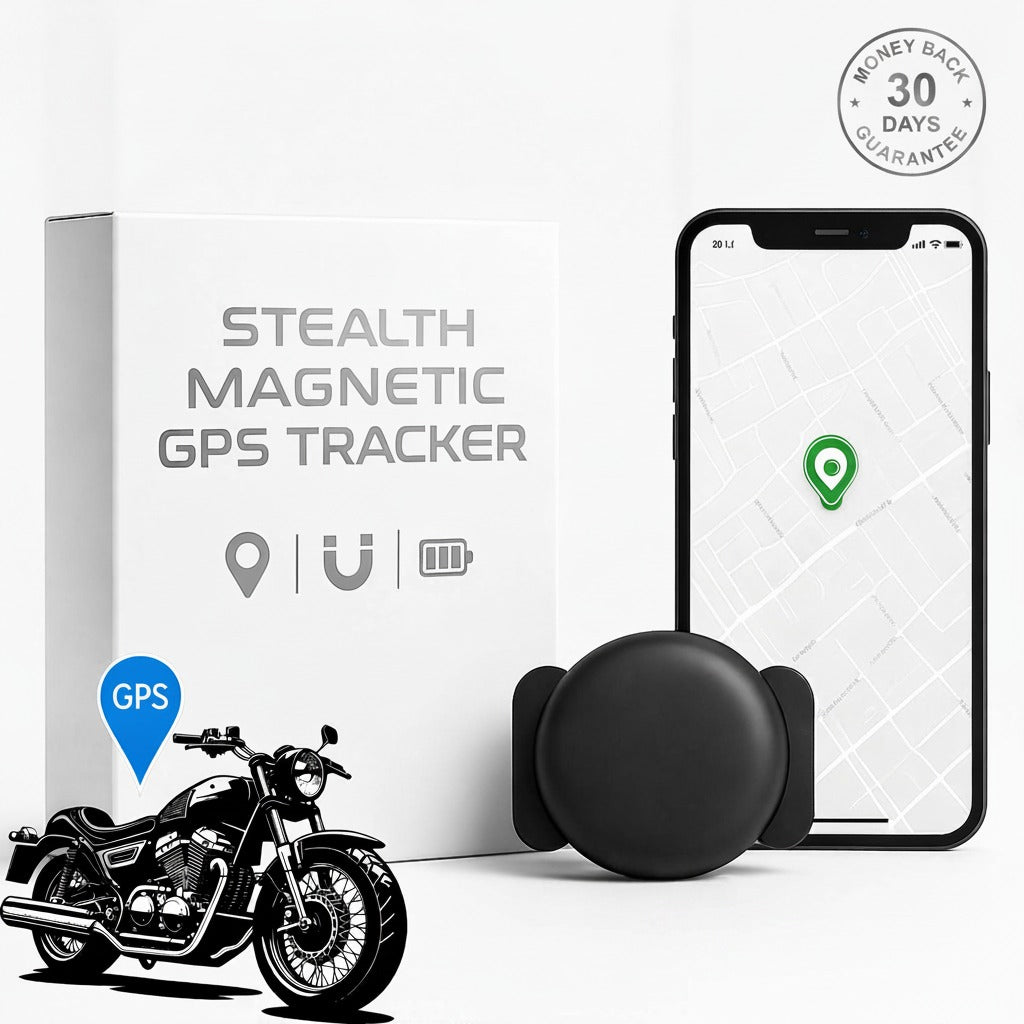
It varies by device and settings, but most motorcycle trackers work on a smart schedule rather than a fixed one. While the bike is moving, a good tracker typically updates every few seconds to every minute or so — frequent enough to follow it on a map in near real time. While the bike is parked, the tracker goes into a low-power sleep mode and checks in far less often, which is what makes months of battery life possible.
The part that matters most for theft isn't the routine interval — it's the wake-up trigger. Quality trackers use a motion sensor: the moment your parked bike is moved, lifted, or rolled, the tracker wakes, sends you an alert on your phone, and starts reporting its live location. That first alert is your real alarm system, because most thefts start with the bike being pushed or loaded, not ridden.
When comparing trackers, look at:
- Update rate while in motion (faster is better for recovery).
- Whether motion alerts are instant and reliable.
- How the update schedule affects battery life.
A tracker that alerts you within moments of movement, then updates continuously while the bike travels, gives you and the police the best shot at recovery.




No comments yet. Be the first rider to weigh in.