
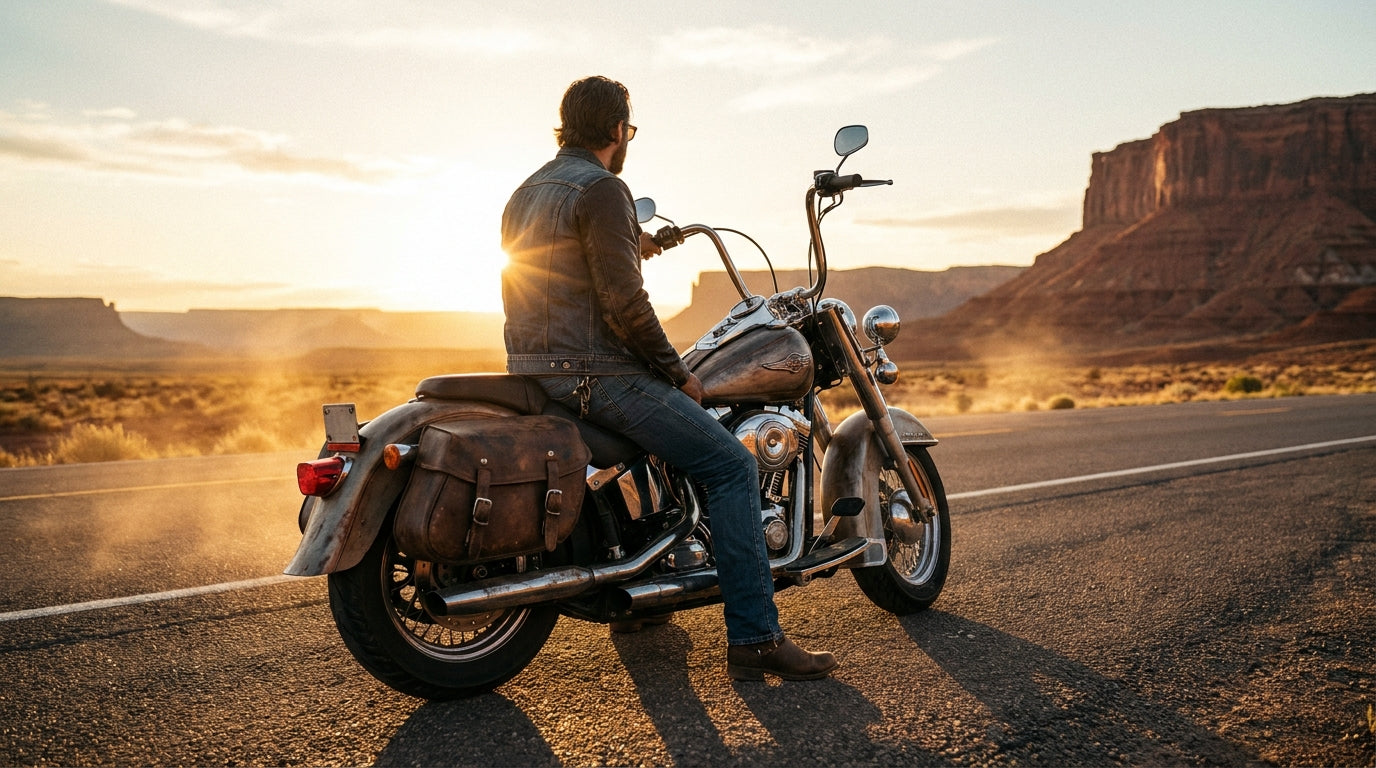
A thousand-mile motorcycle road trip sounds incredible until you are stuck on the shoulder in rural Nevada with a blown rear tire and no plug kit. According to the American Automobile Association, roughly one in three roadside-assist calls involves a tire. On two wheels, that kind of failure hits harder and faster than it does in a car.
The gap between an epic motorcycle road trip and a miserable one almost always comes down to what happens in the week before departure. This guide walks through the bike prep, packing list, bag setup, and route-planning approach that keeps a long ride on track. Whether this is your first overnight ride or your tenth cross-country run, the details below will tighten up your plan.
Pre-Ride Bike Inspection: The Checks You Cannot Skip
The Motorcycle Safety Foundation uses a six-point system called T-CLOCS: Tires, Controls, Lights, Oil, Chassis, and Stands. Running through all six before a long ride takes about 20 minutes. Skipping it is how riders end up debugging a charging issue 400 miles from home.
Tires are the single biggest item. Check pressure cold (most cruisers run 36 psi front, 40 psi rear per the sidewall, but always verify against your owner's manual). Look at tread depth. If you are below 2/32 of an inch anywhere, replace the tire before you leave. A worn rear tire on wet mountain roads is not a calculated risk. It is just a crash waiting to happen.
Chain or belt tension matters more on a trip than around town. A Harley-Davidson primary chain, for example, should have 5/8 to 7/8 inch of free play when measured at the midpoint between the sprockets. Too tight and it wears the sprocket teeth. Too loose and it skips under hard acceleration.
Change the oil if you are within 500 miles of your service interval. Topping off brake fluid, checking coolant level, and testing both brake lights takes five minutes and eliminates three potential trip-ending problems.
The Complete Motorcycle Road Trip Packing List
Overpacking is the second most common mistake on a motorcycle road trip (more on that below). Every item needs to earn its space. Here is what actually matters.
Must-Have Gear
- Tire repair plug kit and CO2 inflator (a Slime kit weighs 12 oz and has saved more trips than any tool)
- Basic metric tool roll: 8mm, 10mm, 12mm sockets, Allen set, pliers, tire gauge
- First-aid kit with gauze, tape, ibuprofen, and zip ties
- Rain suit (even if the forecast looks clean)
- Phone mount, USB charger, and a backup battery bank
- Registration, insurance card, and a printed route map as backup
Clothing Layers
Temperature can swing 30 degrees in a single mountain pass. The base layer matters more than the outer one. A moisture-wicking synthetic shirt under your leather jacket beats a cotton tee in every weather scenario. Pack one extra base layer, two pairs of socks, and a neck gaiter for cold mornings.

What to Leave Behind
A laptop, multiple pairs of boots, and anything marked "just in case" usually stays home. Most riders who have done a two-week trip will tell you the same thing: you wear the same three outfits on rotation, and the extra weight you packed sits untouched in the bottom of a saddlebag.
Best Bags for a Motorcycle Road Trip
The right luggage setup depends on the bike, the trip length, and how often you stop. Saddlebags handle the bulk of your gear. A tank bag keeps your phone, wallet, and snacks within arm's reach. A tail bag or sissy bar bag adds overflow capacity for camping gear or rain suits.
Saddlebags
Hard saddlebags (like the factory Harley Tour-Pak setup) hold about 35 to 45 liters per side and lock securely. Leather throw-over saddlebags are cheaper and look great on a cruiser, but they need support brackets to stay clear of the rear wheel. For a trip longer than three days, hard-mounted bags are worth the investment.

Tank Bags
A magnetic tank bag sits on the fuel tank and gives you quick-access storage for maps, sunglasses, and a phone. Most quality magnetic bags hold 8 to 15 liters and lift off in seconds at fuel stops. If your tank is aluminum (like many newer Triumphs), go with a strap-mount bag instead since magnets will not stick.

Leg Bags and Waist Packs
A drop-leg bag straps to your thigh and keeps a phone, wallet, or multi-tool accessible without digging through a saddlebag. On a motorcycle road trip with frequent photo stops, this is the most used bag you will carry.
Motorcycle Bag Types Compared
| Bag Type | Capacity | Best For | Mounting | Price Range |
|---|---|---|---|---|
| Hard Saddlebags | 35-45L per side | Multi-day touring | Bolt-on brackets | $150-$400 |
| Leather Throw-Overs | 20-30L per side | Cruiser weekenders | Drape + strap | $80-$250 |
| Magnetic Tank Bag | 8-15L | Quick-access essentials | Magnets on steel tank | $40-$120 |
| Tail/Sissy Bar Bag | 20-50L | Overflow, camping gear | Straps to rack or bar | $50-$180 |
| Drop Leg Bag | 1-3L | Phone, wallet, tools | Waist + thigh strap | $25-$70 |
How to Plan a Route That Matches Your Riding Style
The biggest routing mistake is treating a motorcycle like a car and planning 500-mile days. On a sport tourer with a comfortable seat, 300 miles per day is a solid pace. On a cruiser or standard, 200 to 250 miles is more realistic if you want to actually enjoy the ride instead of just surviving it.
Fuel range limits your route options more than anything else. A Sportster with a 3.3-gallon tank getting 45 mpg gives you roughly 130 miles between fill-ups. Plan fuel stops at no more than 100 miles apart in rural areas, because that gas station on Google Maps might be closed on Sundays.
The best motorcycle roads in America are not interstates. US Route 129 through Deals Gap (the Tail of the Dragon) packs 318 curves into 11 miles of Smoky Mountain blacktop. The Blue Ridge Parkway runs 469 miles without a single stoplight. Route 1 along the California coast delivers 650 miles of ocean views. These roads are why you ride instead of fly.
Build a route using Butler Maps (designed specifically for motorcycles) or the Calimoto app, which prioritizes twisty roads over fast ones. Avoid scheduling tight arrival times. Riders who have to "make time" start cutting corners on rest stops, and fatigue on a motorcycle is not like fatigue in a car. There is no cruise control for your reaction time.
Motorcycle Road Trip Safety Tips That Actually Matter
Riding in a group changes the dynamics of a motorcycle road trip significantly. The standard formation is staggered, with the lead rider in the left third of the lane and the second rider in the right third, two seconds behind. In corners, single file. These are not suggestions. The NHTSA reports that multi-vehicle motorcycle crashes frequently involve riders in the same group.
Hydration sounds obvious, but it is the thing riders forget first. At 70 mph in 90-degree heat, your body loses water faster than you feel thirsty. Drink 8 ounces at every fuel stop as a baseline. Dehydration causes the same slow reaction times as mild intoxication, and on two wheels, that is enough to miss a curve.
Carry a basic protective gear set even in warm weather. Back armor, riding gloves, and quality boots with ankle support are the three items that separate a low-speed slide from a hospital stay. If you would not wear it at 60 mph, you should not wear it at 30 mph either.
5 Common Mistakes That Wreck a Motorcycle Road Trip
- Overpacking beyond the bike's capacity. Every motorcycle has a Gross Vehicle Weight Rating. A 2024 Road King has a GVWR of 1,100 lbs. With a 200 lb rider, a passenger, and gear, you can blow past that number fast. Overloaded suspension makes the bike wallow in corners and extends braking distance.
- Skipping the tire check. Tires lose about 1 psi per month naturally. If you have not checked in three months, you could be riding on 33 psi in a tire that wants 40. That changes handling, increases heat buildup, and raises the odds of a blowout on hot asphalt.
- No rain plan. A two-piece rain suit stows in less space than a rolled-up t-shirt. Riders who skip it end up riding through a downpour in soaked denim, which drops body temperature fast and makes every control slippery.
- Riding too many miles on day one. Excitement pushes riders to knock out 400 miles the first day. By mile 300, focus is gone, the lower back is screaming, and small mistakes start compounding. A better approach: keep day one short (150 to 200 miles) and ramp up from there.
- Using bungee cords instead of proper mounting. A bungee cord looks fine in the driveway. At 75 mph with crosswind, it stretches, shifts, and dumps your gear on the highway. Use cam-buckle straps, ROK straps, or hard-mounted luggage. Every time.
Start Planning Your Next Ride
A good motorcycle road trip does not happen by accident. The bike prep, the packing list, and the route all need to line up before you twist the throttle. Get the mechanical checks done first, pack only what you will actually use, and build a route that gives you time to enjoy the road instead of just covering miles.
If you are putting together your bag setup, the motorcycle bags collection at American Legend Rider has saddlebags, tank bags, and leg bags that riders use on real trips. Quality bags that stay put at speed make the difference between a great ride and one you spend fighting your luggage.

No comments yet. Be the first rider to weigh in.