
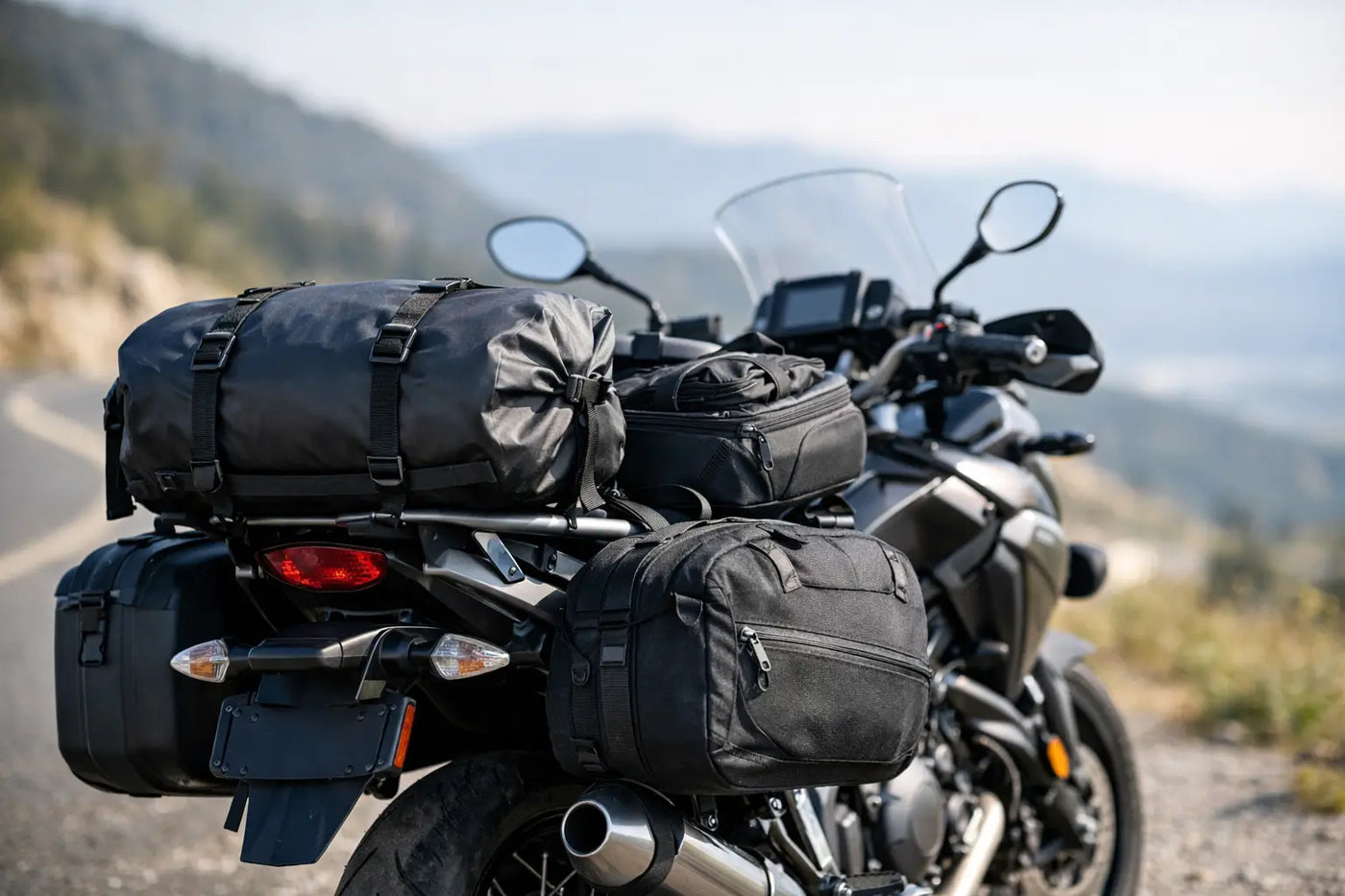
A bag that shifts at 70 mph is not a minor problem. It can throw off your balance, rub against hot exhaust, block your signals, or dump your gear across the highway. If you're figuring out how to secure motorcycle luggage, the goal is simple - keep your load tight, balanced, weather-aware, and hard for thieves to grab.
A lot of riders assume any strap job is good enough if the bag feels snug in the driveway. That is where trouble starts. Wind pressure, vibration, bumps, and long miles work every weak point loose. What looks solid parked outside the house can turn sloppy fast once the road starts fighting back.
How to secure motorcycle luggage without rookie mistakes
The first rule is to match the luggage to the bike and the ride. A hard case with a proper mounting plate gives you better theft resistance and cleaner structure than a generic duffel, but it costs more and adds weight. Soft bags are flexible, easier on the wallet, and great for weekend trips, but they demand better strapping and more frequent checks.
The second rule is to use real tie-down points. Passenger grab rails, dedicated rack loops, sissy bars, and solid frame-adjacent anchor points are your friends. Turn signals, plastic trim, shock covers, and anything sharp or hot are not. If your strap path crosses the exhaust side, assume heat will win unless you have serious clearance.
The third rule is tension with control, not brute force. Riders wreck luggage by cranking straps until seams distort or buckles twist. You want the bag compressed enough that it cannot hop, slide, or sway, but not so crushed that the load shifts inside because the outer shell deforms.
Start with the right luggage setup
Before you even tighten a strap, look at where the weight will sit. The closer your load stays to the bike's centerline and lower mass, the better the bike will handle. A tall stack on a rear seat might work for a short haul, but it can make the front end feel lighter and the whole bike less planted in crosswinds.
Tail bags work well for compact loads and shorter rides. Saddlebags spread weight better, but they need equal loading side to side. A backpack on your body should be the last choice for heavy gear. It adds fatigue, shifts with your movement, and can become a problem in a crash.
If your bike has a luggage rack, use it. If it has a sissy bar, use that too. A vertical support behind the bag gives you one more solid surface to brace against, which matters when you brake hard or hit rough pavement. Riders who tour often usually learn this the expensive way.
Soft luggage vs hard luggage
Hard luggage wins on security, shape retention, and convenience. Lock it, close it, ride. The trade-off is price, added bulk, and less flexibility if you need to haul odd-shaped gear.
Soft luggage is more adaptable and often lighter. It also fits more bikes, especially cruisers and stripped-down builds that do not have factory cases. The catch is that soft bags need disciplined packing and proper tie-down technique. If you go this route, cheap bungee cords alone are asking for trouble.
Use the right straps, not whatever is in the garage
If you want a secure setup, start with cam buckle straps, quality quick-release luggage straps, or a motorcycle cargo net paired with backup straps. Rok-style elastic hybrid straps are popular for a reason - they keep tension better than plain webbing while allowing some controlled movement. Basic bungees can work for very light loads, but they should not be the whole system for anything serious.
A good strap setup has two jobs. First, it holds the bag down. Second, it stops forward, backward, and side-to-side movement. A lot of loose loads happen because riders only strap downward and forget the bag still has room to slide.
Run straps in opposing directions when possible. That creates stability instead of a single-point squeeze. Keep buckle hardware away from paint, chrome, and body panels unless you want scuffs. If loose strap ends are flapping, secure them. Wind-whipped webbing gets noisy, distracting, and eventually damaged.
What to avoid
Ratchet straps are usually overkill for motorcycle luggage and easy to overtighten. Thin rope can slip, fray, and wear into the bag. Stretch-only cords without a backup system can unhook at the worst time. If your entire luggage plan depends on one old bungee, you do not have a luggage plan.
Pack for stability before you strap anything down
The way you pack matters just as much as the way you tie it. Put heavier items low and centered. Tools, locks, and dense gear should ride near the bottom of saddlebags or at the base of a tail bag. Lighter items like clothes can fill the upper space.
Balance matters side to side. One overloaded saddlebag can make the bike feel off in corners and at low speed. It does not take a huge difference to notice it. On a long ride, that uneven feel gets old fast.
You also want to eliminate internal movement. If the contents can roll around inside the bag, the bike will feel that. Use packing cubes, smaller inner bags, or tightly rolled clothing to fill dead space. A bag that is half-empty is harder to secure than a bag packed with intention.
How to secure motorcycle luggage for highway riding
Highway miles expose every weak setup. The wind pushes constantly, lane changes load one side of the bike, and road vibration keeps testing your tie-downs. For interstate speed, your luggage should be cinched against a solid support like a rack, passenger seat, or sissy bar, with at least two independent retention points.
After you strap it down, grab the loaded bag and try to move it hard. Push front to back, then side to side, then upward. If the whole bike rocks, that is fine. If the bag shifts separately from the bike, fix it now, not at the next gas stop after something has already worked loose.
Keep anything loose, dangling, or bulky away from the rear wheel, belt, chain, and brake components. This sounds obvious until a rain flap or strap tail starts wandering in the wind. One bad strap path can turn into a roadside mess.
Checkpoints on the road
Even a strong setup should be checked after the first 10 to 15 miles. New strap tension settles. Bags compress. What felt perfect at the start may need one more pull.
After that, inspect at fuel stops or every couple of hours. Put a hand on the straps. Look for rubbing, melting, twisting, or sagging. If weather changes, check again. Rain can add weight, and wet straps sometimes behave differently than dry ones.
Security against theft matters too
Securing luggage is not only about keeping it on the bike. It is also about making it harder to steal when you park. Hard cases with locks are the cleanest answer, but they are not unbeatable. They just slow thieves down and make your bike a less attractive target.
For soft luggage, use locking zippers where possible and run a cable lock through the bag frame, mounting loops, or rack. No, that will not make a soft bag thief-proof. It does add enough hassle to stop casual grab-and-go theft in a lot of situations.
The smarter move is to avoid leaving valuables in external luggage when you walk away. Documents, cash, electronics, and anything hard to replace should stay on your body or in a bag you can remove quickly. Security is always part hardware, part habit.
Weatherproofing changes how secure your luggage feels
A soaked bag gets heavier, softer, and sometimes looser on the bike. That changes strap tension and handling. Waterproof bags with roll-top closures hold shape better in bad weather, while standard textile bags usually need rain covers or dry bags inside.
Do not just throw a cover over everything and assume the job is done. A flapping rain cover can catch wind and start tugging at the whole setup. If you use one, make sure it is fitted and strapped so it cannot balloon at speed.
If you are loading for a weekend run, rally trip, or daily commute, road-tested gear makes the whole job easier. Riders shopping for bags, cargo nets, locks, and tie-downs usually save themselves trouble by buying motorcycle-specific gear instead of adapting random travel luggage. That is where a shop built for riders, like American Legend Rider, earns its keep.
When less luggage is the smarter move
Not every ride needs a fully loaded bike. Overpacking creates handling problems and turns a simple trip into a constant strap-check routine. If you can trim your load by one bag, do it.
A cleaner setup usually rides better, takes less time to secure, and leaves fewer failure points. That matters whether you are running across town or knocking out a few hundred highway miles. More storage is not always better. Better-packed storage is.
The best luggage setup is the one you stop thinking about once the wheels are rolling. If it stays tight, clears the hot parts, keeps the bike balanced, and makes theft a little harder, you did it right - and you can get back to what matters: the ride.

כדגנ