
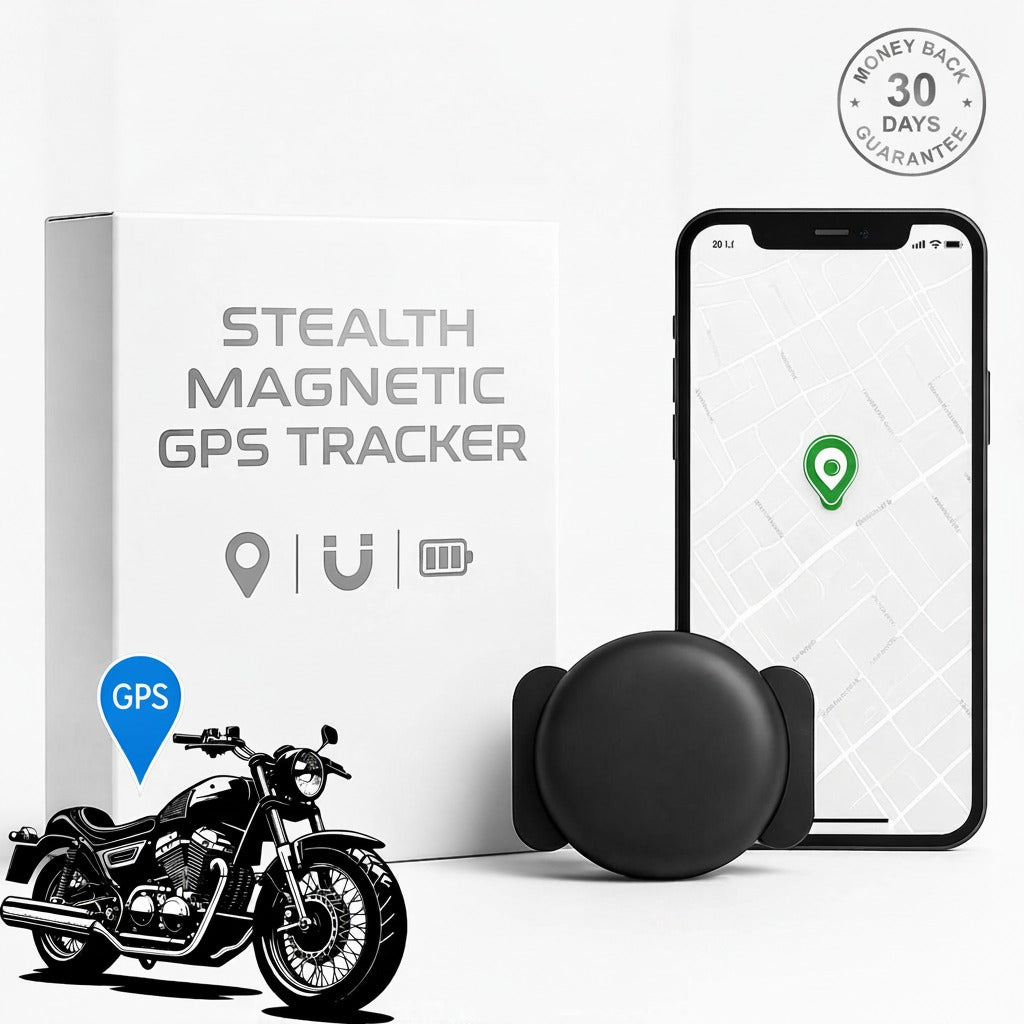
They solve different problems, so the honest answer is: a tracker does more of what actually gets bikes back, but the strongest setup uses both.
What an alarm does: makes noise at the scene. That's genuinely worth something against a nervous opportunist. But we've all walked past a screaming alarm without a glance — bystanders ignore them, and experienced thieves plan for them. Once the bike is in a van, the alarm is just noise in a box. It has no second act.
What a GPS tracker does: tells you, specifically, that your bike is moving — via an alert on your phone — and then keeps telling you where it is. That changes the situation from "my bike vanished overnight" to "my bike is at this address, officer." The alert is quieter than a siren but reaches the one person guaranteed to care.
Think of it in layers:
- Deterrence: a visible lock or chain makes the thief pick an easier target.
- Notification: the tracker's movement alert starts your response immediately.
- Recovery: live tracking gives police something concrete to act on — the layer an alarm simply doesn't have.
If budget forces a choice, we'd take the tracker: deterrence only has to fail once, and the tracker is the only tool that still works after that moment. Ideally, run a stout lock plus a hidden tracker and cover both ends.



No comments yet. Be the first rider to weigh in.