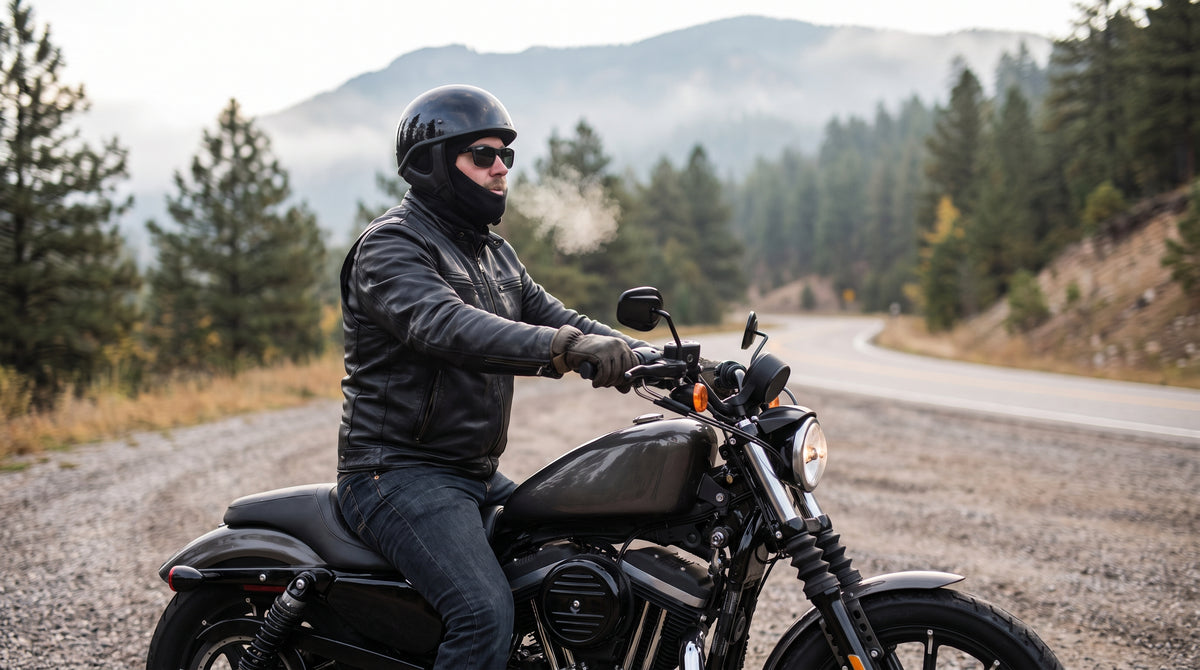
At 40°F, sitting still, you would call it jacket weather. Roll onto the interstate at 55 mph and the National Weather Service wind chill formula puts that same air at about 25°F against your skin. Your jacket handles your chest. Nothing is covering the six inches between your collar and your helmet, which is exactly where riders lose heat fastest and where a two hour ride turns into a headache and a runny nose for the rest of the day.
That gap is the whole reason a motorcycle face mask exists. This guide covers the four styles worth owning, which one to reach for in January versus July, how to get a biker mask to sit under a helmet without fogging your glasses, and the sizing mistakes that make riders give up on masks entirely. Prices below are live American Legend Rider prices, not guesses.
What a motorcycle face mask actually does
A rider mask is doing four jobs at once, and most people only think about the first one.
- Wind and cold. Bare skin at highway speed loses heat through forced convection, which is why 50°F at 65 mph feels closer to 39°F. Fabric over the nose and mouth breaks that airflow.
- Sun. The left side of a rider's face takes the worst of it on a long westbound afternoon. A UPF neck tube blocks it without sunscreen sweating into your eyes.
- Debris and bugs. A June bug at 60 mph on an open face helmet is genuinely painful. It is also the fastest way to get a rider to swerve.
- Helmet hygiene. A thin liner mask absorbs sweat and oil that would otherwise soak into your helmet's comfort padding. Washing a mask is easier than replacing a liner.
One honest limit: a face mask is comfort and coverage gear, not impact protection. It does nothing for crash safety. That job belongs to your helmet, and no fabric mask changes a DOT rating.
The four types of biker mask, compared
Nearly every motorcycle face mask on the market is one of four shapes. Pick by how much coverage you need and how hot you run.
| Style | Coverage | Best season | Works with | ALR price range |
|---|---|---|---|---|
| Full face balaclava | Head, ears, neck, nose, mouth | Fall through spring | Full face, open face, half helmet | $14.95 to $29.95 |
| Neck tube / gaiter | Neck, pull up over nose | Summer and shoulder season | Any helmet | $17.95 to $19.95 |
| Half face mask | Nose, mouth, chin only | Mild weather, short rides | Open face and half helmets | $17.95 |
| Mask with built in goggles | Full face plus eye protection | Cold, dusty, open face riding | Half and open face helmets | $29.95 to $38.95 |
If you only buy one, buy a thin full face balaclava. It is the only style that works in a full face helmet, layers under a heavier mask in winter, and doubles as a helmet liner in summer. The balaclava collection is where most riders start.

Cold weather face mask for motorcycle riding
This is the search riders make in October, and the requirements are different from a summer mask. Cold riding asks for three specific things.
- A windproof front panel. Fleece alone is warm until 60 mph pushes air straight through it. You want a laminated or coated membrane across the nose and mouth.
- Length past the collarbone. A short mask rides up and opens a gap at the throat every time you check a blind spot. Look for a bib that tucks inside the jacket.
- A vented mouth zone. Breath has to go somewhere. Sealed fleece over the mouth soaks through in 20 minutes and then freezes.
A thermal lined windproof balaclava at $25.97 is the workhorse for 30°F to 50°F riding. Below freezing, most riders layer a thin lycra balaclava underneath rather than buying a thicker single mask, because the thick ones bunch at the helmet cheek pads.


Summer masks: sun, sweat and airflow
Riders drop masks in July because they wear a winter one into an 88°F afternoon and decide masks are miserable. A summer motorcycle face mask is a different tool. Ice silk and moisture wicking lycra move sweat to the surface and cool as air passes over them, which is the opposite of what fleece does.
A cooling neck gaiter at $19.95 is the most used piece of summer gear on this list. It sits around the neck unnoticed, pulls up over the nose for sun or a dusty construction zone, and pulls down at every stop light. UV sun protection matters more than most riders think on a west facing highway at 4 p.m.

For full coverage in heat, a breathable summer helmet liner at $26.95 gives you the whole balaclava shape in a fabric that does not trap heat, and it keeps sweat out of your helmet padding.

Mask that covers your whole face vs half face vs tube
Coverage is a tradeoff against heat and against how fast you can get it off your face at a gas pump.
Full face mask
A full face mask covers head, ears, neck and face with one opening for the eyes. It is the only option that keeps your ears warm, and ears are where cold riding actually hurts. It is also the right answer for anyone wearing a half helmet in winter.
Half face mask
A half face biker mask, roughly 9.4 x 9.8 inches of fabric, covers nose, mouth and chin and hooks behind the ears or head. At $17.95 it is the cheapest way to stop bug strikes and cold air on an open face helmet, and it comes off in one motion.
Neck tube
A motley tube is a single fabric cylinder with no seams and no ear loops. It is the most versatile and the least warm. Riders who hate the closed in feeling of a balaclava usually end up here.


Balaclava vs ski mask: is there a difference?
In normal use the words get swapped freely, and most riders mean the same garment. The real distinction is the opening. A classic ski mask has three holes, two eyes and a mouth, which leaves a fabric bridge across the nose that fogs glasses and eyewear badly at low speed. A riding balaclava uses one wide open eye port instead, so warm breath vents down and away rather than up into your lenses.
For motorcycle use, choose the open port version. If you already own a three hole ski mask, wear it with the mouth hole pulled under your chin rather than over your mouth.
How to fit a motorcycle face mask under a helmet
Fit is where most masks fail, and it is almost always one of these five things.
- Put the mask on first, then the helmet. Pulling a helmet on over a seated mask drags it out of position every time.
- Check your seams. A seam sitting under a cheek pad becomes a pressure point around mile 30. Flat stitched or single piece construction is worth the few extra dollars.
- Thin, not thick. A helmet is sized to your bare head. A thick mask changes the internal fit and can push a correctly sized helmet into being too tight, which causes the classic forehead headache riders blame on the helmet.
- Route breath downward. Position the nose panel so exhaled air exits at the chin, not straight up the inside of your visor.
- Tuck the bib inside the jacket collar, never outside. Outside, wind gets under it and inflates it.
Sizing note worth knowing: most rider masks are sold one size fits most, built from four way stretch fabric. If you wear a helmet above size XL, look specifically for a stated size range instead, because a stretched out mask loses its wind seal at the nose.
Skull masks and style picks
The skull motorcycle mask is the most requested look in the category, and it is one place where the cheap versions give themselves away fast. Printed skull graphics on thin polyester fade and crack after a dozen washes. Dye sublimated print on a stretch base keeps the graphic when the fabric flexes.

For open face and half helmet riders who want eye protection in the same piece, a skull mask with UV400 windproof goggles at $38.95 replaces two purchases. Browse the full skull mask lineup or the goggle and mask combinations if you ride without a face shield.

Five mistakes riders make buying a face mask
- Buying one mask for the whole year. A thermal fleece mask in August and a lycra liner in January both get abandoned in a saddlebag. Two masks at roughly $25 each cover 12 months.
- Buying a cotton mask. Cotton holds sweat and stays wet, and wet fabric against skin at highway speed pulls heat out faster than no mask at all. Cotton bandanas are a style piece, not cold weather gear.
- Ignoring the nose bridge. A mask with no shaped nose panel channels breath straight up into glasses. Fogged glasses at 60 mph is a real hazard, not an annoyance.
- Going too thick for a full face helmet. If your helmet was snug before the mask, a 3 mm fleece layer will make it painful. Size the mask to the helmet you already own.
- Buying no name marketplace masks with no stated fabric. Unlabeled listings tend to be thin single layer polyester with a printed graphic and no wind membrane. They look right in a photo and fail at the first cold morning, which is when you needed them.
Quick picks by how you ride
- Daily commuter, all seasons: one breathable lycra balaclava at $29.95 plus one cooling neck gaiter at $19.95.
- Cold weather touring: thermal windproof balaclava at $25.97, layered over a thin liner below freezing.
- Half helmet cruiser rider: full face balaclava for ear coverage, or a mask with integrated goggles if you run no shield.
- Summer only, short rides: a motley tube at $17.95 is enough.
- Tightest budget: a plain full face cover at $14.95 still beats bare skin at 55 mph.

Where to start
Most riders overthink this. Get a thin full face balaclava first, wear it for two weeks, then add a cooling tube for summer or a thermal windproof mask for winter depending on which direction your riding season is heading. The whole category sits between $14.95 and $38.95, which makes it one of the cheapest upgrades in comfort per dollar that exists for a motorcycle.
If you are shopping for one now, the motorcycle face mask collection is where I would start. Filter by season first, style second.

No comments yet. Be the first rider to weigh in.