
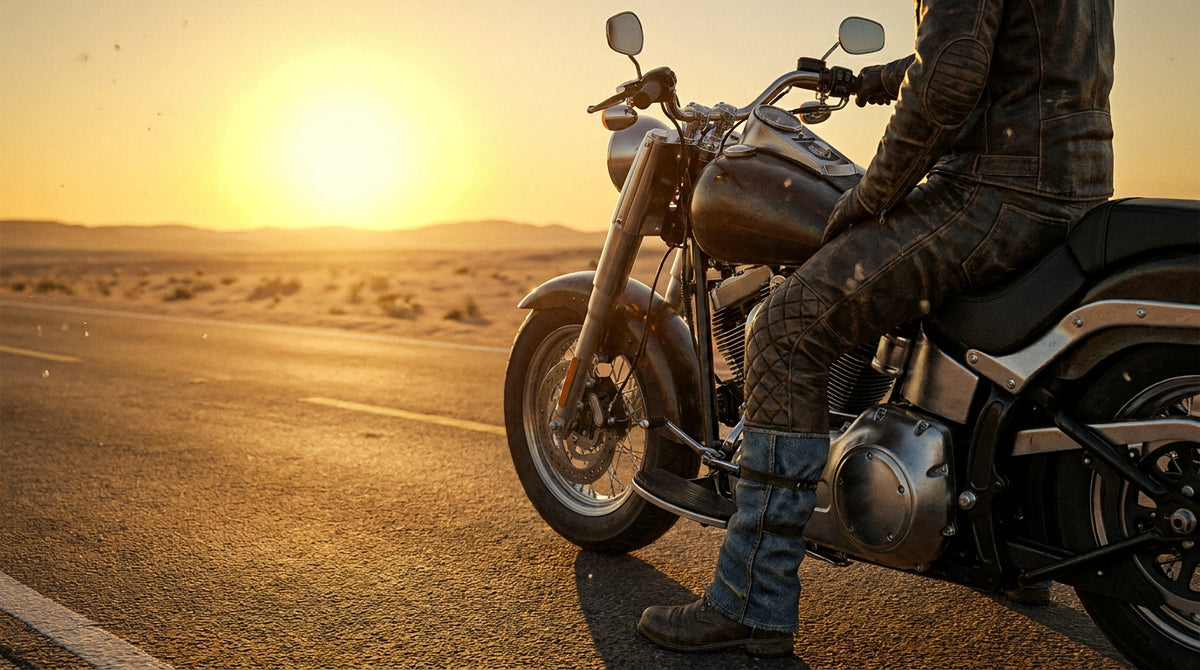
Your jacket is zipped, your gloves are heated, and your shins still feel like they are packed in ice by the second exit. That is the gap most riders never fix. Jeans and even riding pants let 60 mph wind cut straight through the lower leg, and the knees and shins have almost no fat or muscle to hold heat.
Motorcycle leg warmers close that gap for less than the price of a tank of gas. This guide covers what they are, which fabrics block wind, whether to wear them under or over your pants, how to size them so they do not slide, and the mistakes that make riders give up on them after one ride.
What Motorcycle Leg Warmers Actually Do
A motorcycle leg warmer is a tube of insulated fabric that covers the lower leg from just above the knee to the ankle. Unlike the ribbed knit leg warmers from the dance studio, riding versions use a windproof outer layer, a fleece or brushed inner layer, and a grip band or zipper to stay in place at highway speed.
The reason they matter comes down to wind chill. At 40F ambient, air hitting your legs at 60 mph behaves like roughly 25F. That is the number from the National Weather Service wind chill chart, and it explains why a ride that felt fine in the driveway turns miserable on the interstate. Leg warmers stop that moving air before it reaches skin.
They also solve a layering problem. Full thermal pants under jeans make the waist tight and the knees stiff. Leg warmers insulate only the part of the leg that takes the wind, so your hips and waist stay free to move on the bike.
Fleece vs Neoprene vs Insulated Shell: Which Fabric Wins
Three fabric families cover almost every pair of leg warmers for bikers on the market. Each one trades warmth against bulk and breathability.
Fleece leg warmers for men and women
Polar fleece in the 200 to 300 gsm range is the standard. It traps a layer of warm air next to the leg and dries fast if you hit drizzle. On its own, fleece lets wind through, so the good pairs bond it to a tighter woven face fabric. Fleece is the pick for rides between 35F and 55F.
Neoprene
Neoprene is the wetsuit material, usually 2 to 3 mm thick for leg wear. It blocks wind and water completely and is the warmest option per millimeter. The downside is sweat. Neoprene does not breathe, so a 20 minute stop at a gas station leaves damp legs that feel colder when you ride off.
Insulated shell with fleece lining
This is the hybrid most riders end up with. A windproof polyester or nylon face, a thin layer of synthetic insulation, and brushed fleece against the skin. It gives most of the neoprene warmth with far better breathability, and it packs small enough to live in a saddlebag.
Comparison Table: Leg Warmer Fabrics for Riding
| Fabric | Wind block | Breathability | Best temp range | Weak point |
|---|---|---|---|---|
| Polar fleece (200 to 300 gsm) | Low unless bonded | High | 35F to 55F | Wind cuts through plain fleece |
| Neoprene (2 to 3 mm) | Total | Very low | 20F to 45F | Sweat buildup at stops |
| Insulated shell + fleece lining | High | Medium | 25F to 50F | Costs more than plain fleece |
| Knit acrylic (fashion type) | None | High | Above 55F | Useless at highway speed |
For most riders, the insulated shell with a fleece lining is the right call. One structural reason: the windproof face does the work that fleece alone cannot, and the fleece inside keeps the shell from feeling clammy the way neoprene does.
Under or Over Your Pants?
This is the question riders search more than any other, and the answer depends on what you wear on the bike.
- Under jeans: works with thin fleece leg warmers. The denim becomes your wind layer and the fleece becomes your insulation. Slim jeans may not fit over a thick pair.
- Over jeans or riding pants: the normal choice for insulated shell or neoprene types. The warmer takes the wind so your pants never get cold in the first place. Look for a wide calf opening and a zipper or hook closure so you can put them on over boots.
- Over armored pants: fine as long as the warmer does not pin the knee armor out of position. Check that you can still bend the knee freely before you ride off.
Leg warmers under pants are quieter and look like nothing from the outside. Leg warmers over pants are easier to pull off at a warm destination without finding a bathroom. If you commute and change at work, the over the pants style saves a lot of hassle.
Sizing: How to Keep Them From Sliding Down
The number one complaint about any leg warmer is that it ends up around the ankle at the first stop light. Three measurements fix that.
- Calf circumference at the widest point. Most men measure 14 to 17 inches. The warmer should be 1 to 2 inches smaller than this when relaxed so it grips without cutting off circulation.
- Length from mid thigh to ankle bone. A warmer that covers the knee needs about 20 to 24 inches for an average adult. Shorter versions that stop below the knee leave the coldest joint exposed.
- Top closure type. A silicone grip strip holds better than plain elastic. An adjustable strap or zipper at the top beats both because you can tighten it over a pant leg.
If you are between sizes, go smaller for under the pants use and larger for over the pants use. Thick riding pants add about 1 inch to the calf measurement.
How Leg Warmers Fit Into a Full Cold Weather Layering System
Leg warmers are the cheapest part of staying warm on a winter ride, but they only work if the rest of the system holds. Cold creeps in wherever two layers meet.
- Core: a windproof jacket with a base layer underneath. Once the torso is cold, the body pulls blood away from the arms and legs, and no leg warmer can fight that.
- Hands: heated motorcycle gloves or at least insulated gauntlets that overlap the jacket sleeve.
- Head and neck: a windproof motorcycle balaclava under the helmet. The neck has large blood vessels close to the skin and loses heat faster than almost any other spot.
- Legs: leg warmers over or under your pants, plus wool or synthetic socks that reach above the boot cuff.
- Feet: boots with a shaft at least 8 inches tall, so the leg warmer can overlap the top of the boot and seal out wind.
The overlap rule is the detail riders miss. Every layer should cover the edge of the next one by at least 2 inches. Leg warmer over sock, pant over leg warmer, boot cuff under leg warmer. No gaps, no cold spots.

Leg Warmers vs Thermal Pants vs Heated Pant Liners
Leg warmers are not the only way to keep your legs warm. Here is how the three main options compare for a rider deciding where to spend.
| Option | Typical cost | Covers | Setup | Best for |
|---|---|---|---|---|
| Leg warmers | Low | Knee to ankle | Pull on in 30 seconds | Commutes, fall and spring, riders who run warm |
| Thermal base layer pants | Low to mid | Waist to ankle | Change clothes | Long cold days, touring |
| Heated pant liners | High, plus bike wiring | Waist to ankle | Wire to battery or carry a pack | Riding below 25F for hours |
A good pairing for most riders is leg warmers plus a thin thermal base layer. The base layer handles the whole leg at a modest level and the warmer adds concentrated insulation exactly where the wind hits hardest. Heated liners are brilliant, but they tie you to the bike and double the cost of the whole leg setup.
Waterproof Leg Warmers: Worth It?
Searches for waterproof leg warmers spike every fall, and the honest answer is that fully waterproof usually means neoprene or a coated shell that does not breathe. For riding in steady rain, a proper rain pant over everything beats any leg warmer.
What you actually want for most wet rides is water resistant, not waterproof. A DWR coated polyester face sheds road spray and light drizzle for 30 to 60 minutes, then dries fast once the rain stops. Neoprene stays dry inside but you will be sitting in your own sweat by the time you park.
If your commute has a real chance of rain, carry a packable rain pant in the saddlebag and use the leg warmers for warmth. Trying to make one product do both jobs is how riders end up cold and wet at the same time.
Common Mistakes Riders Make With Leg Warmers
- Buying fashion knit leg warmers. Acrylic knit has zero wind resistance. At 60 mph the air passes straight through and the fabric just gets cold. It fails because insulation without a wind barrier does nothing on a motorcycle.
- Stopping below the knee. The knee is the most exposed joint on the bike and the first place riders feel pain in the cold. A warmer that ends at the shin top leaves the worst spot uncovered.
- Sizing too loose. A loose warmer lets air pump in and out with every bump. It also slides. One size smaller than feels comfortable standing is usually right once you are seated on the bike.
- Wearing neoprene on a mild day. Above 45F, neoprene turns into a sweat trap. Save it for the genuinely cold rides and use fleece or an insulated shell the rest of the time.
- Skipping the sock overlap. A 1 inch gap between the sock and the warmer at the ankle is enough to make the whole foot go numb. Pull the sock up first, then the warmer over it.
Who Should Buy Motorcycle Leg Warmers
They make the most sense for three riders. The commuter who rides year round in a place with real shoulder seasons, since a pair weighs a few ounces and lives in the bag. The cruiser rider who refuses to give up jeans but is tired of frozen shins. And the rider with a leg injury or poor circulation who feels the cold in the lower leg first.
They make the least sense for riders who already wear insulated textile touring pants with a thermal liner. Those pants are doing the job already, and adding a warmer on top is bulk for little gain.
If you are shopping for a pair, the cold weather riding gear collection is where I would start. Look for a windproof face, fleece lining, a grip band at the top, and a length that covers the knee. Get that right and a 40F morning stops being the reason you leave the bike in the garage.
No comments yet. Be the first rider to weigh in.