
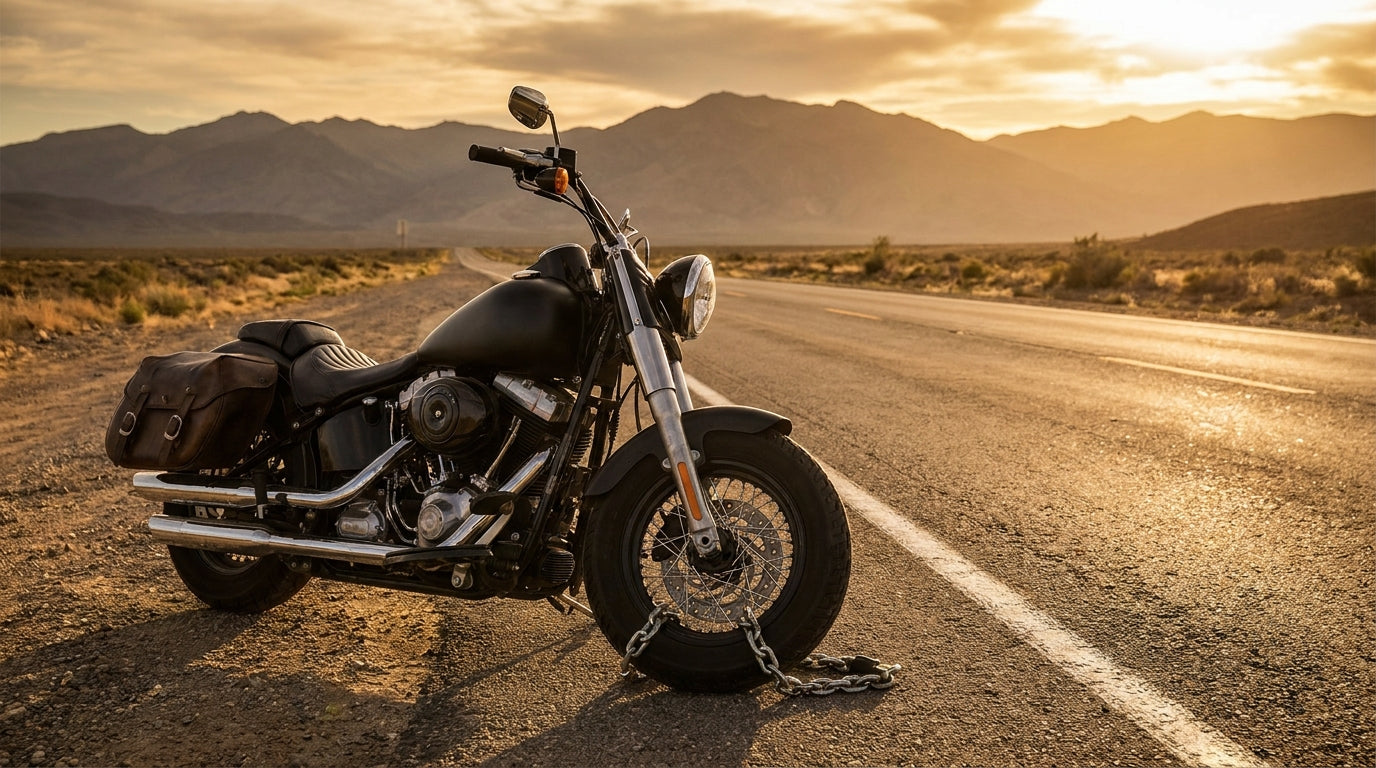
The National Insurance Crime Bureau logged roughly 52,000 motorcycle thefts across the United States in 2023. Fewer than half were recovered. California, Florida, and Texas lead the count every single year. The average stolen bike is worth around $11,000, and most thefts happen in broad daylight from open parking, not locked garages. A thief with a van and two buddies can lift a 500-pound cruiser into a truck bed in under 30 seconds.

This guide covers what actually works for motorcycle theft prevention. You will learn which anti-theft devices stop real thieves, how GPS trackers have changed recovery rates, what motorcycle theft insurance actually covers, and how to verify a used bike is clean before buying. Every method here is backed by specific hardware, real numbers, and practical advice you can act on today.
How Common Is Motorcycle Theft in the US?
Motorcycle theft is more common than most riders think. The NICB's 2023 data shows 52,000 reported thefts nationally, with a recovery rate of about 46 percent. That means roughly 28,000 bikes disappeared for good in a single year. The FBI's Uniform Crime Report puts the total value of stolen motorcycles at over $570 million annually.
Geography matters. California consistently leads with approximately 7,500 thefts per year. Florida follows with around 4,800, and Texas sits at about 4,200. Warmer states with year-round riding seasons see higher numbers because more bikes are parked outside, more often, in more accessible locations. Urban areas see far higher per-capita rates than rural towns.
Most motorcycle thefts are crimes of opportunity. A thief spots an unsecured bike in a parking lot, defeats the steering lock in under 10 seconds with a pry bar, and rolls it into a van. The entire operation can take less than 2 minutes with no tools louder than a conversation. That means prevention comes down to slowing the thief past their comfort window.
Most Stolen Motorcycle Brands
Not every brand is stolen at the same rate. The NICB breaks down theft data by manufacturer, and the pattern is consistent year over year. Volume selling brands get stolen most often simply because there are more of them on the road and more demand for their parts.
| Rank | Brand | Share of Thefts | Why |
|---|---|---|---|
| 1 | Honda | ~30% | Largest install base, high parts demand |
| 2 | Yamaha | ~16% | Popular sport and dual-sport models |
| 3 | Suzuki | ~11% | GSX-R series is a prime target |
| 4 | Kawasaki | ~10% | Ninja models popular on resale |
| 5 | Harley-Davidson | ~8% | Lower theft rate relative to volume, heavier bikes |
Honda leads because roughly 3 in 10 motorcycles on American roads are Hondas. The CBR and CRF lines are especially targeted because their parts fit across multiple model years, making them easy to strip and sell. Harley-Davidson bikes get stolen less often per unit on the road, partly because they weigh 600 to 900 pounds and are harder to lift into a vehicle without a ramp and crew.
Best Anti-Theft Devices for Motorcycles
No single device stops every type of motorcycle theft. The goal is to layer multiple deterrents so a thief faces more effort, more noise, and more risk of getting caught. Here is what works.
Disc Locks
A disc lock clamps through a hole in the front brake rotor and prevents the wheel from rolling. Quality disc locks use hardened steel pins at 10mm or thicker that resist bolt cutters. Alarm models add a 100 to 120 dB siren triggered by vibration or tilt. The ABUS Granit Detecto X-Plus 8077 (13.5mm pin, Sold Secure Gold) is one of the strongest options on the market at roughly $140. For a deeper breakdown of picks, see our motorcycle disc lock guide.

Chain Locks and Ground Anchors
For home parking, a hardened chain through the rear wheel and frame, anchored to a bolt-in-concrete ground anchor, stops the lift-and-van method. The Oxford Monster chain uses 14mm boron steel links and resists angle grinders for over 60 seconds of sustained cutting. Pair it with a ground anchor rated to the same security level. Budget: $80 to $150 for a quality chain, $30 to $50 for the anchor.

Alarms and Kill Switches
A loud alarm draws attention. A hidden kill switch prevents the engine from starting even if the thief bypasses the ignition. Many riders wire a simple toggle switch into the fuel pump circuit, hidden under the seat or behind a side panel. Cost: under $10 in parts and 30 minutes of wiring. Combined with a visible disc lock, this creates two separate obstacles the thief must solve under pressure.
How GPS Trackers Changed Motorcycle Theft Recovery
The biggest shift in motorcycle theft prevention over the past five years is affordable GPS tracking. A hidden GPS unit transmits the bike's location to your phone in real time. If the bike moves without your permission, you get an alert and can share coordinates with law enforcement immediately.
Without a tracker, the NICB recovery rate sits around 46 percent. With a live GPS signal, police can locate a stolen motorcycle within hours instead of weeks. Many recovered bikes are found in garages and storage units where they sit for days before being stripped. A GPS ping within the first 24 hours often catches the bike before any parts are removed.
The practical setup: a magnetic GPS tracker that hides under the seat, inside a fairing panel, or behind the battery box. No wiring. No monthly fees on the best units. Installs in under 3 minutes. The thief does not know it is there, so the first thing they do after stealing the bike is ride it straight to their location while your phone logs every turn.
For riders who park on the street, in apartment complexes, or in shared garages, a GPS tracker paired with a quality disc lock or chain is the strongest combination available right now. The lock slows the thief. The tracker finds the bike if the lock fails.

Does Motorcycle Theft Insurance Actually Pay Out?
Standard liability motorcycle insurance does not cover theft. You need comp coverage (sometimes called "other than collision"), which is an optional add-on in most states. Comp covers theft, vandalism, fire, weather damage, and animal strikes. It does not cover collision.
Typical cost: $50 to $200 per year on top of your base policy, depending on the bike's value, your zip code, and your deductible. A $500 deductible is standard. That means if your $8,000 bike is stolen, the insurer pays $7,500 minus depreciation. If the bike is 5 or more years old, the payout may be well below what you need to buy a replacement.
Key things to know before filing a motorcycle theft claim:
- File a police report within 24 hours. Insurers require it.
- Provide your VIN, registration, and photos of the bike. Keep these on your phone, not just in the glovebox of the bike.
- Expect the claim to take 30 to 60 days. The insurer investigates before paying.
- Some insurers offer discounts (5 to 15 percent on comp coverage) if you use approved anti-theft devices like disc locks, chains, or GPS trackers.
If you ride a bike worth $5,000 or more and park it anywhere that is not a locked private garage, comp coverage is worth the cost. The $150 per year is a fraction of the financial hit from an uninsured theft.
How to Check If a Motorcycle Is Stolen Before Buying
Buying a stolen motorcycle unknowingly is more common than riders expect. If law enforcement traces the VIN back to a theft report, you lose the bike and the money you paid for it. No refund. Here is how to protect yourself when buying used.
Run the VIN
The NICB offers a free tool called VINCheck at nicb.org/vincheck. Enter the 17-character VIN and it tells you whether the vehicle has been reported stolen or has a salvage title from an insurance total-loss. NMVTIS (National Motor Vehicle Title Information System) reports cost $2 to $5 and add title history from all 50 states.
Inspect the VIN Plate
Check the VIN plate on the steering head (neck of the frame, below the triple tree). Look for scratches, re-stamping, or adhesive residue. A legitimate VIN plate is riveted or laser-etched by the factory. If the plate looks like it was removed and reattached, walk away. Also compare the frame VIN to the engine case number. They should match the title.
Ask for Paperwork
A clean title in the seller's name, a matching registration, and a bill of sale are the minimum. If the seller only has a "bill of sale from the previous owner" and no title, that is a red flag. Some stolen bikes are sold with forged titles or titles from a different state. Always verify through your state's DMV portal before handing over cash.
5 Motorcycle Theft Prevention Mistakes Riders Keep Making
1. Relying on the steering lock alone. The factory steering lock on most motorcycles can be defeated with a pry bar in 5 to 10 seconds. It was never designed as a serious anti-theft device. It stops a bike from rolling in a straight line, not from being stolen.
2. Parking in the same spot every day. Thieves scout locations before stealing. If your bike sits in the same apartment lot every night with no lock visible, a thief can plan the grab in advance, knowing exactly what tools to bring and how much time they have. Vary your parking spot when possible and always use a visible lock.
3. Skipping comp insurance. Riders who only carry liability save $100 to $200 per year but absorb the full cost of a stolen bike. On a $10,000 motorcycle, that gamble makes no sense. One theft wipes out decades of premium savings.
4. Using one lock and calling it done. A single disc lock stops rolling. It does not stop lifting. Two people can pick up a 500-pound motorcycle and set it in a truck bed in 30 seconds. Layer a disc lock, a chain (when at home), and a hidden GPS tracker. Three obstacles are exponentially harder to defeat than one.
5. Not recording the VIN, engine number, or photos. If your bike is stolen and recovered, you need to prove it is yours. Store your VIN, engine case number, registration, and 10 to 15 clear photos (including unique marks, scratches, or aftermarket parts) in a cloud folder. This speeds up both the police report and the insurance claim.
Motorcycle theft prevention comes down to making your bike harder to steal than the one parked next to it. A visible lock, a hidden tracker, solid insurance, and smart parking habits cover the vast majority of real-world scenarios. If you are putting together a security setup, the motorcycle locks and security gear collection is a good place to start.


No comments yet. Be the first rider to weigh in.