
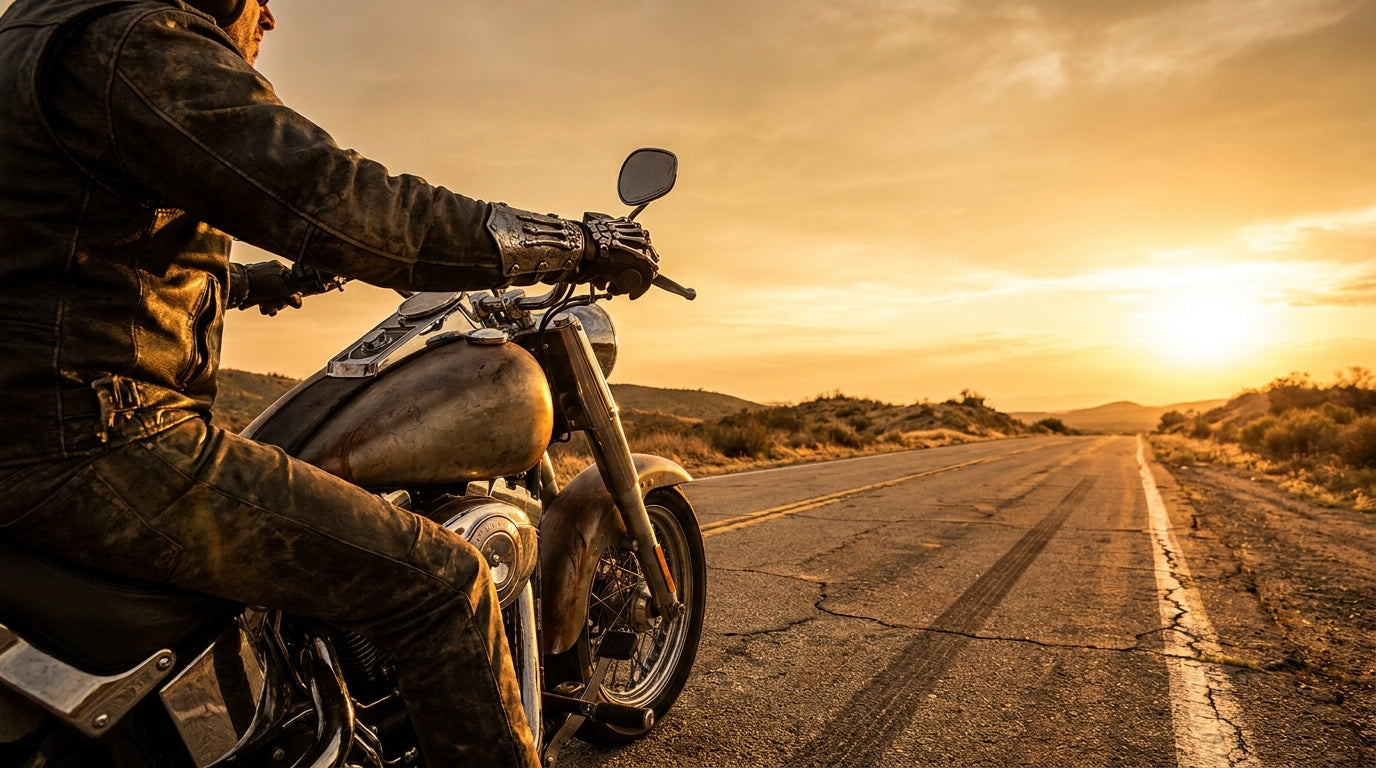
Most biker wrist gear falls into two camps: plain leather cuffs that look like every other rider's, or cheap metal that turns your skin green after one weekend ride. The skeleton hand bracelet sits in a different spot entirely. It's bold, it's specific to the rider-and-skull culture, and when it's built right, it actually survives the road.
This guide covers the metals, styles and sizing details that separate a skeleton hand bracelet you'll wear for years from one that falls apart before your first oil change. By the end you'll know exactly what to look for, whether you want a skeleton hand bracelet ring combo that covers your whole hand or a simple chain-style piece for daily riding.
What Makes a Skeleton Hand Bracelet Stand Out
A skeleton hand bracelet wraps bone-shaped links around your wrist and, in many designs, extends finger rings connected by chains across the back of your hand. That hand-spanning design is what sets it apart from a standard chain bracelet or leather cuff.
The look started showing up in biker circles in the early 2000s, borrowed from gothic jewelry, and it stuck because it matched the skull-forward aesthetic riders already wore on skull helmets and rings. The most recognizable version uses articulated finger bones in 316L stainless steel, with each knuckle joint actually bending as your hand moves.
Weight matters here. A well-built skeleton bracelet in stainless steel typically weighs between 80 and 120 grams. That's heavy enough to feel solid on your wrist, light enough that you're not fighting your own hand when you grab the throttle. Compare that to a zinc alloy knockoff at 30 to 40 grams, and you can literally feel the quality difference the moment you pick it up.

If you already wear biker bracelets or biker rings, a skeleton hand bracelet ties the whole look together without adding another ring to an already crowded hand.
Skeleton Bracelet Metals: Stainless Steel vs Silver vs Zinc Alloy
The metal decides how long your bracelet lasts and whether it can handle road conditions. Here is what each option actually delivers.
316L Stainless Steel
This is the standard for biker jewelry that sees real use. 316L resists corrosion, handles sweat and rain, and does not tarnish. A 316L skeleton bracelet typically runs $30 to $90 depending on detail work. The "316L" designation means the alloy contains 2 to 3 percent molybdenum, which is what keeps it from rusting even if you ride through a downpour and forget to dry it off afterward.
Sterling Silver (925)
Silver carries more detail in the castings and has a sharper finish. Silver skeleton hand bracelets typically cost $80 to $250. The tradeoff is maintenance. Silver oxidizes with exposure to air and sweat, so you'll need to polish it every few weeks or let it develop a dark patina. Some riders prefer the aged, blackened look and skip polishing entirely.
Zinc Alloy
This is the budget option, and it shows. Zinc pieces weigh less, feel hollow, and the plating chips within months. Most of those $8 to $15 skeleton bracelets on major marketplaces use zinc alloy under a chrome or nickel finish. They photograph well. They do not survive actual riding. A zinc bracelet exposed to highway wind, sweat and rain will start flaking inside 60 days.
| Metal | Price Range | Weight Feel | Durability | Maintenance |
|---|---|---|---|---|
| 316L Stainless Steel | $30 - $90 | Solid, heavy | Excellent | None needed |
| Sterling Silver 925 | $80 - $250 | Medium | Good | Polish monthly |
| Zinc Alloy | $8 - $15 | Light, hollow | Poor | Replating chips fast |
| Titanium | $100 - $300 | Light, solid | Excellent | None needed |
Bottom line: 316L stainless steel gives you the best durability per dollar for actual riding use. Silver works for show rides and events. Zinc alloy belongs in a costume drawer, not on a motorcycle.
Ring-Connected vs Standalone Skeleton Bracelets
This is where you decide how much wrist and hand coverage you actually want.
Ring-Connected Designs
The skeleton hand bracelet ring style runs chains from the bracelet across the back of your hand to one or more finger rings. Biker versions use heavier gauge chain and thicker rings than fashion pieces. These look impressive at rallies and meetups, but there is a practical issue: the finger rings can interfere with your grip on the handlebars. The chains also catch on glove linings. For actual riding, most guys wear the ring-connected style off the bike and switch to something simpler when they saddle up.
Standalone Skeleton Bracelets
These skip the finger connection and focus the bone design entirely on the wrist band. They typically use a toggle clasp or lobster claw closure. Nothing sits between your glove and the grip, so they work for every ride. A good standalone skeleton bracelet in 316L stainless steel from a brand like Han Cholo or ALR weighs around 85 to 100 grams and sits flat enough to slide under a riding glove without creating a pressure point.
If you want both looks, some designs offer modular setups where the ring chains detach from the main bracelet with small carabiner links. That way you get the full skeleton hand bracelet with rings for events and a clean wrist piece for the ride there.
How to Size a Skeleton Hand Bracelet
Sizing a skeleton bracelet is different from a regular chain because the rigid bone sections do not flex the same way standard links do. Get this wrong and you'll either cut off circulation or lose the bracelet on the highway.
Measure your wrist with a flexible tape measure, snug but not tight. Most men's wrists fall between 7 and 8.5 inches. Add half an inch to one full inch for a comfortable riding fit. Going too tight restricts blood flow during long rides, and your hands will swell from engine vibration and summer heat. That snug bracelet becomes painful after 30 minutes at highway speed.
For ring-connected styles, you also need your finger circumference at the base knuckle. The average men's ring size is US 10, which equals about 2.48 inches around. Measure the specific finger the design targets, because index and ring fingers often differ by a full size.
| Wrist Measurement | Bracelet Length | Fit Type |
|---|---|---|
| 6.5 - 7 inches | 7.5 inches | Snug |
| 7 - 7.5 inches | 8 inches | Standard |
| 7.5 - 8 inches | 8.5 inches | Comfortable |
| 8 - 8.5 inches | 9 inches | Loose / large wrist |
Most 316L stainless skeleton bracelets ship in 8 or 9 inch lengths. If you are between sizes, go up. A bracelet that sits slightly loose will not bother you. One that is too tight will dig into your wrist bone every time you pull the clutch lever.
Skeleton Hand Bracelet for Guys: Matching Your Riding Style
Different bikes call for different levels of flash. Here is what works with each riding style.
Cruiser and chopper riders lean into the heavy, ornate skeleton hand bracelet. A 100-gram-plus stainless piece with detailed bone articulation matches the chrome-and-leather look of a Harley-Davidson Softail or Indian Chief Dark Horse. This is where the bolder ring-connected styles fit naturally.
Sport bike riders tend toward slimmer skeleton bracelets, if they wear wrist jewelry at all. A low-profile stainless chain with subtle skull or bone accents works under sport gloves without creating a pressure point. Look for pieces under 60 grams with a flat-profile clasp.
Touring riders who cover 400-plus miles in a day need comfort above everything. A medium-weight standalone skeleton bracelet with rounded edges and a secure toggle clasp stays comfortable through long hours. Skip anything with sharp bone tips that will dig in under a touring glove.
Whatever your ride, keep your metals consistent. If you wear a stainless steel skeleton bracelet, pair it with stainless biker jewelry across the board. Mixing silver and stainless pieces on the same hand looks off. Pick one metal family and stick with it on your wrist, neck and fingers.
How to Care for a Skeleton Bracelet
Stainless steel is low maintenance, but "low" does not mean "zero." Road grime, chain lube spray and dried sweat build up in the articulated joints of a skeleton bracelet faster than on a smooth chain. Here is a simple cleaning routine that takes two minutes.
- Soak the bracelet in warm water with a drop of dish soap for five minutes.
- Scrub the bone detail and clasp with an old toothbrush to clear grime from the crevices.
- Rinse under running water and pat dry with a microfiber cloth.
- For silver pieces, use a dedicated silver polishing cloth after drying. This removes tarnish without scratching the casting detail.
Do this every two to three weeks if you ride regularly. For winter storage, keep the bracelet in a soft pouch or lined box, separate from other metal items. Loose bracelets rattling around in a drawer will scratch the detail work that makes a skeleton design look good in the first place.
5 Mistakes That Kill a Good Skeleton Bracelet
1. Buying zinc alloy and expecting it to last. The chrome peels, the clasp bends, and you end up with a green wrist after two rides. If the listing does not specify 316L stainless or 925 silver, assume it is zinc.
2. Wearing a ring-connected style while riding. The chains catch on levers, the rings shift under gloves, and you lose grip control. Wear the full skeleton hand bracelet ring setup at the rally. Switch to a standalone piece for the actual ride.
3. Ignoring the clasp type. Toggle clasps and lobster claws hold under vibration. Magnetic clasps do not. One bump on a rough road and a magnetic-close bracelet is in the ditch behind you.
4. Skipping the size check. A bracelet that is too tight restricts blood flow. After 30 minutes of gripping handlebars at 70 mph, your hands swell from vibration. That snug bracelet becomes a pressure cuff.
5. Storing it loose with other metal gear. The bone-detail castings on a skeleton bracelet scratch easily when they rattle around with keys, rings and buckles. A $5 velvet pouch saves you from ruining a $70 bracelet.
Where to Find a Skeleton Bracelet That Actually Holds Up
The gap between a skeleton hand bracelet that lasts and one that does not comes down to two things: metal grade and clasp construction. If the product page does not state the exact alloy (316L stainless, 925 silver, Grade 5 titanium), move on. If the weight is not listed, it is probably zinc alloy trying to hide behind a "premium metal" label.
For riders who want heavy stainless steel pieces that match the skeleton and skull aesthetic, the ALR biker jewelry collection carries rings, chains and bracelets built for actual wear. Every piece ships with the metal type and weight stated upfront, so you know what you are getting before it arrives.
A good skeleton hand bracelet is one of those pieces of gear you buy once and wear for years. Get the metal right, get the sizing right, and it becomes part of your riding identity. If you are shopping for one, that collection is where to start.

No comments yet. Be the first rider to weigh in.