
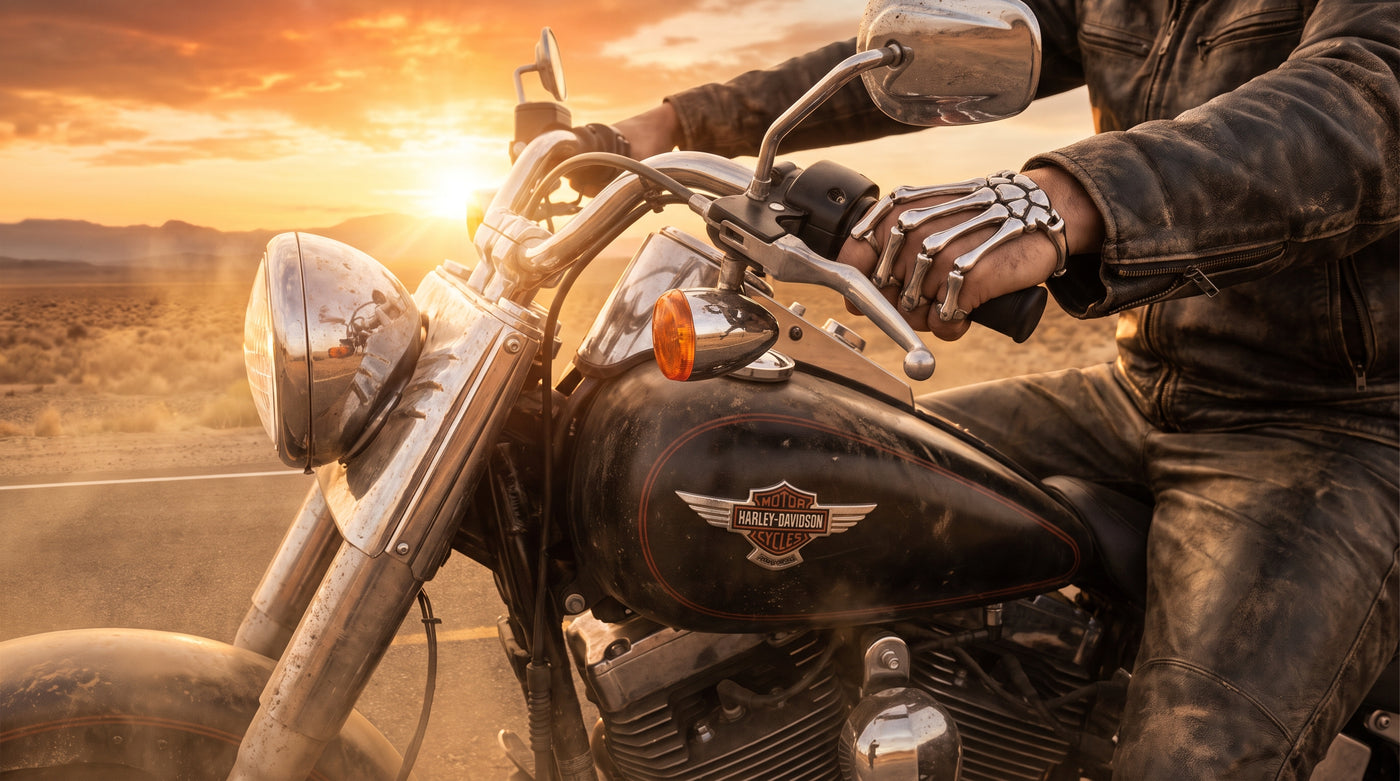
A skeleton hand bracelet wraps articulated metal bones across your wrist and knuckles, connected by fine chain links at every joint. It is one of the most eye-catching pieces of biker jewelry you can wear, and one of the easiest to get wrong. Most versions sold on marketplaces use cheap zinc alloy that turns green after two rides in the rain. The difference between a piece that lasts and one that corrodes comes down to the metal, the clasp, and how it fits under your gloves.
This guide covers every style of skeleton hand bracelet worth buying. You will learn which metals survive sweat and road spray, how to measure for a ring-connected piece, and the specific mistakes that lead to broken links and wasted money. If you are shopping for skeleton hand jewelry of any kind, this is the page to read before you spend a dollar.
What a Skeleton Hand Bracelet Actually Is (and Why Riders Wear Them)
A skeleton hand bracelet is a piece of jewelry shaped like the bones of a human hand. The design typically runs from a cuff or chain on the wrist, across the back of the hand, and connects to one or more finger rings through articulated links. Each "bone" segment moves independently, so the piece flexes with your hand instead of sitting rigid.
The skeleton motif has deep roots in biker culture. Skull and bone imagery shows up on everything from skull motorcycle helmets to club patches. A skeleton hand bracelet fits that tradition while also being functional. Unlike bulky cuffs, the chain-link design sits flat enough to slide under most riding gloves without bunching.
The most common base material is 316L stainless steel, which rates 58 to 62 on the Rockwell hardness scale. That matters because anything softer (like standard zinc alloy or brass) will scratch, pit, and discolor fast. 316L resists corrosion from sweat, rain, and even salt air, which is why surgical instruments and marine hardware use the same grade.

Skeleton Hand Ring Bracelet: The Full Connected Look
The skeleton hand ring bracelet is the most searched variant of this style. It connects a wrist chain to one, two, or three finger rings through articulated bone-shaped links. The result covers the entire back of your hand, and it moves with every grip and gesture.
Single-ring versions attach to the middle finger. Two-ring designs typically cover the index and ring fingers. The three-ring style is the most dramatic but also the hardest to size correctly, because each finger ring needs to fit independently. If even one ring is too tight, the whole piece pulls and binds when you flex.
For riding, the single-ring skeleton hand ring bracelet is the most practical. It gives you full throttle control with your other fingers free. The Regal Wolf brand makes a popular 316L version with a lobster-claw clasp at the wrist, priced around $35 to $50 depending on the finish. Always check that the finger ring is open-backed or adjustable. A closed ring in the wrong size means you cannot wear it at all.
Silver, Gold or Stainless Steel: Which Metal Holds Up
Metal choice determines how long your skeleton hand bracelet lasts and how much maintenance it needs. Here is a straightforward comparison of the three most common options for skeleton hand jewelry.
| Metal | Tarnish Resistance | Weight (8" bracelet) | Price Range | Best For |
|---|---|---|---|---|
| 316L Stainless Steel | Excellent | 85-120g | $25-$70 | Daily riding, low maintenance |
| Sterling Silver (.925) | Moderate (needs polishing) | 70-95g | $80-$250 | Show pieces, collectors |
| Gold-Plated Steel | Good (plating wears over time) | 90-125g | $40-$90 | Occasional wear, events |
| Zinc Alloy | Poor (turns green) | 50-70g | $5-$15 | Avoid |
A silver skeleton hand bracelet looks stunning when polished, but sterling silver tarnishes when exposed to air and moisture. You will need to clean it with a polishing cloth every few weeks if you ride with it. A gold skeleton hand bracelet is almost always gold-plated steel rather than solid gold. The plating holds up for 6 to 12 months of regular wear before it starts to fade at the edges and around the clasp.
For a metal skeleton hand bracelet that you plan to wear every day on the road, 316L stainless steel is the clear winner. It costs less, weighs about the same, and you never have to polish it. Wipe it down with a damp cloth after a ride and it looks the same as the day you bought it.
How to Size a Skeleton Hand Bracelet Properly
Sizing a standard bracelet is simple: measure your wrist, add half an inch. A skeleton hand bracelet with finger rings is more complicated because you are fitting two different body parts connected by a rigid chain.
Start with your wrist. Wrap a flexible tape measure (or a strip of paper you can mark) snug against the skin, right at the wrist bone. Most men land between 7 and 8.5 inches. Add 0.5 to 0.75 inches for comfort. If you plan to wear riding gloves over it, add a full inch.
For the finger ring, measure the circumference of the knuckle on whichever finger the ring attaches to. The knuckle is the widest point the ring needs to pass over. Standard men's ring sizes run from 8 (18.1mm diameter) to 13 (22.3mm diameter). If the piece has a closed ring, get the size right or skip it. Adjustable or open-back rings give you more margin.
The chain between the wrist and the finger ring should lay flat against the back of your hand without pulling tight when you make a fist. If it bunches up or lifts off your skin by more than an inch, the piece is too long for your hand. Most quality skeleton bracelets come in small, medium, and large, with the hand-chain length varying by about 1.5 inches per size.
One tip that saves returns: put on a pair of your riding gloves before you finalize the size. A skeleton bracelet that fits perfectly on bare skin can dig into the back of your hand once you pull a snug leather glove over it. If you wear leather motorcycle gloves with a gauntlet cuff, make sure the wrist clasp sits above or below the gauntlet overlap, not right under it. Otherwise the clasp presses into your wrist every time you grip the bars.

Best Skeleton Hand Bracelets for Guys: What to Look For
A skeleton hand bracelet for guys tends to run wider, heavier, and darker than unisex or women's versions. The chain links are thicker (8mm to 12mm wide versus 4mm to 6mm on lighter models), and the bone detailing is more pronounced with deeper relief carving.
Three styles dominate the men's market right now:
- Gothic full-hand: Dark oxidized steel, heavy articulated bones from wrist to middle finger. The most traditional biker look. Pairs well with skull rings on the other hand.
- Minimalist chain-link: Thinner bone segments connected by longer chain sections. Lighter on the hand and easier to wear under gloves. Works for daily riding.
- Punk spiked: Adds small spikes or studs along the bone segments. More aggressive, less practical for glove wear, but popular at rallies and bike nights.
The deciding factor for most riders is weight. A heavy gothic piece at 120g feels solid and impressive, but after 200 miles of gripping a throttle, that weight adds up. A lighter chain-link version at 60 to 70g is barely noticeable. If you ride long distances, go lighter. If the bracelet is for shows, rallies, and bar nights, go heavy and dramatic.

Skeleton Hand Jewelry: Building a Full Set
A skeleton hand bracelet works well on its own, but it also anchors a full skeleton hand jewelry set. The most common pairing is a bracelet on one hand and a matching skull ring on the other. Adding a biker chain necklace with a skull or bone pendant ties the look together without overdoing it.
Stick to one metal finish across all pieces. Mixing silver-tone and gold-tone skeleton jewelry looks disjointed. 316L stainless steel is the easiest to match because most biker jewelry brands use it as their base metal, so finishes stay consistent across rings, bracelets, and chains from the same line.
One rule that works: wear skeleton hand accessories on a maximum of two body points. Bracelet plus ring, or bracelet plus necklace. Going bracelet, ring, necklace, and earrings all at once crosses into costume territory. Keep it intentional and the pieces stand out more.
How to Clean and Maintain a Skeleton Hand Bracelet
Skeleton hand bracelets have more moving parts than a standard chain bracelet, which means more crevices where sweat, road grime, and skin oils collect. A 5-minute cleaning routine after every few rides keeps the piece looking sharp and prevents the hinges from stiffening up.
For 316L stainless steel, soak the bracelet in warm water with a drop of dish soap for 3 to 5 minutes. Use a soft toothbrush to scrub between the bone segments and around the clasp. Rinse, pat dry with a lint-free cloth, and let it air dry fully before storing. Never use bleach or abrasive cleaners on stainless steel. They strip the passive chromium oxide layer that gives 316L its corrosion resistance.
Sterling silver skeleton bracelets need a dedicated silver polishing cloth every 2 to 3 weeks if you wear the piece regularly. The articulated joints tarnish faster than flat surfaces because moisture gets trapped in the hinges. If tarnish builds up heavily, a 30-second dip in a commercial silver cleaning solution (like Wright's Silver Cream) brings it back. Store silver pieces in an anti-tarnish pouch when not wearing them.
Gold-plated pieces are the most fragile. Avoid any chemical cleaner. Wipe with a damp microfiber cloth only. The plating wears fastest at the points where the bracelet flexes and where it contacts your skin, so expect the gold finish to thin at the hinges first.
5 Mistakes That Ruin a Skeleton Hand Bracelet Purchase
These are the specific errors that lead to returns, green wrists, and wasted money. Avoid all five.
- Buying zinc alloy to save $20. Zinc alloy bracelets cost $5 to $12 and look great in the listing photos. After a month, the plating chips and the base metal oxidizes green against your skin. 316L stainless steel costs $25 to $50 more and lasts for years. The math works out.
- Ignoring the clasp type. Cheap skeleton bracelets use S-hook clasps that pop open under vibration. A lobster-claw or toggle clasp holds firm even at highway speed. If the listing does not specify the clasp, that is a red flag.
- Ordering the wrong hand-chain length. A skeleton hand ring bracelet that is too short pulls your finger ring toward your wrist every time you extend your hand. Too long, and the chain droops and catches on things. Measure from your wrist bone to the base of your finger and compare it to the product specs.
- Wearing a rigid piece under tight gloves. Some skeleton bracelets use solid cast segments instead of articulated links. These do not flex with your hand and create pressure points under snug riding gloves. Look for "articulated" or "jointed" in the product description.
- Skipping the return policy check. Skeleton hand bracelets are one of the hardest jewelry items to size correctly because they fit both wrist and finger. If the seller does not accept returns, you are stuck with a $50 accessory you cannot wear. Always confirm the return window before ordering.
How to Pick Your First Skeleton Hand Bracelet
Start with a 316L stainless steel piece in a single-ring design. It is the most forgiving for sizing, the most durable for daily riding, and the most versatile for pairing with other gear. Skip the gold plating for your first piece and focus on getting the fit right.
If you are building a biker jewelry collection, a stainless steel skeleton bracelet pairs naturally with skull rings, chain wallets, and heavy-link necklaces. If you are shopping for skeleton hand accessories, the biker bracelets collection is a good place to start.


No comments yet. Be the first rider to weigh in.