
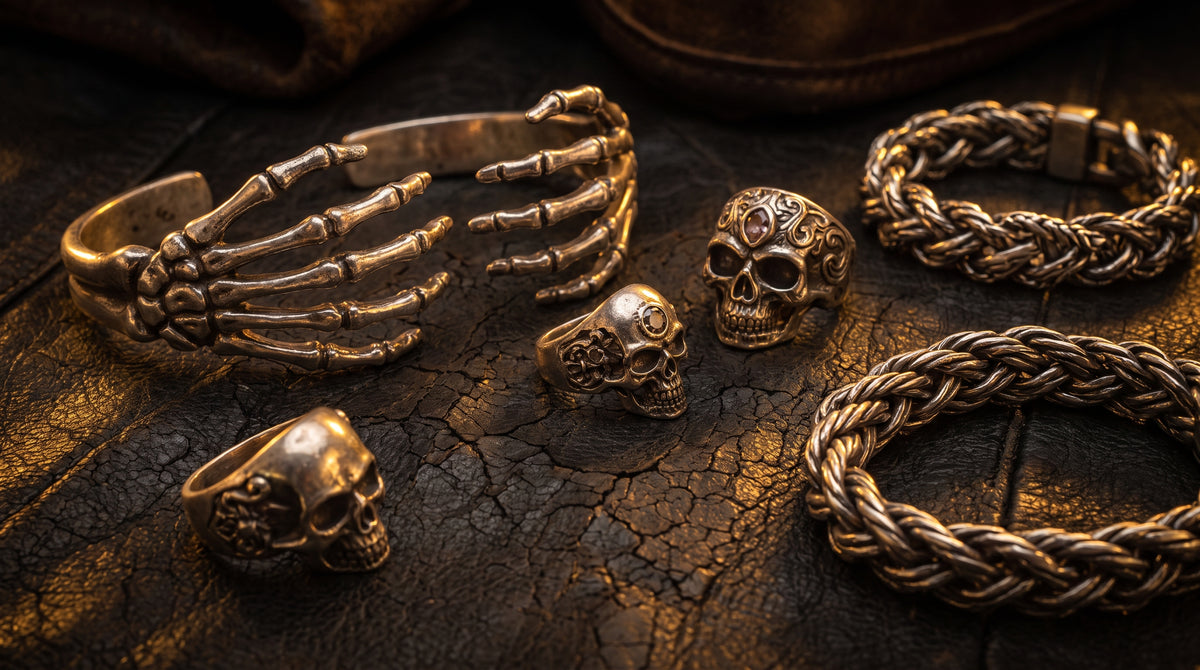
A rider pulls up at a gas station, kills the engine, and reaches for the pump. That is when you notice it: a full skeleton hand bracelet wrapping from wrist to knuckles, polished stainless steel catching the sun. It looks like something out of a movie, but it is a real piece of biker jewelry that costs less than a tank of gas. Skeleton hand jewelry has been part of motorcycle culture for decades, and it is not slowing down.
This guide covers the main styles of skeleton hand jewelry, what metals actually survive road life, how to size a ring-bracelet combo, and which pieces are worth the money. Whether you ride daily or just want the look, you will walk away knowing exactly what to buy and what to skip.
Why Skeleton Hand Jewelry Became a Biker Symbol
Skull and skeleton imagery in biker culture goes back to World War II veterans who formed the first motorcycle clubs in the late 1940s. The "memento mori" idea, a reminder that life is short, fit perfectly with riders who already lived on the edge. By the 1960s, outlaw clubs like the Hells Angels had made skull rings and skeleton patches standard issue.
Skeleton hand pieces specifically took off in the 1990s when custom jewelers started casting full hand-bone designs that wrapped around the wrist or connected a ring to a bracelet with chain links. Today, you can find skeleton hand accessories in stainless steel for under $40 that would have cost $200 in sterling silver two decades ago. The style has gone mainstream without losing its edge.
If you are into the broader biker rings and jewelry scene, skeleton hand pieces sit right at the intersection of wearable art and everyday riding gear.
Skeleton Hand Bracelets: The Most Popular Style
The skeleton hand bracelet is the flagship piece in this category. It is a chain bracelet with a clasp or buckle shaped like a skeleton hand, a full set of finger bones gripping the links. Most versions use 316L stainless steel, which resists rust, sweat, and road grime better than brass or plated zinc.
Sizing matters here. A standard 8.5-inch chain fits most men's wrists, but if your wrist measures over 7.5 inches, go for a 9-inch version to avoid that tight, cutting feeling on long rides. Weight runs between 80 and 130 grams depending on the link thickness. The Skeleton Chain Buckle Bracelet is a solid example of the style done right.

Silver skeleton hand bracelets in genuine .925 sterling run $80 to $150, while stainless steel versions deliver the same look for $25 to $45. For riding, stainless steel wins. Sterling tarnishes fast when exposed to sweat and highway air. Save the silver for off-bike wear.
Skeleton Hand Ring Bracelets: The Connected Look
The skeleton hand ring bracelet is the statement piece of the genre. It connects a skull or bone ring on one finger to a chain bracelet at the wrist, with decorative bone links running across the back of the hand. The Vivienne Westwood armor ring popularized this "connected chain" look in fashion, but bikers had their own version years earlier.
These pieces typically use a single adjustable ring (most fit sizes 8 through 12) connected by 3 to 5 chain links to the main bracelet. The chain should have enough slack to let you grip a throttle without binding. If you cannot comfortably close your fist while wearing it, the chain is too short.
One thing to check before buying: the ring-to-chain connection point. Cheap versions use a thin jump ring that will snap under stress. Better pieces use a welded loop or a reinforced bail. That $5 difference in build quality saves you from losing the ring section mid-ride.
Skeleton Hand Rings and Skull Bands
Not every rider wants a full hand chain. A standalone skeleton hand ring, usually a band with a raised skeleton fist or claw design, gives you the same attitude in a smaller package. Most biker-grade rings use 316L surgical stainless steel with a weight between 15 and 30 grams.
The most popular sub-styles break down like this:
- Skeleton claw rings: A single bone hand wrapping around the finger. Usually 20mm wide at the top. Fits best on the index or middle finger.
- Skull signet rings: A flat-face skull on a thick band. Classic biker look that has not changed in 40 years.
- Skeleton hand wrap rings: Full hand-bone design that spans from knuckle to knuckle. Sized for the middle finger.

For sizing, measure your finger circumference with a flexible tape or a strip of paper. Most men fall between size 9 and 11. Stainless steel does not stretch like gold, so getting the size right matters. If you are between sizes, go up, not down. A ring that is too tight cuts circulation on hot days when your hands swell.
Skeleton Hand Chains and Necklaces
Skeleton hand pendants on heavy chains round out the set. The most common design is a skeleton fist or open hand pendant, roughly 40mm tall, hanging from a 22 to 24-inch curb chain or rope chain. Weight ranges from 40 to 80 grams depending on chain thickness.
Chain gauge matters for riders. Anything under 4mm will look flimsy on a big guy in a leather vest. The sweet spot for most riders is a 5 to 6mm curb chain. It sits flat against the chest, does not tangle in collar zippers, and has enough weight to feel solid without being uncomfortable on a 200-mile day.

A complete set, bracelet plus ring plus chain, makes a stronger visual impact than any single piece. If you are building a set, stick to one metal finish. Mixing polished silver-tone with matte black looks disjointed. Check out the biker necklace collection for chains that match the bracelet styles.
Silver vs Gold vs Stainless Steel: What Actually Holds Up
This is where most buyers get it wrong. Here is how the three main metals compare for everyday riding wear:
| Metal | Price Range | Weight Feel | Rust/Tarnish | Best For |
|---|---|---|---|---|
| 316L Stainless Steel | $15 - $45 | Heavy, solid | None | Daily riding, rain, sweat |
| .925 Sterling Silver | $80 - $200 | Medium | Tarnishes fast outdoors | Off-bike, events, rallies |
| Gold-Plated Steel | $25 - $60 | Heavy | Plating wears off in 6-12 months | Occasional wear only |
| Titanium | $40 - $100 | Very light | None | Riders who hate heavy jewelry |
| Zinc Alloy (Pot Metal) | $5 - $15 | Light, cheap | Corrodes quickly | Costume only, skip for riding |
316L stainless steel is the clear winner for motorcycle jewelry. It handles rain, sweat, gasoline splashes, and UV exposure without any maintenance. A $35 stainless steel skeleton hand bracelet will look the same after two years of daily riding. A $120 sterling silver version will need polishing every two weeks just to keep its shine.

Gold skeleton hand bracelets are mostly gold-plated over steel or brass. The plating wears through at friction points, usually the clasp and the back of the hand section, within a year of regular wear. If you want that gold look, go for a gold-tone IP (ion plating) finish on stainless steel. It lasts 3 to 5 times longer than standard plating.
How to Size Skeleton Hand Jewelry for Riding
Riding puts unique demands on jewelry. Vibration, grip pressure, and temperature swings all affect fit. Here is how to get it right:
Bracelets: Measure your wrist with a soft tape, then add 0.75 to 1 inch. You want the bracelet loose enough to slide slightly but not so loose that it catches on controls. For a skeleton hand ring bracelet, put on a riding glove first and check that the ring sits flat under the glove without creating a pressure point.
Rings: Size your finger in the afternoon when your hands are warmest, or after a ride. Morning measurements run 0.5 to 1 full size smaller because your fingers are cooler and thinner. A ring that fits perfectly at 7 AM will feel like a tourniquet at 2 PM in August.
Chains: For riding, a 22-inch chain keeps the pendant inside your jacket or vest. A 24-inch chain lets it sit outside. Shorter than 20 inches and it will ride up uncomfortably when you lean forward on the bars.

5 Mistakes Riders Make Buying Skeleton Hand Jewelry
1. Buying zinc alloy thinking it is stainless steel. Zinc alloy pieces cost $5 to $10 and look identical to stainless steel in photos. The giveaway: weight. A zinc bracelet weighs about half of what a stainless steel version does. If the listing does not specify "316L stainless steel" or "surgical steel," assume it is zinc. It will corrode, turn green, and fall apart within months.
2. Ignoring the clasp type. A lobster claw clasp on a heavy bracelet is a recipe for losing it. Toggle clasps and box clasps are more secure for riding. The best option for a skeleton hand bracelet is a fold-over clasp with a safety latch, the same type used on dive watches.
3. Wearing a ring-bracelet combo with full gauntlet gloves. The chain links across the back of your hand will bunch up under a gauntlet glove and create pressure sores. If you ride with gauntlets, take the hand chain off and just wear the bracelet. Short or fingerless gloves work fine with the full setup.
4. Polishing stainless steel with silver polish. Silver polish contains compounds that leave a residue on stainless steel. Use warm water, dish soap, and a soft cloth. For stubborn grime, a dab of WD-40 on a microfiber cloth works without scratching the finish.
5. Buying loose-linked chains for riding. Open-link chains (where each link is not soldered shut) will stretch and eventually break from vibration. Always check that the chain links are welded or soldered closed. Run your thumbnail along the inside of a few links. If you feel a seam or gap, it is an open link.

What to Look for in Quality Skeleton Hand Accessories
Beyond the metal type, three details separate a piece that lasts from one that ends up in a drawer:
Casting quality: Look at the skeleton hand detail on the clasp or pendant. Cheap castings have blurry, undefined finger bones. Quality pieces show distinct knuckle joints, defined metacarpals, and clean edges. The detail level tells you everything about the mold quality.
Finish consistency: Flip the piece over. The back should be finished as cleanly as the front. Rough, unfinished backs mean corners were cut in production, and those rough spots will irritate your skin on long rides.
Hardware gauge: The jump rings, spring rings, and connection points should match the gauge of the main chain. A thick 8mm chain connected by a thin 3mm jump ring will fail at the weakest point. Good manufacturers use matching gauge throughout.
A skeleton hand accessory from a brand that specializes in biker bracelets and chains will almost always outperform a generic fashion piece. Biker-focused brands design for vibration, sweat, and all-weather wear. Fashion brands design for a photo op.
Building a Complete Skeleton Hand Set
If you want the full look, build the set in this order:
- Start with the bracelet. It is the most visible piece and sets the tone. A stainless steel skeleton hand bracelet in the $30 to $45 range gives you the best balance of quality and value.
- Add a matching ring. A skull or skeleton claw ring in the same metal finish. Keep it on the same hand as the bracelet for visual impact, opposite hand from your throttle for comfort.
- Finish with the chain. A 5mm curb chain with a skull or skeleton pendant pulls the set together. Match the metal finish to your bracelet and ring.
Total cost for a three-piece stainless steel set: $50 to $90. That is less than a single sterling silver bracelet, and it will handle years of daily riding without any special care. If you are shopping for your first piece, the skeleton and chain bracelet collection is where to start.


No comments yet. Be the first rider to weigh in.