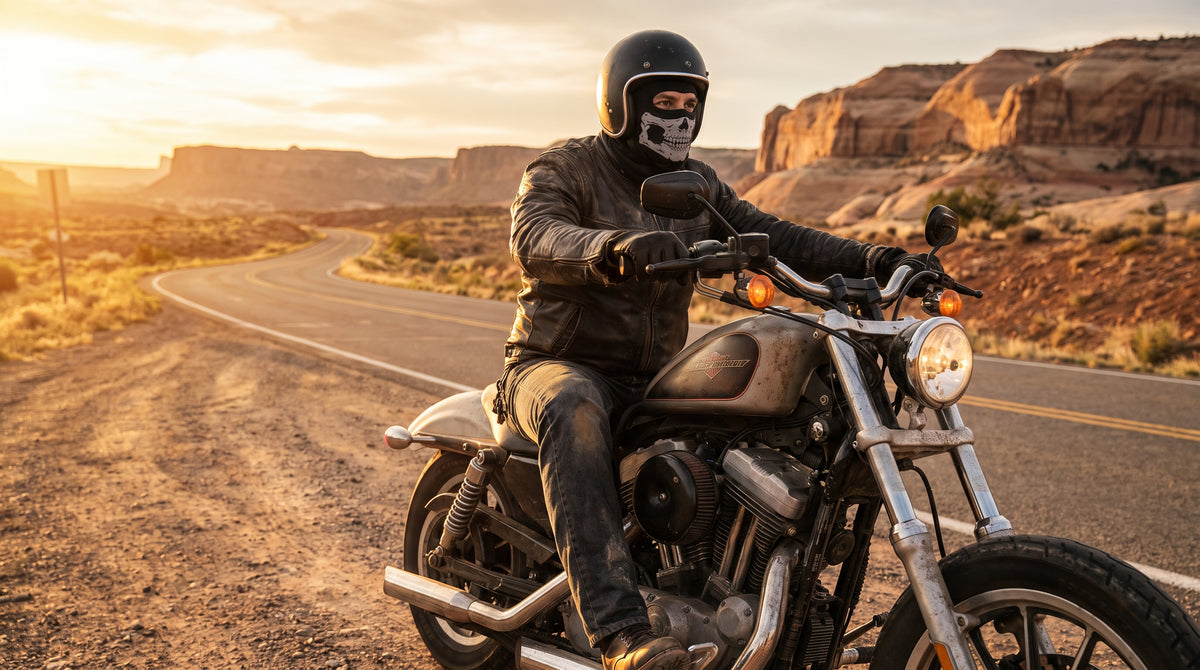
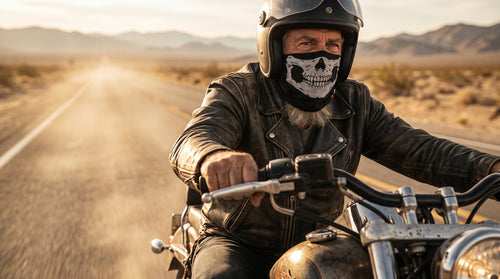
Most skull balaclavas fail in the same spot. The printed seam runs straight over the bridge of your nose, and ten minutes into a ride at 65 mph it is digging a red line into your face. The graphic looks mean in the product photo. Nobody photographs the part where you are peeling it off at the first gas stop.
A skull balaclava is a cheap piece of gear that either disappears under your helmet or ruins the ride. The difference comes down to fabric weight, seam placement, and how much of your neck it covers. Below are nine skull balaclava and skull mask options that hold up on real rides, what each one is actually for, and the sizing check that takes ten seconds.
What a skull balaclava actually does on a ride
The skull print is the reason people buy one. The wind is the reason people keep wearing one. Run the National Weather Service chill numbers and a 50°F afternoon at 60 mph lands on bare skin like 39°F. That is the gap between a pleasant two hour ride and coming home with a numb chin.
Three jobs, in order of how much they matter:
- Wind and chill blocking. Sealed at the neck, a full face balaclava stops the cold air that otherwise funnels straight up inside an open-face lid.
- Keeping your helmet liner alive. Sweat, sunscreen and hair oil are what kill a helmet liner. A $20 mask is a washable barrier between your skin and a $200 helmet.
- Bugs, grit and sun. A June evening ride through farmland without a mask means eating whatever is in the air. A thin knit layer also keeps the back of your neck off the sunburn list.
Worth saying plainly: the mask does none of the impact work. That is the helmet's job, and we come back to that below.
Fabric decides everything, not the graphic
Every complaint about a skull mask balaclava traces back to fabric picked for the wrong season. A thermal fleece mask is wonderful in February and unwearable in an August traffic jam. Here is the honest breakdown before you shop.
| Fabric | Best riding range | What you give up |
|---|---|---|
| Thin stretch polyester / microfiber | 55°F to 90°F | Almost no warmth on its own |
| Thermal fleece | Below 50°F | Traps heat fast above 65°F |
| Windproof fleece with a front panel | Below 45°F at highway speed | Bulk under the jaw and chin strap |
| Ice silk / cooling knit | 80°F and up | Zero insulation, thin feel |
| Cotton wrap or bandana | Short rides, half helmets | Soaks sweat, slow to dry, flaps at speed |
One detail that gets ignored: skull prints need a flat, tight knit to stay crisp. Print a skeleton jaw onto brushed fleece and the teeth blur into grey mush after a few washes. If the skull look is the point, a smooth polyester face panel is what holds the detail. The full balaclava lineup is sorted this way, and the skull mask collection is where the graphic-first options live.
The 9 best skull balaclava and face mask picks
These are ranked by what they are good at, not by price. Every one of them is a mask I would pick for a specific ride and a specific temperature.
1. Skull Balaclava Full Face Mask, best overall skull option
This is the default answer for anyone typing "skull balaclava" into a search bar. Full face coverage, a stretch opening rather than a cut eye hole, and it is built to work under a helmet and under ski goggles. Full face means it tucks into the collar of your jacket, so no cold seam sits across your throat at speed. If you buy one skull mask and want it to cover three seasons, buy this one.

2. USA Flag Skull Motley Tube, best for half helmets
A tube has no crown, which is exactly what you want under a skull cap or half helmet where a full balaclava adds a hot layer over your scalp for nothing. Polyester, one size, and it pulls down to sit around the neck at a stop instead of coming off entirely. The flag-and-skull print reads clearly from a few feet away rather than turning into a blur.

3. Biker Bandana Cotton Skull Scarf, best classic look
Cotton is the worst technical fabric on this page and the best looking one. It soaks sweat instead of moving it, so it is a short-ride and around-town piece, not a 300 mile interstate mask. What it does do is sit right under a half helmet and look like a bandana should look. Wash it separately the first time so the black does not bleed.

4. Windproof Winter Balaclava with Thermal Lining, best in real cold
Below 45°F at highway speed, thin polyester stops being enough and a windproof front panel starts earning its keep. This is the mask for pre-dawn starts and November rides. Expect bulk under the chin strap, and fit the helmet with the mask already on so the strap lands where it should.

5. ALR Fashion Winter Thermal Fleece Balaclava, warmest daily driver
Thermal fleece head to neck, which makes it the simple pick for winter commuting when you are not chasing a graphic. At $22.95 it is cheaper than losing feeling in your jaw. Leave this one out of the saddlebag from May to September, because it is genuinely too warm above 65°F.

6. Camo Winter Fleece Balaclava, best non-skull alternative
Some riders want the coverage without a skeleton face. Camo fleece does that, and the broken pattern hides road grime far better than solid black, which shows every bug strike. Same warmth rules as any fleece mask apply: cold weather only.

7. Black MultiCam Balaclava Full Face Mask, best blacked-out build
Full face, black multicam, and it disappears under a dark helmet instead of fighting it. This is the one to reach for if you ride a blacked-out bike and a white skeleton jaw is louder than you want. Coverage is the same as a skull balaclava, the look just stays quiet.

8. Cooling Ice Silk Neck Gaiter with UV Protection, best in summer heat
Ice silk is the fabric that makes a mask wearable in August. It carries UV sun protection and it moves air instead of trapping it, which is the whole problem with wearing fleece in July. It is a neck and lower-face piece rather than a full balaclava, so pair it with a half helmet or an open-face lid on long hot days.

9. Breathable Summer Balaclava Helmet Liner, best full coverage in heat
If you want full balaclava coverage but ride somewhere hot, a breathable summer liner is the compromise. It is built as a helmet liner first, so it is thin enough that a snug helmet still fits right, and it keeps sweat off the padding. This is the one that makes a full face helmet bearable at 90°F.

All 9 side by side
| # | Mask | Price | Coverage | Best for |
|---|---|---|---|---|
| 1 | Skull Balaclava Full Face Mask | $24.95 | Full face + neck | Overall skull pick, 3 seasons |
| 2 | USA Flag Skull Motley Tube | $17.95 | Neck + lower face | Half helmets and skull caps |
| 3 | Biker Bandana Cotton Skull Scarf | $19.45 | Head wrap | Classic look, short rides |
| 4 | Windproof Winter Balaclava, Thermal | $25.97 | Full face + neck | Under 45°F at speed |
| 5 | ALR Thermal Fleece Balaclava | $22.95 | Full face + neck | Winter commuting |
| 6 | Camo Winter Fleece Balaclava | $24.45 | Full face + neck | Cold rides, no skull graphic |
| 7 | Black MultiCam Full Face Mask | $22.95 | Full face + neck | Blacked-out setups |
| 8 | Cooling Ice Silk Neck Gaiter | $19.95 | Neck + lower face | 80°F and up, sun |
| 9 | Breathable Summer Balaclava Liner | $26.95 | Full face + neck | Full coverage in heat |
Two masks cover almost every rider: one thin summer piece and one fleece winter piece. Everything else on this list is a preference, not a gap.
Getting the fit right under a helmet
Skull balaclavas are almost always sold as one size fits most, which in practice means roughly a 21 to 24 inch head circumference measured around the brow. That covers most adults, and it is also why fit problems come from placement rather than size.
Three checks, in this order:
- Put the mask on before the helmet, every time. Pulling a balaclava on after the helmet twists the eye opening and shoves the nose seam out of position.
- Move the nose seam off the bridge. Seat it just below the bony bridge of your nose. That single adjustment fixes most of the pressure-line complaints.
- Check the chin strap on bare fabric, not bunched fabric. Smooth the neck section flat under the strap. A fold under a chin strap turns into a hot spot within twenty miles.
One more thing worth testing in the driveway: turn your head fully left and right with the helmet on. If the mask drags the helmet liner with it, the fabric is too grippy or too thick for that helmet, and it will annoy you at every shoulder check.
Skull balaclava vs skull ski mask vs tube mask
These three get used as if they mean the same thing, and they do not. The difference is how the opening is built.
- Balaclava: one continuous stretch piece with an opening that flexes around your face. It pulls down over the neck and tucks into a collar. Best under a helmet because there is no rigid cut edge to catch.
- Ski mask: a fixed cut eye and mouth opening, often on heavier fabric, built for goggles rather than a helmet. The cut edges sit where a helmet liner wants to be.
- Tube or motley tube: open at the top, no crown. Fastest to pull up and down, and the right answer under a half helmet.
For riding, a balaclava skull mask beats a true ski mask nearly every time. If you want the longer fabric-by-fabric version, our motorcycle balaclava fabric breakdown goes deeper on the knit and weight side.
What a skull balaclava will not do
No balaclava is safety-rated, and none of them are meant to be. In the United States motorcycle helmets are certified to Federal Motor Vehicle Safety Standard No. 218, and that standard is about impact attenuation, penetration and retention. A knit mask contributes nothing to any of those three. Wearing a skull face balaclava under a novelty non-rated shell does not make it safer. Details on helmet standards are on the NHTSA motorcycle safety page.
The other honest limit is abrasion. A single-layer polyester mask offers no meaningful slide protection. Treat it as comfort gear that also happens to look good, and let a DOT-rated helmet do the protecting.
5 mistakes riders make buying a skull balaclava
- Buying fleece as the only mask. It works for four months of the year and then lives in a drawer. A fleece mask at 85°F traps sweat against your face and fogs a visor at every stoplight.
- Sizing up to be safe. Extra fabric has nowhere to go inside a helmet. It folds, and the fold becomes a pressure point under the chin strap or lifts off your chin and lets air in.
- Ignoring where the seam lands. A seam directly over the nose bridge is the number one reason a mask gets abandoned after two rides. Check the seam line in the photos before you buy.
- Treating a ski mask as a riding mask. Cut openings and heavy fabric fight a helmet liner. It fits, but you will feel the edges the whole ride.
- Chasing the cheapest no-name print. Unbranded marketplace masks are usually screen prints on loose knit, and the pattern cracks within a handful of washes while the fabric goes baggy and starts flapping at speed. A $20 to $26 mask from a brand that sells riding gear is built on a tighter knit that holds shape, and that is the whole reason it lasts a season instead of a month.
Which one to buy
If you only want one, take the Skull Balaclava Full Face Mask at $24.95. It carries the skull look people are actually searching for, it covers the neck, and it works from about 55°F upward without cooking you. Add the ice silk gaiter for summer and a fleece mask for winter and you are done for years.
If you are shopping now, the skull mask collection is where I would start, and the wider balaclava range has the seasonal fabrics in one place. Buy the fabric for the weather you actually ride in, get the nose seam sitting low, and the mask stops being something you think about.
No comments yet. Be the first rider to weigh in.