
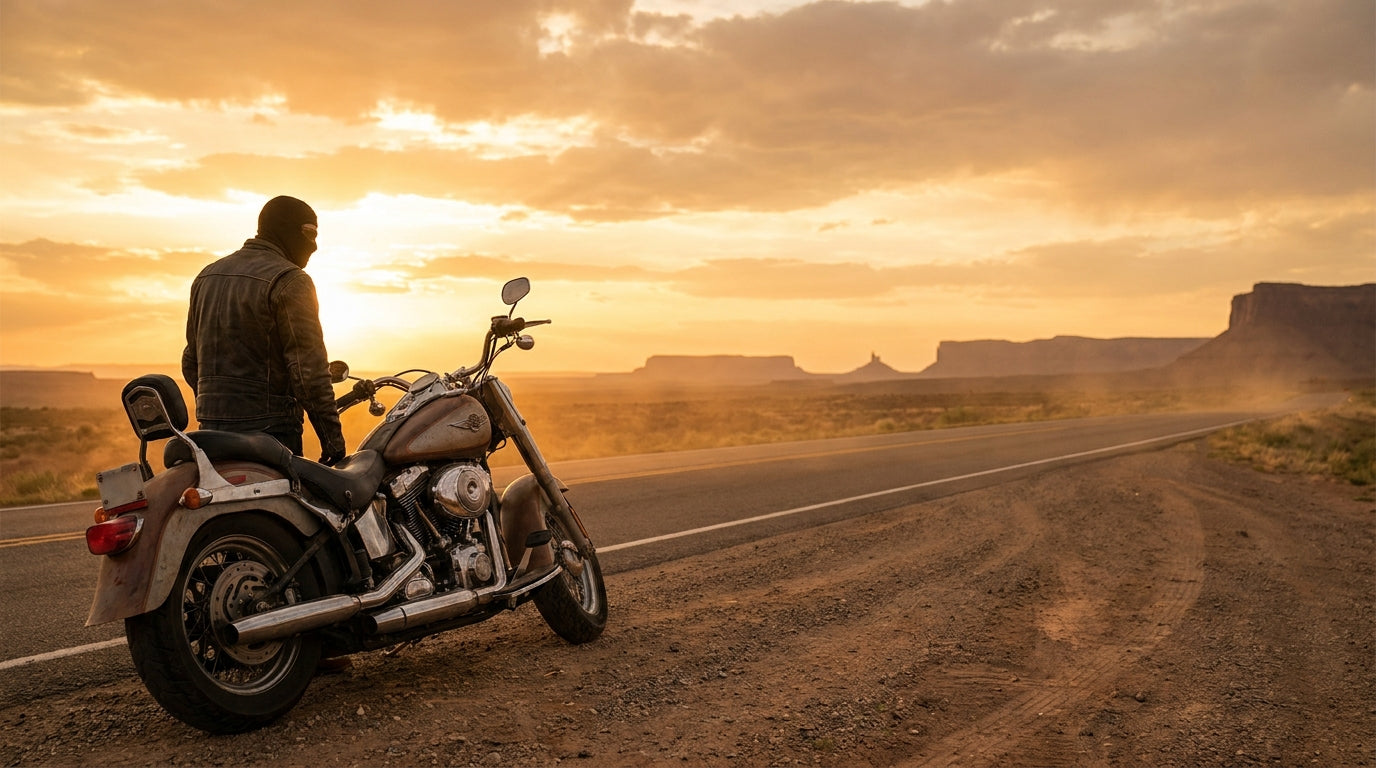
Forty degrees, 70 mph, and a half-inch gap between your helmet chin bar and your neck. That is when you learn exactly how much exposed skin costs on a winter ride. A motorcycle balaclava closes that gap. But grab the wrong one and you get fogged goggles, a helmet that seats poorly, and a sweat-soaked face by mile 30. The difference between a functional balaclava and a useless one comes down to fabric, stitching, and fit under a helmet.
This guide breaks down motorcycle balaclava fabrics, fit styles, and construction details worth checking before you order. You will learn which materials work in cold vs. warm conditions, how a balaclava should sit under a full face helmet without creating pressure points, and which mistakes riders keep making with this simple piece of gear.
What Sets a Motorcycle Balaclava Apart from a Regular One
A ski balaclava and a motorcycle balaclava look similar on a hanger. The differences show up at speed.
Motorcycle balaclavas use flatlock stitching where the fabric panels meet. Standard balaclavas use overlocked seams that create a raised ridge about 2 to 3mm thick. That ridge presses into your skin under a helmet, creating hot spots and pressure marks after 30 minutes of riding. Flatlock seams sit flush with the fabric surface, so you barely feel them under helmet padding.
The mouth and nose area is the other key difference. Riding-specific balaclavas use a mesh or perforated panel over the breathing zone. This lets warm air escape forward instead of channeling it upward into your visor or goggles. A standard ski balaclava traps exhaled air against your face, which fogs any eyewear within minutes at a stoplight.
Collar length matters too. A motorcycle balaclava extends 4 to 6 inches below the chin to tuck inside a jacket collar. Ski models tend to end right at the jawline, leaving the neck exposed to wind buffeting at highway speed. That 4-inch gap between a short balaclava and your jacket collar feels like an open window at 60 mph.

Motorcycle Balaclava Fabrics: Merino, Fleece, Polyester and Silk
Fabric choice is the single biggest factor in whether a balaclava works for your riding conditions. Here is how the main options compare.
| Fabric | Warmth | Moisture | Odor | Best Temp Range | Price Range |
|---|---|---|---|---|---|
| Merino Wool (18.5 micron) | High | Wicks well, slow dry | Excellent (natural anti-microbial) | 25 to 50F | $30 to $55 |
| Polyester/Spandex Blend | Low to Medium | Wicks fast, dries fast | Poor (holds bacteria) | 50 to 75F | $10 to $25 |
| Fleece (200-weight) | Very High | Absorbs, slow dry | Moderate | Below 30F | $15 to $35 |
| Silk | Low to Medium | Wicks well, fast dry | Good | 40 to 65F | $20 to $40 |
Merino wool at 18.5-micron fiber diameter is the gold standard for cold-weather riding. That fiber thickness sits right below the itch threshold, so it feels soft against skin rather than scratchy. Merino also regulates temperature better than synthetics because the fibers absorb moisture vapor (up to 30% of their weight) before feeling wet. On a 35-degree ride, merino keeps your face warm without the clammy sensation that polyester creates when sweat starts building.
Polyester blends win in warmer weather. A thin poly/spandex balaclava dries in minutes and weighs almost nothing under a helmet. The trade-off is odor. Polyester holds bacteria in the fiber structure, so a poly balaclava smells after 2 or 3 rides unless you wash it. For warm-weather wind protection without bulk, it works. Just plan on washing it after every ride.
Fleece is the warmth king but only makes sense below freezing. A 200-weight fleece balaclava adds noticeable bulk under a helmet, which can make a snug-fitting helmet feel tight. If your helmet has removable cheek pads, swap to thinner pads when running a fleece balaclava in deep winter.
For a broader look at face protection options beyond balaclavas, our motorcycle face mask guide covers bandanas, neoprene masks, and modular setups.

Balaclava Styles: Full Face, Open Face, Convertible and Hinged
Not every motorcycle balaclava covers the same area. Four main styles exist, and each fits a different riding situation.
Full face balaclavas cover everything from the crown of your head to the base of your neck, with a single eye opening. These provide maximum wind protection and work best in cold, dry conditions. The downside: they trap the most heat and moisture. If you stop at a gas station in a full face balaclava, your face is soaked within 3 minutes of standing still.
Open face balaclavas leave the entire face exposed and only cover the head, ears, and neck. These are more of a helmet liner than a face protector. They work well as a base layer under a full face helmet, keeping sweat off the helmet padding and reducing helmet odor over time.
Convertible balaclavas have a fold-down chin panel that converts from full coverage to open face. The REV'IT Maximus, for example, uses a magnetic chin panel that drops with one hand while stopped at a light, then snaps back into place in about 2 seconds. This is the most versatile design for rides that start in cold mornings and warm up by midday.
Hinged balaclavas work like a tube that you pull up or push down. No separate chin panel, just a single tube of fabric that sits around your neck until you pull it up over your nose. Simple, no hardware to break, but less structured than a convertible. If you want skull and skeleton designs, check our skull balaclava picks for styled options.

How a Motorcycle Balaclava Should Fit Under a Helmet
A balaclava that fits fine by itself can create real problems under a helmet. The fit check needs to happen with the helmet on, not off.
Start by putting the balaclava on and pulling it smooth. No bunching, no folds, no wrinkles across the forehead or cheeks. Any wrinkle under a helmet becomes a pressure ridge that gets uncomfortable after 20 minutes. Then put your helmet on normally. It should seat fully without extra force. If you have to push harder than usual to get the helmet past the balaclava, the material is too thick for that helmet. Switching to a thinner fabric or removing the helmet's cheek pad liners (if removable) fixes this.
Check three things with the helmet on:
- Eye opening alignment. The balaclava eye slot should sit centered on your eyes without any fabric creeping into your peripheral vision. If you have to adjust the balaclava through the visor opening, it will shift during the ride.
- Cheek pad pressure. A balaclava adds about 1 to 2mm of compression to each cheek pad. A helmet that already fits snug may feel too tight. This is the most common fit problem riders report.
- Neck seal. The balaclava should extend far enough down your neck to tuck inside your jacket collar by at least 2 inches. If wind gets between the balaclava and your collar, the whole thing is less effective.
One more detail: keep the balaclava's breathing mesh aligned with your mouth and nose. If the mesh panel shifts sideways, exhaled air goes straight into your visor or goggle lens instead of venting forward.

Seasonal Riding: Which Balaclava for Which Temperature
Owning one balaclava for all conditions is like owning one pair of gloves for all seasons. It can work, but the compromise is always noticeable.
Below 40F: Fleece-lined or heavyweight merino. At this temperature range, wind chill on a motorcycle at 60 mph drops the felt temperature by 15 to 25 degrees. A 35-degree ride feels like 10 to 15 degrees on exposed skin. Full face coverage with a long neck extension is the right call here. Pair it with a heated jacket liner and insulated gloves for the full cold-weather setup.
40 to 55F: Midweight merino or a poly/merino blend. This is the sweet spot where a convertible balaclava earns its keep. Morning departure at 42 degrees calls for full coverage. By noon at 55 degrees, you fold the chin panel down and ride with just the head and neck covered. For cold-weather riding gloves to pair with, our fingerless motorcycle gloves guide covers options that balance grip and warmth.
55 to 70F: Thin polyester or silk. You might not need a balaclava at all in this range, but early-morning riders and high-altitude routes still get enough wind chill to make a thin layer worthwhile. A lightweight poly balaclava weighs under 2 oz and compresses to the size of a fist. Easy to stuff in a pocket when the temperature climbs.
Above 70F: Open face or skip it entirely. A full balaclava above 70 degrees traps too much heat and causes excessive sweating under a helmet. If you want sun protection or dust screening, a thin neck gaiter pulled up over the nose works better than a full balaclava in summer heat.
5 Mistakes Riders Make Buying a Motorcycle Balaclava
1. Buying cotton. Cotton absorbs moisture and holds it. On a cool ride, a wet cotton balaclava pressed against your face drops your skin temperature fast. Cotton also takes hours to dry. Every purpose-built motorcycle balaclava uses synthetic, merino, or silk for a reason. If the listing says "cotton" or "cotton blend," keep scrolling.
2. Ignoring seam placement. Check where the seams run. A seam across the forehead or along the bridge of the nose creates a pressure line under a helmet that gets worse over time. The best balaclavas place their seams along the sides and back of the head, where helmet padding is thickest and distributes pressure more evenly.
3. Testing fit without a helmet. A balaclava feels completely different by itself vs. under a helmet. The fabric compresses, seams press harder, and the eye opening shifts. Always test the fit with your actual riding helmet on before committing.
4. Using one balaclava for all seasons. A fleece balaclava in July is miserable. A thin poly balaclava in January is useless. Owning two (one warm, one light) costs $30 to $50 total and covers the full year. The marginal cost of a second balaclava is far less than the discomfort of the wrong one on a 200-mile ride.
5. Not washing it. A balaclava sits against your face, nose, and mouth for hours. Sweat, skin oils, and exhaled moisture build up fast. Polyester balaclavas should be washed after every ride. Merino can go 3 to 4 rides between washes thanks to its natural odor resistance. Throwing a balaclava in the washing machine on cold/gentle with no fabric softener is all it takes. Fabric softener clogs the moisture-wicking fibers.
Picking the Right Motorcycle Balaclava
A good motorcycle balaclava is a small piece of gear that makes a big difference in comfort, especially on rides below 50 degrees. Match the fabric to your climate, check the fit under your actual helmet, and own at least two: one for cold rides and one for shoulder-season mornings.
If you are shopping for one, the balaclava collection has options in multiple fabrics and styles built for riders.
No comments yet. Be the first rider to weigh in.