A rider spots a skull motorcycle helmet full face online, loves the aggressive look, and orders it for $45. It shows up weighing barely a pound. The foam inside is thinner than a beer cozy, and the DOT sticker peels off with a thumbnail. That scenario plays out thousands of times a year because roughly half the skull helmets on major marketplaces carry zero real certification.
Here are seven things worth knowing before you buy a full face skull helmet. By the end you will know which DOT-rated options actually protect your chin and jaw, which styles hold up at highway speed, and what separates a real riding helmet from an expensive costume piece.
Why Riders Want a Full Face Skull Helmet (And Why It Matters)
The chin bar on a full face helmet is not decoration. According to a Dietmar Otte study cited by the NHTSA, roughly 35% of all motorcycle helmet impacts hit the chin and jaw area. That single stat makes the full face the only helmet style covering the zone most likely to take a direct hit in a crash.
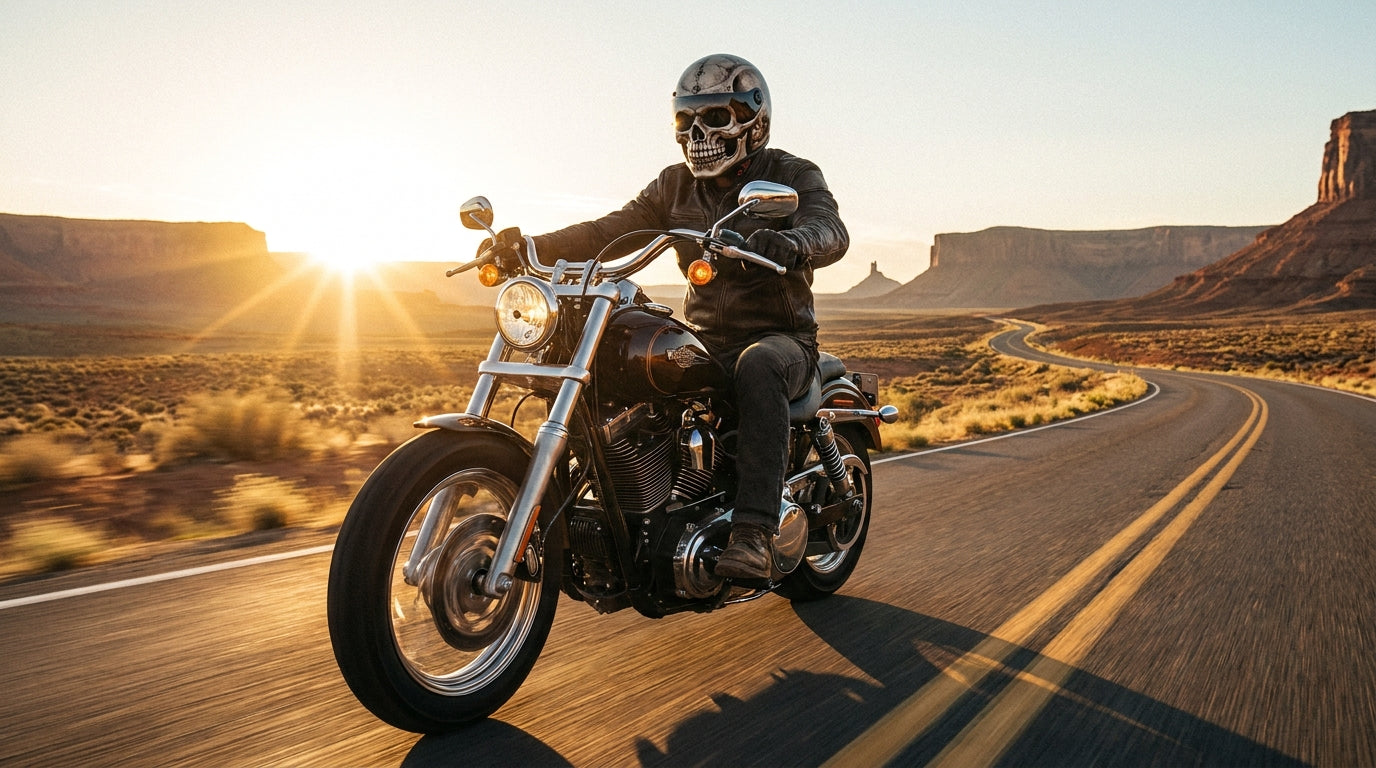
Skull designs have been a fixture of biker culture since at least the 1960s, and the full face format is where they work best. The larger shell surface gives manufacturers room for detailed skull graphics, 3D molded jaws, and wraparound airbrushed work that a half shell simply cannot support. A half shell only shows the top of the skull. A full face shows the whole thing, teeth included.
The catch is that the skull helmet market is flooded with novelty pieces that look great on a shelf but offer nothing in a crash. If the price is under $50 and the listing never mentions FMVSS 218, that is a red flag worth taking seriously. The ALR skull motorcycle helmet collection is one of the few spots that only stocks DOT-certified options, so everything in the lineup has actually passed impact testing.

DOT Approved Skull Helmets vs. Novelty: How to Spot the Difference
DOT certification under FMVSS 218 means the helmet passed federal tests for impact absorption, penetration resistance, and retention system strength. The standard test drops the helmet at 13.4 mph onto a flat anvil and 11.2 mph onto a hemispherical anvil. If peak acceleration inside the shell exceeds 400g, the helmet fails.
You can tell real from fake in about 30 seconds if you know what to look for.
Weight. A DOT-certified full face skull motorcycle helmet with an EPS foam liner typically weighs between 3.1 and 3.9 lbs. Novelty helmets often come in under 2 lbs because they skip the impact-absorbing foam entirely. Pick up the helmet. If it feels like a baseball cap, it probably protects like one.
Inner liner. Open the helmet and look inside. Real DOT helmets have a thick layer of expanded polystyrene (EPS) foam, the same white rigid foam used in racing gear. Novelty pieces have thin comfort padding and nothing else underneath the shell.
DOT sticker placement. The genuine DOT label sits on the back exterior of the helmet, permanently affixed during manufacturing. If the sticker arrives loose in the box or peels off easily, the certification is almost certainly fake.
Chin strap. DOT helmets use a D-ring or double D-ring retention system rated to hold under serious force. Snap buckles are a novelty giveaway. No DOT-rated full face helmet uses a plastic snap closure.

Full Face Skull Helmet Styles Worth Knowing About
Not every skull motorcycle helmet looks the same. Here are the main categories on the market right now and what makes each one different.
3D Molded Skull Jaws. These helmets feature a chin bar sculpted to resemble a skull's lower jaw, with teeth molded directly into the shell material. Some use raised resin detailing while others rely on carved paint. The Ruroc Atlas line includes skull variants with this approach. The visual effect from any angle is a helmet that looks like an actual skull rather than a helmet with a skull sticker on it.
Full Graphic Wraps. A standard full face shell with a skull design printed or painted across the entire surface. This is the most common and most affordable option because it keeps standard helmet geometry and full DOT protection while adding the skull aesthetic. Most DOT-certified skull helmets under $150 use this approach, and the print quality has improved dramatically in recent years.
Sugar Skull and Day of the Dead Designs. These pull from Mexican folk art traditions, layering colorful floral patterns over a skull base. Sugar skull motorcycle helmet searches pulled 228 Google impressions in the last 90 days, so the demand is real and growing. The designs are intricate and stand apart from the typical dark and aggressive skull look, making them popular with riders who want something distinct.

Moving Jaw Skull Helmets. A smaller but growing category. These use a modular chin bar designed to look like a skull's jaw, so flipping it up makes the "jaw" open. It is an impressive concept for riders who want a conversation starter. If you go this route, confirm the helmet carries DOT certification in both the open and closed positions, because not all modular mechanisms meet the standard when raised.
Skull Helmet Covers. Not technically a helmet at all. These are stretch fabric covers that slip over any existing helmet and add a skull face design on the outside. They cost about $15 and add zero protection, but they can turn a plain white helmet into a skull helmet in seconds. Fine for occasional use, but not a substitute for a genuine skull-design shell.
Shell Materials: What Stands Between Your Head and the Road
The shell is the first barrier in any impact. Different materials behave differently when they hit asphalt, and price alone does not always predict performance.
ABS (Acrylonitrile Butadiene Styrene). The most common material in budget and mid-range full face helmets. ABS shells are injection molded, which keeps manufacturing costs down. They handle impacts well but tend to crack rather than flex on a hard hit. Most DOT skull helmets in the $80 to $150 range use ABS, and for the majority of riders, that level of protection is solid.
Polycarbonate. A meaningful step up. Polycarbonate absorbs impact through controlled deformation, meaning the shell flexes and spreads force across a wider area rather than shattering at the point of contact. Brands like Scorpion and Icon use polycarbonate in their mid-range full face models. If you ride at highway speeds regularly, the extra $30 to $50 for a polycarbonate shell is money well spent.
Fiberglass Composite. Used in higher-end helmets from manufacturers like Shoei, Arai, and Bell. Fiberglass composite is lighter than ABS at the same strength level, and its layered construction handles different impact angles more effectively. You will not find many fiberglass skull helmets off the shelf, but they exist as limited editions and through custom paint shops.
Carbon Fiber. The lightest and strongest shell material available. A carbon fiber full face weighs around 2.8 lbs compared to roughly 3.5 lbs for the same-sized ABS shell. At $400 and up, it is gear for riders who count every ounce. Skull designs in carbon fiber are rare and almost always custom work.
For most riders shopping for a skull motorcycle helmet at a reasonable price, polycarbonate hits the best balance of protection, weight, and value. ABS is fine for riders on a tighter budget who still want DOT certification.

Full Face vs. Half Shell vs. Modular Skull Helmets Compared
| Feature | Full Face Skull | Half Shell Skull | Modular Skull |
|---|---|---|---|
| Chin protection | Yes, full chin bar | None | Yes when closed |
| Average weight | 3.1 to 3.9 lbs | 2.0 to 2.5 lbs | 3.5 to 4.2 lbs |
| Skull design coverage | Full skull and jaw | Top of skull only | Full skull, jaw opens |
| Wind and noise protection | High | Low | Medium to high |
| DOT options available | Many | Some | Few |
| Price range (DOT rated) | $80 to $250 | $60 to $150 | $120 to $300 |
| Best for | Highway, touring, sport | Short cruiser rides | Riders who want flip-up convenience |
Full face wins on both protection and design coverage. Half shells run lighter and cooler in summer heat, but you lose the jaw area entirely. That is where skull designs have the most visual impact, and it is where 35% of crashes make contact.
Modular helmets give you the best of both if you want to flip up at gas stations or talk without removing the whole helmet. Just make sure the modular mechanism is solid. Cheap modulars wobble at speed, and a loose chin bar defeats the purpose of having one.
If your riding includes any highway miles at all, a full face skull motorcycle helmet is the right call. City-only cruiser riders might get away with a DOT-rated half shell, but they are accepting a meaningful safety trade-off for the extra airflow.

5 Common Mistakes When Buying a Skull Full Face Helmet
1. Picking style over certification. A helmet that looks incredible but carries no DOT rating is a face decoration, not protection. Always check certification before anything else. The permanent DOT sticker belongs on the back exterior, applied at the factory.
2. Ordering without measuring your head. Helmet sizes vary between brands. A Biltwell large fits differently from an HJC large. Measure your head circumference at the widest point above your ears and compare it to the manufacturer's size chart. Full face helmets range from about 21.25 inches (XS) to 25.5 inches (3XL). Guessing leads to returns.
3. Ignoring weight on longer rides. A 4-pound helmet feels fine for 20 minutes. After two hours on the highway, your neck knows the difference. If you tour or do long rides, stay under 3.8 lbs. Polycarbonate and fiberglass shells help keep weight down without sacrificing protection.
4. Trusting a marketplace listing at face value. Some sellers apply DOT stickers to uncertified helmets and call it a day. Cross-reference the model on the manufacturer's website to confirm certification actually exists. A dot certified skull motorcycle helmet from a reputable retailer is always a safer bet than a mystery brand from page three of a marketplace search.
5. Skipping the visor seal check. Full face helmets with poor visor seals let in rain, wind noise, and road debris at highway speeds. Press the visor closed and look for daylight gaps along the top and sides. A proper seal should need slight pressure to pop open. If it flaps loose, send it back.
Where to Find Full Face Skull Helmets Built for Real Riding
The gap between a skull helmet you will ride with for years and one that falls apart in a season comes down to three things: materials, certification, and who stands behind the product.
American Legend Rider is where riders get authentic, built-to-last biker gear. Real leather, DOT-rated protection, and designs that hold up to actual road use. No marketplace mystery brands, no uncertified novelty pieces pretending to be real helmets.
If you are shopping for a full face skull motorcycle helmet, the skull helmets collection is where to start. The lineup covers 3D molded jaws, full graphic wraps, and custom-style skull designs. Everything is DOT certified and built for real miles, not for sitting on a shelf.



No comments yet. Be the first rider to weigh in.