
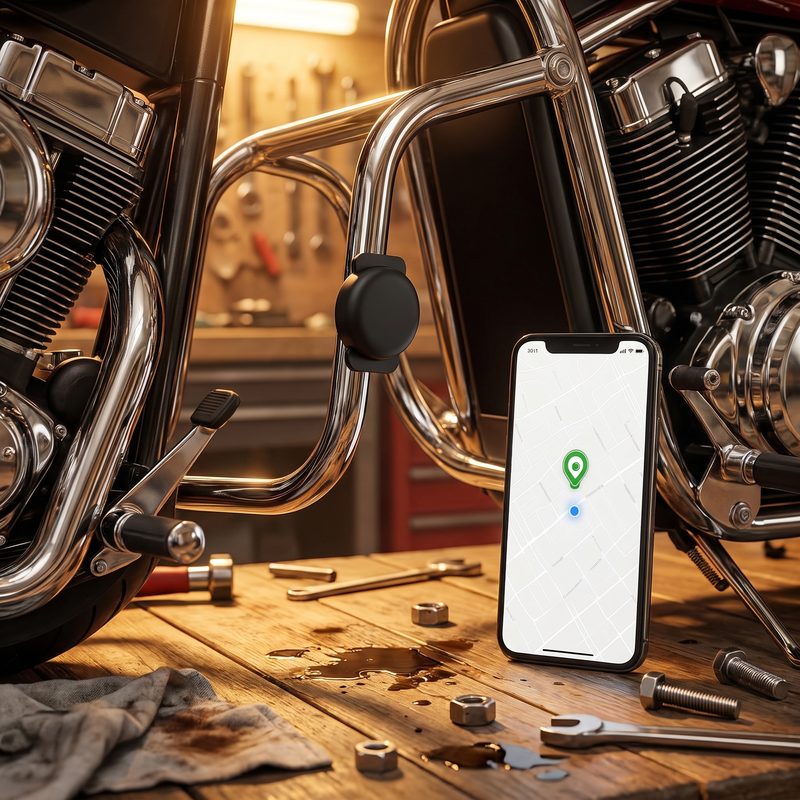
They sound similar and work completely differently.
Tile, AirTag, and other Bluetooth tags have no live connection of their own. They ping off strangers’ phones: when someone running the right app passes within roughly 30–100 feet, the tag reports that spot. In a dense city that can work surprisingly well. On a highway, inside a garage, or in a rural area — silence. Two more honest problems for theft: the dot you see is where your vehicle was when a phone happened by, not where it is now; and anti-stalking features can pop a “tracker is moving with you” alert on the thief’s own phone, telling them to search the bike and toss the tag.
GPS trackers carry a cellular connection, like a phone. They report live location anywhere with cell coverage, send movement alerts on their own, and depend on nobody walking past. The tradeoffs: higher price up front, and most brands charge a monthly subscription for the cellular service — though pay-once, no-subscription models now exist.
Bottom line for a vehicle: Bluetooth tags are great for keys and fine as a cheap backup layer. For something that moves at 70 mph and gets loaded into vans, live GPS is the tool the job actually calls for.




No comments yet. Be the first rider to weigh in.