
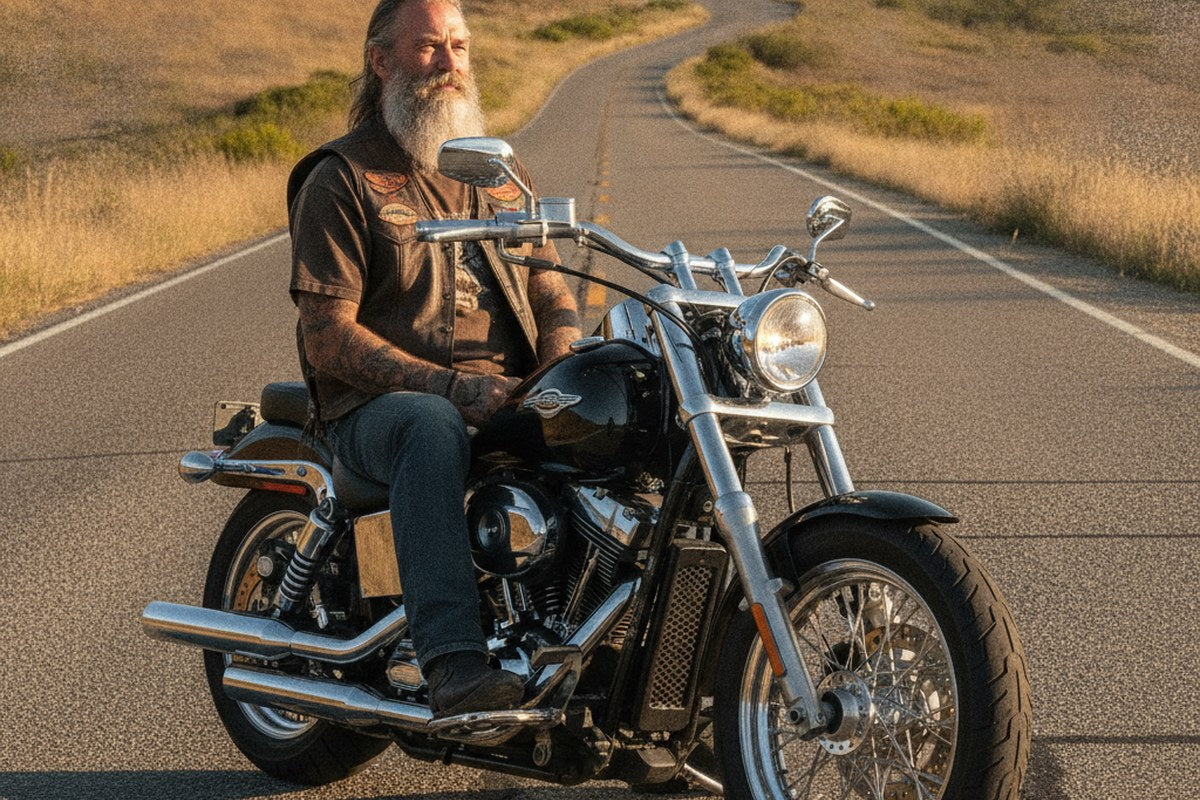
The honest answer: there is no single magic posture — and anyone selling you one is guessing. Backs differ. Some riders with low-back trouble tolerate a slight forward hinge better; others need dead-neutral upright; the leaned-back slouch is the most common offender, but even that isn't universal. If your "bad back" is a diagnosed condition, it's genuinely worth asking your doctor or physical therapist which direction your spine tolerates better — flexion or extension — because that answer changes what setup suits you.
That said, the principles that hold for most riders are consistent:
- Neutral pelvis: sitting on your sit bones, not rolled back onto your tailbone. The classic cruiser slouch starts at the pelvis, not the shoulders.
- A slight hinge from the hips, not a rounded lower back — a small forward lean lets your torso muscles share the work.
- Feet under you enough to take weight, so your legs can absorb bumps instead of your spine taking them raw.
- Soft elbows, loose grip, shoulders down — tension travels.
And the principle that matters most: the best position is one you can change. Any posture held rigid for an hour turns hostile. Shift on the seat, vary your foot position, stand briefly over rough stuff when it's safe, and take real breaks. A contact point that spreads pressure makes all that moving easier, because you're not pinned to two aching points — movement is the actual medicine here.




No comments yet. Be the first rider to weigh in.