A motorcycle jacket can look tough hanging on a rack and still come up short when it hits pavement. That is the real answer behind what makes a motorcycle jacket protective - not just leather, not just a cool cut, and definitely not marketing talk. A protective jacket is built to handle abrasion, absorb impact, stay in place during a crash, and keep the rider focused instead of fighting the gear.
If you ride a cruiser, bagger, sport bike, or daily commuter, the basics do not change. The jacket has one job when things go bad: reduce damage to your skin, joints, and upper body. Everything else - style, patches, color, brand name - comes after that.
What makes a motorcycle jacket protective in a real crash
The biggest factor is abrasion resistance. In a slide, the road acts like a grinder. A regular fashion jacket tears fast because it was never made for contact with asphalt. A real riding jacket uses materials that can survive longer under friction, giving your skin a better chance.
Leather still earns respect here for a reason. Quality motorcycle-grade leather, especially in the right thickness, holds up well in a slide and molds to the rider over time. But textile jackets can also be highly protective when they use serious fabrics like Cordura, reinforced nylon blends, aramid panels, or other abrasion-resistant materials. The old idea that only leather protects is too simple. Good construction matters just as much as material choice.
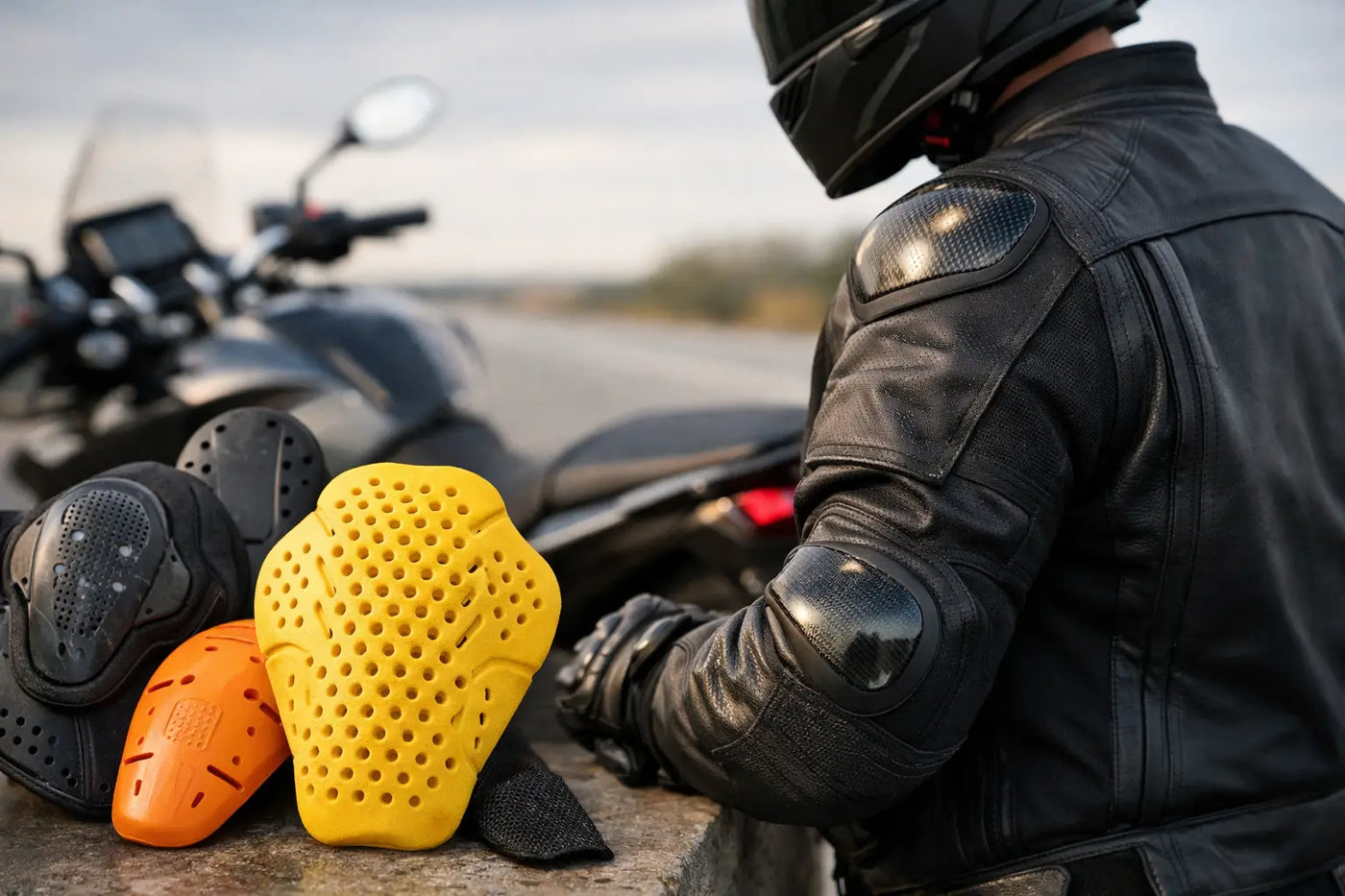
Impact protection is the next piece. Hitting the ground is one part of a crash. Hitting your shoulder, elbow, or back against the road, a bike, or another object is another. That is where armor comes in. A protective jacket should have armor in the shoulders and elbows at minimum, with a back protector strongly preferred. Without armor, even a tough outer shell leaves your joints and spine taking the hit more directly.
The jacket also has to stay where it belongs. If it rides up, twists, or shifts in a crash, the armor can move off target and exposed areas can hit pavement. That is why fit is not just about comfort or style. A proper motorcycle jacket should feel secure without cutting off movement. Snug in the armor zones is good. Skin-tight and restrictive is not.
Materials matter, but not all in the same way
Leather gets a lot of attention because it has proven itself for decades. Cowhide is common, and thicker full-grain or top-grain hides generally offer better abrasion resistance than thin fashion leather. You will often see a trade-off here. Thicker leather can protect better, but it also runs hotter, feels heavier, and takes longer to break in.
Textile jackets bring a different set of strengths. A strong textile jacket can be lighter, easier to live with in changing weather, and more practical for commuting or touring. Many also include waterproof liners, vents, thermal layers, and stretch panels that leather jackets may not offer in the same way. The catch is that not every textile is protective. Cheap polyester with weak reinforcement is not the same as purpose-built abrasion-resistant riding fabric.
Mesh jackets deserve a straight answer too. Riders love them in hot weather, and for good reason. More airflow can keep you alert and reduce fatigue in summer. But protection depends on how the mesh is built and where the reinforcements are placed. A flimsy mesh jacket with basic pads is a warm-weather convenience piece. A well-made mesh jacket with armor and reinforced impact zones is a real riding garment. It depends on the build, not the label.
Armor is where a lot of jackets separate themselves
When riders ask what makes a motorcycle jacket protective, armor quality is often the difference between average gear and gear worth trusting. Good armor is designed to absorb and spread impact energy. That helps reduce the force reaching your body.
Shoulder and elbow armor should be standard. Back protection matters just as much, but many jackets only include a foam pad instead of true armor. Foam fill may help a little with shape, but it is not the same as impact-rated protection. If a jacket accepts an upgraded back protector, that is worth paying attention to.
You should also look at coverage. Bigger is not always better if it prevents movement, but armor needs to actually cover the joint and stay there while riding. If elbow armor floats around or shoulder pads sit too low, the jacket is not doing you many favors. Protection on paper means less if the fit puts it in the wrong place.
Stitching, seams, and construction do heavy lifting
A protective motorcycle jacket is not just fabric plus pads. The way it is built matters a lot. In a crash, seams can burst before the main material fails. That means stitching strength matters more than most riders think.
Look for reinforced seams in high-stress areas, especially shoulders, elbows, and around impact zones. Double or triple stitching can add durability, but the overall quality of construction is what counts. Weak thread, poor panel design, or sloppy assembly can turn good materials into a weak jacket.
Zippers and closures matter too. If the front zipper fails on impact, the jacket can open and expose your torso. Strong hardware, secure cuffs, and waist adjustments all help keep the jacket in place. Some jackets also zip to riding pants, which can improve overall protection by reducing the chance of the jacket riding up in a slide.
Fit is protection, not fashion
A lot of riders buy too loose because it feels casual off the bike. That can backfire fast. If the jacket is baggy, armor can shift, sleeves can twist, and exposed gaps can show up exactly where you do not want them.
A good fit should let you reach the bars naturally, move your shoulders, and wear the layers you actually ride in. But it should still hold the armor close to your elbows, shoulders, and back. When you are in riding position, the jacket should feel planted.
There is always a trade-off. Touring riders may want more room for layering and long-day comfort. Aggressive street riders may prefer a more locked-in fit. Neither is wrong. The key is that the jacket still protects in motion, not just while standing in front of a mirror.
Weather features help more than people admit
Protection is not only about the crash itself. It is also about keeping you sharp enough to avoid one. If your jacket is soaking wet, overheating you, or blocking movement because of bad bulk, it works against you.
Ventilation helps in heat. Waterproofing helps in rain. Thermal liners help in cold. These features are not substitutes for abrasion resistance and armor, but they do support safer riding by reducing distraction and fatigue. A rider who is focused, comfortable, and not battling the weather makes better decisions.
That said, every all-season claim deserves a hard look. Some jackets try to do everything and end up average at all of it. If you ride mostly in one climate, buy for that reality. A heavy waterproof jacket in Arizona summer or a lightweight mesh shell in cold spring rain is the wrong kind of compromise.
Ratings and certifications are worth checking
If a jacket has tested armor or recognized safety certifications, that gives you more than brand hype. It means parts of the jacket were evaluated against a real standard. For riders who want facts over flash, that matters.
Still, certifications are not the whole story. A jacket can have certified armor and still fit poorly. It can use strong materials but fall short in ventilation for your climate. The best choice is the one that balances tested protection, proper fit, and real-world use for the way you ride.
What riders should watch out for
The market is full of jackets that borrow motorcycle style without delivering motorcycle protection. Thin leather fashion pieces, bargain jackets with soft non-rated pads, and low-cost textiles with weak seams can all look the part online.
Price matters, but cheapest usually means corners got cut somewhere. That might be in the armor, the stitching, the leather thickness, or the abrasion panels. A real riding jacket should earn its place with materials, construction, and fit, not just attitude.
For riders shopping American Legend Rider or anywhere else, the smart move is to read beyond the product name. Check the armor locations, material details, reinforcement zones, closure system, and whether the jacket is actually built for riding. Tough style is part of biker culture. Real protection is what backs it up when the road gets ugly.
The best motorcycle jacket is the one you will actually wear every time, in the conditions you really ride in, without giving up the protection your body may need in a split second. Buy for the slide, not just the look.

No comments yet. Be the first rider to weigh in.