
Riding looks passive from the outside. It isn't — you're doing hours of low-grade isometric work, and knowing which muscles are burning out explains why you ache where you ache.
- Lower-back extensors (erector spinae). The big one. With no backrest, these muscles fire continuously to hold your torso upright against acceleration, wind, and gravity. Isometric holds fatigue muscle faster than movement does, and when the extensors finally give out, you slump — shifting the load onto discs and ligaments. That's the hour-two ache most riders know.
- Deep core and abdominals. They stabilize your trunk against every surge and brake. A tired core dumps its share of the work onto the lower back.
- Neck and upper traps. A helmeted head is a serious weight held against wind blast for hours — forward-leaning postures make it worse.
- Forearms and grip. Constant throttle, clutch, and bar pressure, plus absorbing handlebar vibration.
- Hip flexors and glutes. Locked in one shortened position for hours, then compressed against the seat with circulation squeezed off — the "dead legs" feeling at gas stops.
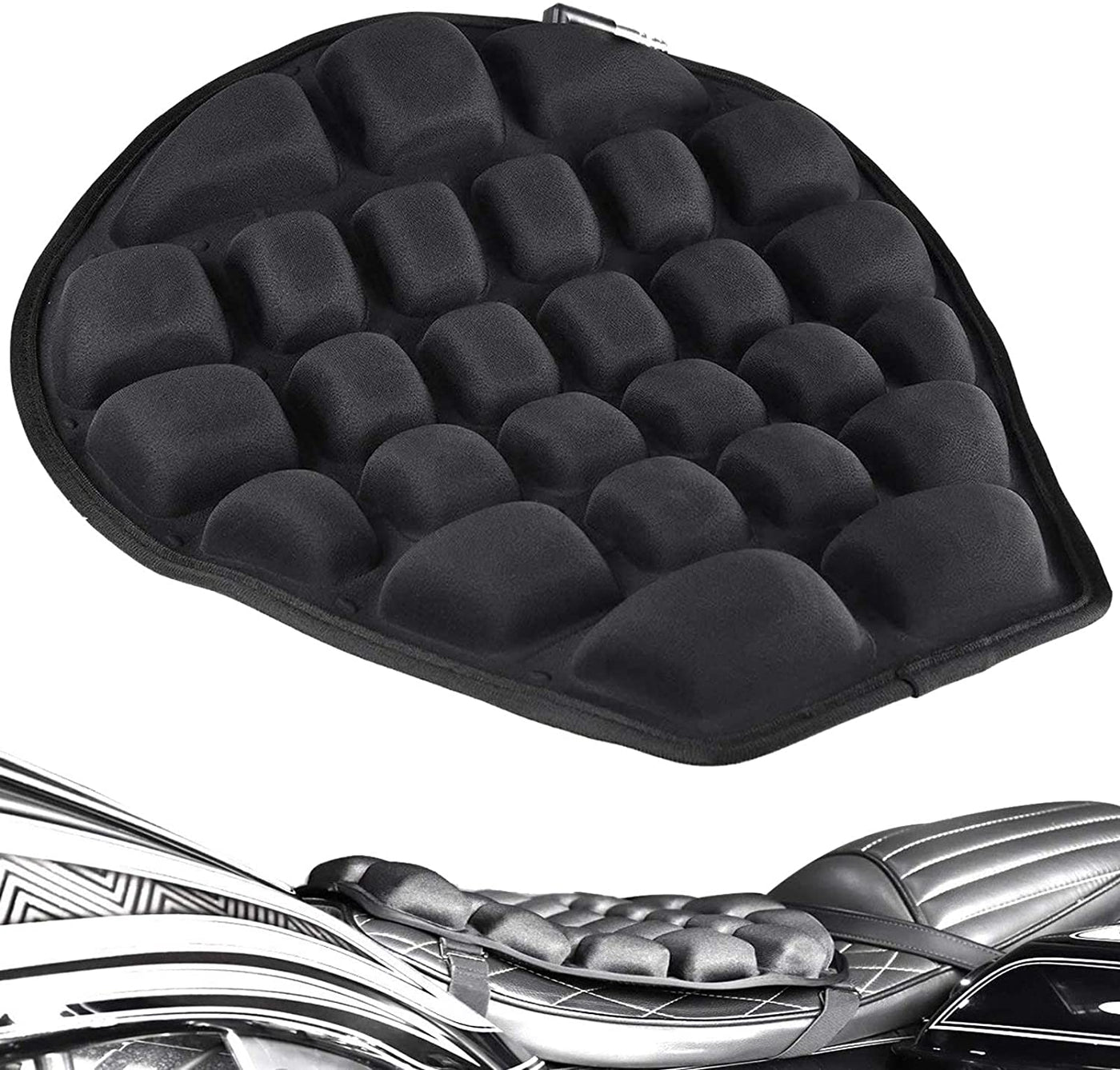
Two things reduce the bill. Movement: posture resets, standing on the pegs when safe, real breaks every hour — muscles recover fast when briefly unloaded. And load reduction at the source: less vibration and pressure reaching your body means the stabilizers fatigue slower. Manage both and the muscles that used to quit at hour two are still working for you at hour five.


No comments yet. Be the first rider to weigh in.