
Both complaints trace back to the same root: gel is a dense, solid polymer, and physics doesn't negotiate.
The heat problem. Gel conducts and stores heat far better than air or foam. On a sunny day the pad soaks up heat while the bike is parked, then your body adds more from above. The gel mass holds that heat against you for the whole ride — there's no airflow through a solid slab. That's why riders describe a gel seat on a July afternoon as sitting on a warm waterbed, and why the "hot monkey butt" nickname stuck.
The flattening problem. Gel doesn't spring back like air. Under constant load, gel slowly migrates away from the highest-pressure zones — which are precisely your sit bones, the spot you bought the pad for. Over months of riding, the pad thins where you need it most and thickens at the edges where you don't. The cushioning didn't disappear; it moved. Cheaper pads also lose thickness permanently as the gel compresses. Either way, a gel pad's best day is its first day, and there's no way to restore it.
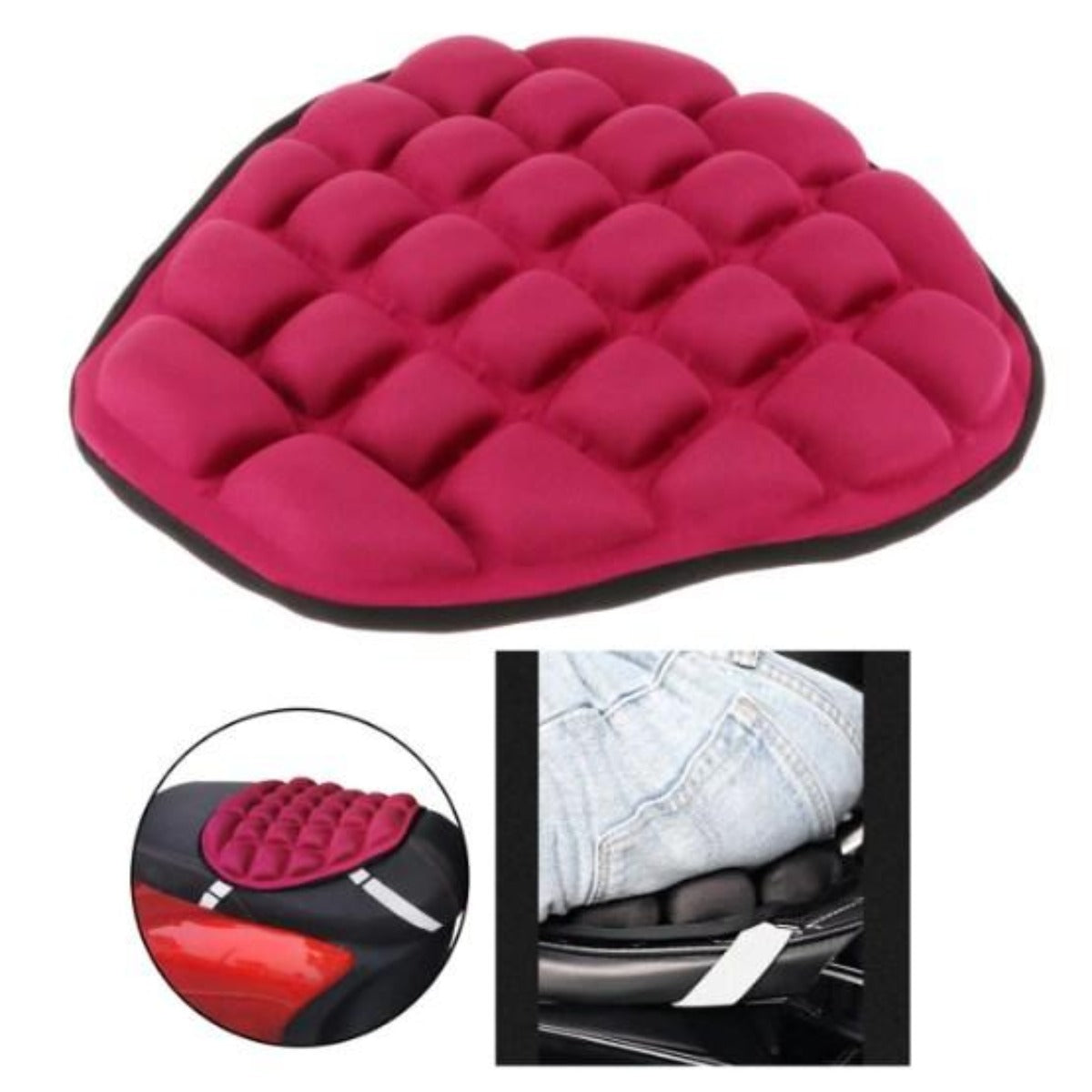
This is the core argument for air over gel: air redistributes itself instantly every time you shift, runs cooler because it moves under the cover, and if the pad ever feels soft you add a breath of air and it's factory-fresh again. Same job, but one material fights physics and the other uses it.



No comments yet. Be the first rider to weigh in.